Parents making homemade lunch components
If chopped tomatoes go into pasta, beans, vegetables or a sauce for a packed lunch, their salt declaration gives you a starting point before you add the other ingredients.


For a lower-salt tomato base in a homemade school lunch, compare the declared salt per 100g rather than relying on the brand or the words on the front of the tin. ASDA Groceries lists 0.01g per 100g for both ASDA and Just Essentials chopped tomatoes, compared with 0.10g for the checked Napolina tin and 0.30g for Mutti; all meet the NHS low-salt threshold of 0.3g or less per 100g. Check the current can label and the salt in the other lunch ingredients before deciding.
If chopped tomatoes go into pasta, beans, vegetables or a sauce for a packed lunch, their salt declaration gives you a starting point before you add the other ingredients.
The NHS gives maximum daily salt amounts of 3g for children aged 4 to 6 and 5g for those aged 7 to 10. A lunch is only one part of that day’s food, so compare the whole recipe rather than the tomato tin alone.
Similar-looking chopped-tomato tins can have different salt declarations. Compare them on the same per-100g basis, then consider whether the tin or multipack size fits the meals you plan to make.
Start with salt per 100g, then check how the tomatoes will be used and stored. The NHS defines low salt on food labels as 0.3g or less per 100g; tins within that range can still have different figures.
| Priority | What to check | Your needs |
|---|---|---|
| Salt per 100g | Compare the same measure on each nutrition panel. ASDA Groceries lists 0.01g per 100g for its ASDA and Just Essentials 400g tins; the checked Napolina listing gives 0.10g, and ASDA Groceries lists 0.30g for Mutti. | I want to limit the salt contributed by the tomatoes before adding the rest of the lunch ingredients. |
| Ingredients and recipe | Read the ingredients as well as the nutrition panel. Check the salt declarations for cheese, bread, processed fillings and sauces used in the same dish. | A low-salt tomato tin is useful to me only if the finished lunch also fits what I am planning. |
| Texture and quantity | Check whether the tomatoes are chopped or finely chopped, and whether you are buying one 400g tin or a multipack. Texture and pack size serve different recipe needs; neither establishes a lower salt figure. | For a small batch, I may prefer one tin; for several planned meals, a multipack may be more practical. |
| After opening | Read the particular can’s directions for transferring, refrigerating and using leftover contents. Plan the recipe around the stated storage period. | If I will use only part of a tin, I need a plan for the remainder. |
| School arrangements | Check your school’s packed-lunch policy for any requirements relevant to the finished meal. | I want the lunch I prepare to suit the school’s arrangements as well as my recipe. |
The checked chopped-tomato products declare figures from 0.01g to 0.30g salt per 100g. A description such as “Italian” does not replace the nutrition panel.
Compare the current per-100g declarations on the tins you are considering.
The tomato base is only one ingredient; cheese, bread, processed fillings and sauces can also contribute salt.
Check the labels of the ingredients you actually add, and choose flavourings to suit the recipe.
After-opening directions can differ between products, which matters when one tin will be used for more than one meal.
Follow that product’s instructions for transferring, covering, refrigerating and using the remainder.
A product page can remain accessible even when its availability changes.
Check the current listing, pack size and can label before purchase.
These figures describe the specified products, not every tomato tin made by each brand.
Two plain 400g chopped-tomato tins to compare when the salt contribution of the tomato base matters.
A branded chopped-tomato option for recipes that call for a chunkier base.
Finely chopped tomatoes for recipes where that texture is wanted.
These single tins and multipacks offer chopped-tomato bases for homemade lunch recipes. Compare their listed salt figures and quantities against your recipe, and check the current can labels before use.
 No image available
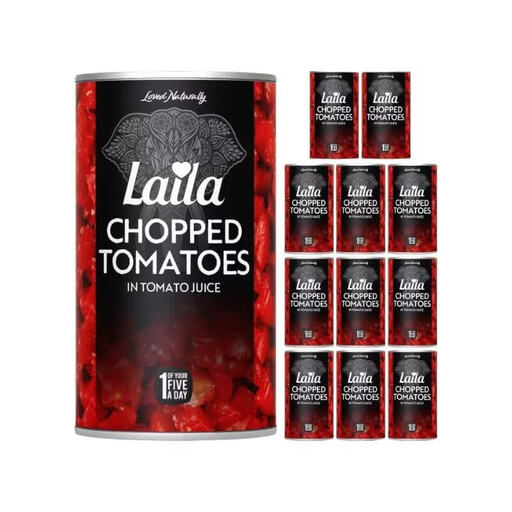
A 12-tin pack for recipes using chopped tomatoes across several meals. The listing declares 0.03g salt per 100g and gives tomatoes, tomato juice and citric acid as ingredients. It says to transfer opened contents to a non-metallic airtight container, refrigerate and use within 2 days; check the can label for the current directions.
 No image available
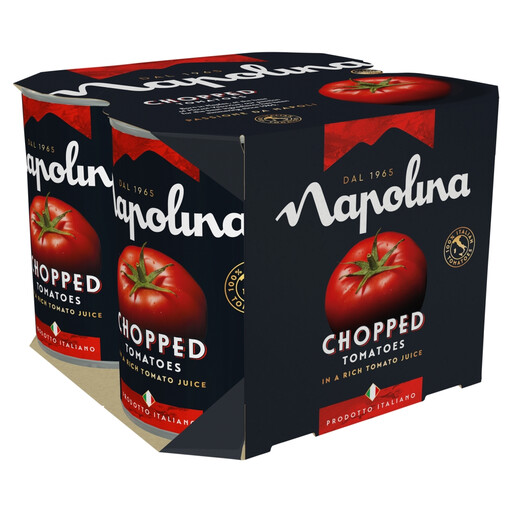
Four 400g tins may suit a plan to make several tomato-based dishes. The listing declares 0.10g salt per 100g and says to transfer opened contents to a non-metallic container, cover, refrigerate and use within 2 days. Confirm the current label before preparing or storing leftovers.
 No image available
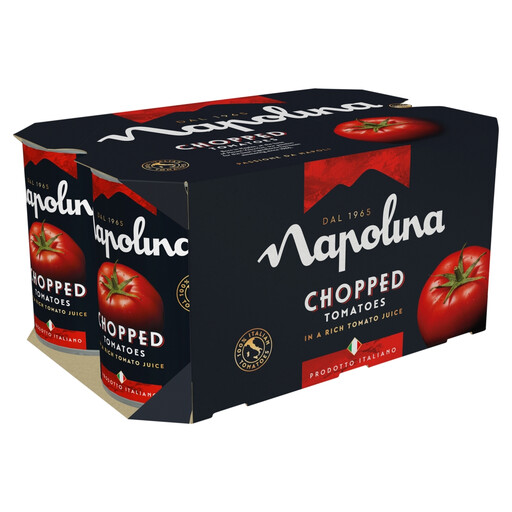
Six 400g tins are an option if several recipes call for chopped tomatoes. The listing declares 0.10g salt per 100g and directs users to transfer opened contents to a non-metallic container, cover, refrigerate and use within 2 days. Check the current can label.
 No image available
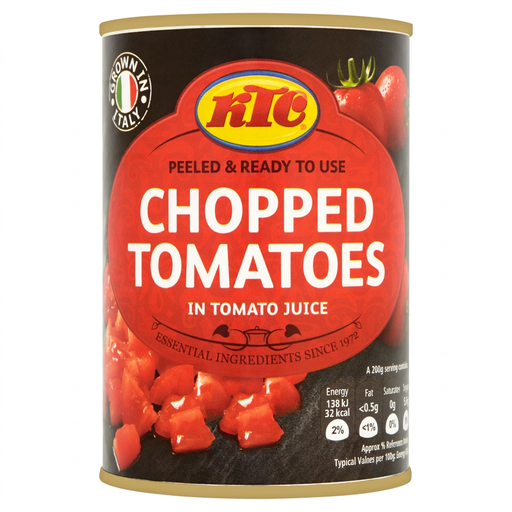
A single 400g tin suits a recipe that does not call for a multipack. The product description lists 0.09g salt per 100g and names tomatoes, tomato juice and citric acid as ingredients. Check the can for its current nutrition panel and after-opening storage directions.
 No image available
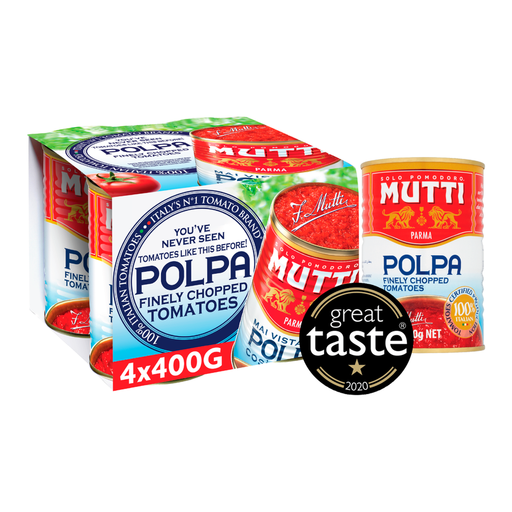
The fine-chopped texture may suit a recipe that calls for it, while the four-tin pack suits repeated use. The listing declares 0.30g salt per 100g and includes salt in the ingredients. That figure meets the NHS low-salt cut-off but is higher than the figures listed for the other products in this section. Check the current can label and its after-opening directions.
The NHS defines a low-salt food as one with 0.3g salt or less per 100g. Use the per-100g declaration to compare tins on the same basis, and read the current label of the product you buy.
Yes. The NHS cut-off includes 0.30g per 100g, although that figure is higher than 0.10g or 0.01g per 100g when comparing these specific tins. Texture and recipe fit may still affect which one you choose.
No. The NHS gives maximum amounts for the whole day: 3g for ages 4 to 6, 5g for ages 7 to 10, and 6g for ages 11 and older. The tomatoes and other lunch ingredients contribute to that daily amount.
Follow the directions on that tin, including its container, refrigeration and use-within instructions. Directions differ between products, so check the label before planning to use the remainder in another meal.