Budget cooks buying cupboard staples
If you use tinned tomatoes for sauces, soups, chilli or pasta, the tin size and how much you will use matter alongside the nutrition label.


For a budget shop, compare the declared total sugars per 100g and the number of tins you will use; a description such as “naturally sweet” does not establish that a product is reduced in sugar. Tesco lists 4.0g sugars per 100g for its Italian Chopped Tomatoes, while Ocado lists 2.8g per 100g for the distinct Mutti Polpa six-pack. Choose a pack size that suits your cooking and check the current tin label before buying.
If you use tinned tomatoes for sauces, soups, chilli or pasta, the tin size and how much you will use matter alongside the nutrition label.
If you want a lower declared sugars figure, compare plain tomato products per 100g. That figure reports total sugars; it does not establish that a tin has been specially formulated as a reduced-sugar product.
A multipack may suit regular cooking if you have room to store the tins and expect to use them before their best-before dates.
Start with the nutrition panel on the exact product, then choose a tomato format and pack quantity that fit the dishes you make.
| Priority | What to check | Your needs |
|---|---|---|
| Total sugars | Compare sugars per 100g on the nutrition panel, not descriptions of sweetness. GOV.UK’s nutrition-labelling guidance uses a per-100g basis for nutrition information. | I want to compare the declared total sugars in the tins I might buy. Tesco lists 4.0g per 100g for Italian Chopped Tomatoes; Ocado lists 2.8g per 100g for Mutti Polpa. |
| Ingredients | Read the ingredients on the exact plain tin. Check flavoured variants separately rather than carrying a figure over from another product in the range. | A plain tomato tin suits my recipe, and I want to know what else, if anything, is in it. |
| Tomato format | Check whether the contents are chopped, finely chopped or whole peeled tomatoes. Whole tomatoes can be crushed if the recipe calls for a different texture. | For a sauce, I may want chopped tomatoes ready to add; for another dish, I may prefer whole tomatoes that I can break up myself. |
| Pack quantity | Count the tins and check their weight. Consider storage space and whether you will use a multipack before its best-before dates. | One 400g tin may be enough for this recipe; I would choose a larger pack only if I expect to use the remaining tins. |
| After opening | Follow the storage and use-within directions on the particular tin. Transfer leftovers to another container if its instructions say to do so. | If I will use only part of a tin, I need a practical plan for storing the rest. |
Plain tomato products can have different declared total-sugars figures, while a flavour description does not establish a reduced-sugar formulation.
Compare sugars per 100g and the ingredients on the exact tin rather than relying on a phrase on the front or on another product from the same brand.
The Tesco Everyday Value and Sainsbury’s Chopped Tomatoes pages cited in the product research were marked out of stock when checked. A listed nutrition figure does not establish current availability.
Check stock and the label of an available tin before making your choice.
These product-specific examples help distinguish the labels; a figure for one tin should not be applied to every product from its brand.
Tesco lists own-label chopped tomatoes, including a 400g Italian Chopped Tomatoes tin.
Sainsbury’s lists own-label chopped-tomato options, including a 400g tin with a product nutrition panel.
Napolina Chopped Tomatoes 400g appears in the Tesco category listing as a branded chopped-tomato option.
Mutti Polpa is a finely chopped tomato product; it is distinct from Mutti’s whole peeled tomatoes.
M&S Organic Italian Chopped Tomatoes is a 400g chopped-tomato option listed by Ocado.
These options include chopped and whole peeled tomatoes in single tins and multipacks. Compare each product’s stated sugars figure with its format and pack size; none should be treated as a specially formulated reduced-sugar tin on that basis alone.
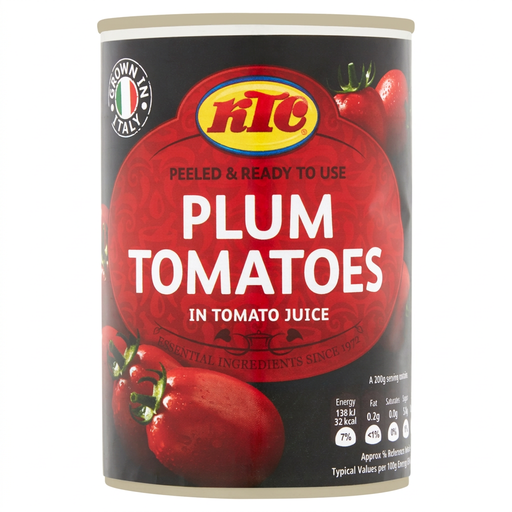 No image available
A single tin for dishes where whole peeled plum tomatoes suit the texture. The product description lists 2.8g sugars per 100g and ingredients of peeled tomatoes, tomato juice and citric acid. Check the current tin label when comparing it with other products.
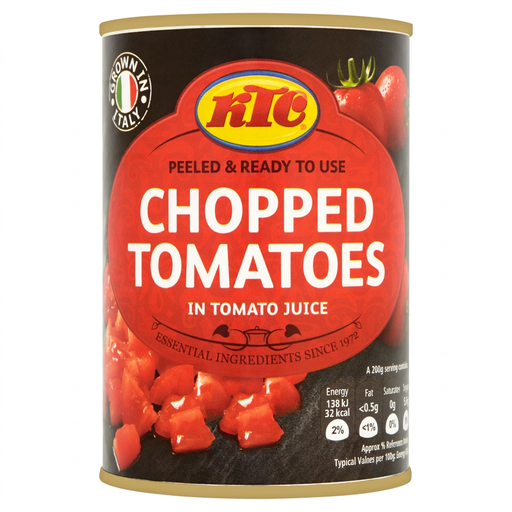 No image available
A single chopped-tomato tin for recipes that call for tomatoes already cut up. Its product description lists 2.8g sugars per 100g and ingredients of tomatoes, tomato juice and citric acid. Read the current label for the details of the tin you buy.
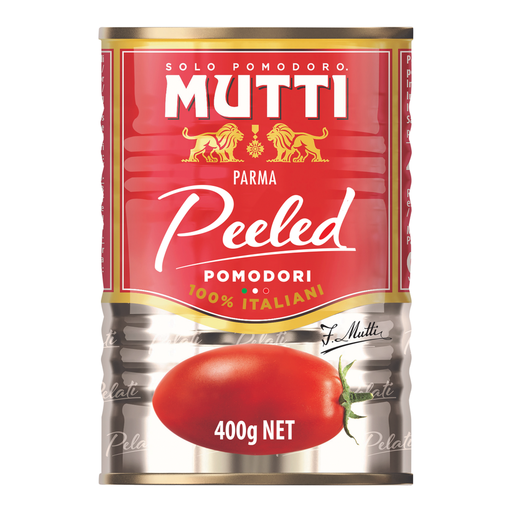 No image available
A single tin of whole peeled tomatoes that can be crushed or blended for a different sauce texture. The product description lists 2.9g sugars per 100g and ingredients of peeled tomatoes and tomato juice. This is a different product from finely chopped Mutti Polpa.
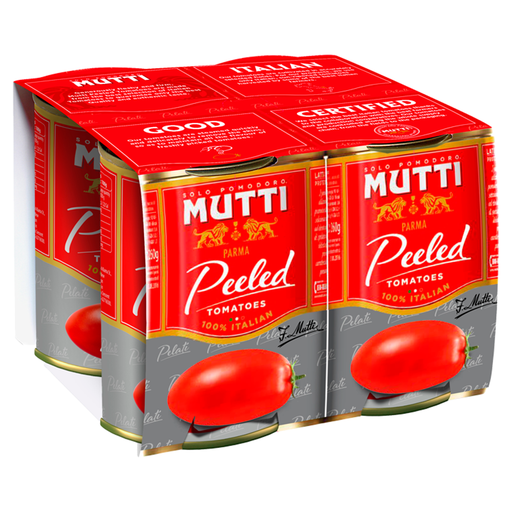 No image available
Four tins of whole peeled tomatoes for cooking that will use that quantity. The product description lists 2.9g sugars per 100g. Product descriptions conflict on whether this pack may contain milk or nuts, so check the packaging if allergens matter to you.
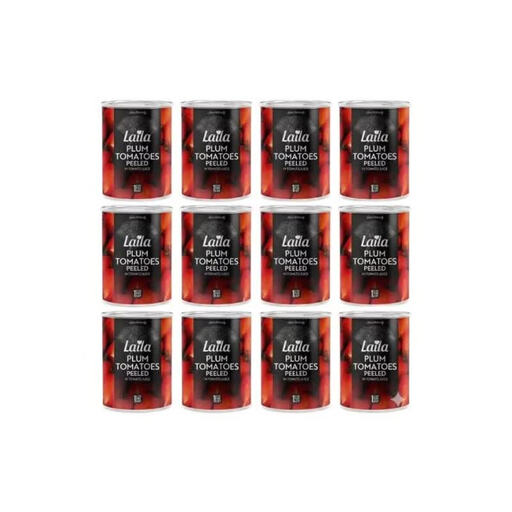 No image available
A twelve-tin pack of whole peeled plum tomatoes for recipes such as sauces, stews and soups. The product description lists 3.5g sugars per 100g. Check that you have room for the pack and expect to use the tins before their best-before dates.
No. The nutrition panel reports total sugars, including sugars naturally present in tomatoes. Compare the declared amount per 100g on the exact tin and read its ingredients; a description such as “naturally sweet” does not establish that it has been specially formulated to reduce sugar.
Compare the nutrition figures per 100g, then check the weight and number of tins in each pack. A single 400g tin and a multipack may suit different cooking plans even when their per-100g sugars figures look similar.
Use the listing to narrow your options, then check the label on the tin you buy. Product information can change, and the exact label matters when you are comparing ingredients or nutrition figures.
Follow that product’s storage and use-within instructions. If its label directs you to transfer leftovers to a non-metallic container and refrigerate them, follow those directions rather than assuming every tin has the same use-within period.