Picnic cooks preparing a dish at home
If you are making a pasta salad, tomato topping, dip or sauce before leaving, choose a texture that suits the recipe and plan how to store any unused contents after opening the tin.


For a picnic dish made in advance, compare the ‘of which sugars’ figure per 100g on similar plain tinned tomatoes, then check the ingredients separately if you want to avoid added sweetening ingredients. The NHS explains that naturally occurring sugars in vegetables appear in the total-sugars figure; neither a low-looking number nor an ingredient list without sugar establishes a ‘reduced sugar’ claim. Texture and the tin’s opened-storage instructions also matter for the dish you plan to make.
If you are making a pasta salad, tomato topping, dip or sauce before leaving, choose a texture that suits the recipe and plan how to store any unused contents after opening the tin.
Read the ingredient list for that purpose. The nutrition panel’s total-sugars figure answers a different question: according to the NHS, it also includes sugars naturally present in vegetables.
Use the per-100g figures to compare similar plain tomatoes, then consider whether chopped or finely chopped tomatoes fit the dish. Pack size alone does not make the sugar figures comparable.
Start with the type of tomato your recipe needs, then compare like-for-like labels and plan for the contents left after opening.
| Priority | What to check | Your needs |
|---|---|---|
| Total sugars | Compare ‘of which sugars’ per 100g on similar plain chopped-tomato tins. Marks & Spencer lists 3.4g per 100g for its organic chopped tomatoes, Napolina lists 3.6g and Asda lists 3.8g for the cited products; those figures are not a reduced-sugar ranking of all tins. | I want to compare declared total sugars without treating a small difference between selected products as a ‘reduced sugar’ claim. |
| Ingredients | Read the full list if you want to avoid added sweetening ingredients. The NHS notes that naturally occurring sugars in vegetables still appear in the total-sugars figure. | A tin without sugar listed as an ingredient may suit my recipe, but I do not expect its nutrition panel to show zero sugars. |
| Texture | Choose chopped pieces or a finer pulp for the dish you are making. Napolina describes its chopped tomatoes as chunky; Mutti describes Polpa as finely chopped pulp with juice. Check flavour additions separately. | Visible tomato pieces would work in my topping, or I may prefer finer tomatoes for a sauce prepared at home. |
| After opening | Read the particular tin’s instructions for transferring, refrigerating and using unused contents. Pack a prepared picnic dish in an appropriate food container rather than taking an opened tin. | If my recipe uses only part of a tin, I need a plan for the remainder before I leave. |
Tomatoes can have no sugar listed as an ingredient while still showing naturally occurring sugars in the nutrition panel, as the NHS explains. Neither observation alone establishes a reduction against a similar product.
Check ingredients for added sweetening ingredients and the per-100g nutrition figure for total sugars. If a tin makes a ‘reduced sugar’ claim, consider what similar product the claim compares it with.
Asda’s listing for Mutti Garlic Polpa includes garlic and salt. Its declared sugars figure therefore does not make it a like-for-like plain chopped-tomato choice for every recipe.
Compare plain chopped tins with one another first. Choose a flavoured tin when its ingredients and texture suit the dish, not solely because of its sugar figure.
A picnic recipe may use only part of a tin, leaving contents that need storage after opening. Storage instructions can differ between products.
Check the tin you buy, transfer unused contents as instructed and arrange refrigeration before setting out.
Without a way to follow the tin’s storage instructions, unused contents may have to be discarded.
These examples show differences in ingredients and texture; they do not establish that every product from a brand has the same formulation.
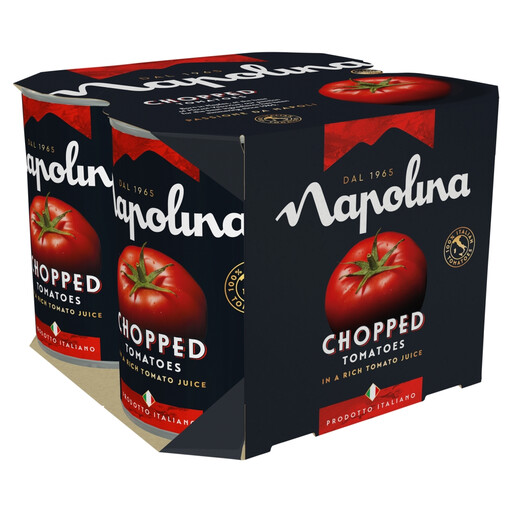
Napolina describes its chopped tomatoes as chunky pieces in tomato juice for dishes where that texture is useful.
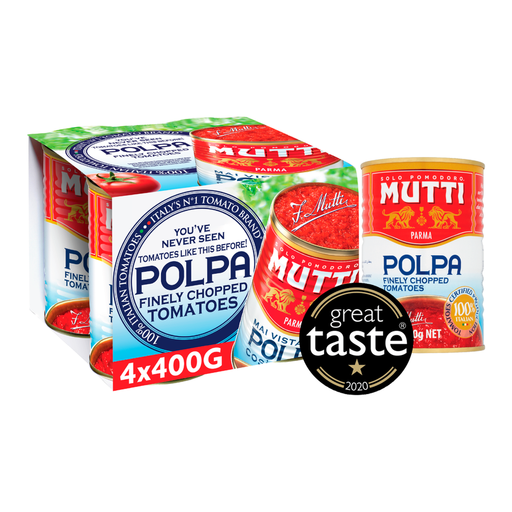
Mutti describes Polpa as finely chopped tomato pulp with juice, offered for dishes including sauces.
Marks & Spencer lists an organic Italian chopped-tomato product containing organic tomatoes, organic tomato juice and citric acid.
Asda’s cited 400g chopped tomatoes list tomatoes, concentrated tomato juice and citric acid.
Tesco’s chopped-tomato range lists own-brand chopped, finely chopped and organic formats.
These chopped and finely chopped tomatoes are options for preparing a tomato-based picnic dish at home. Compare the label on the pack you choose; a product’s inclusion here does not establish a ‘reduced sugar’ claim.
 No image available
Finely chopped tomatoes may suit a sauce prepared before the picnic. This is a four-tin pack; check each tin’s ingredients, sugars per 100g and opened-storage instructions when planning the dish.
 No image available
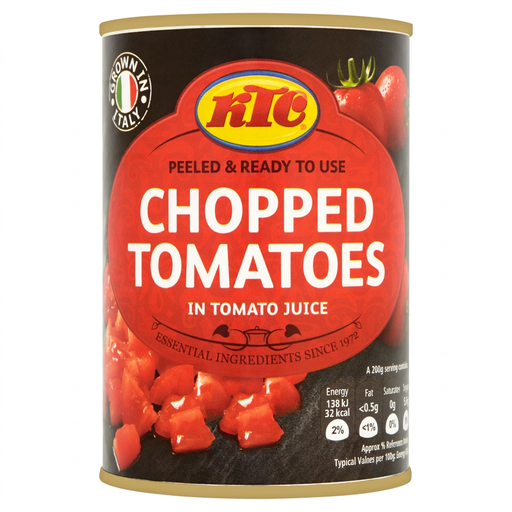
A 400g chopped-tomato tin is an option for a recipe that calls for tomato pieces. Read the actual tin for its per-100g sugars figure, ingredients and instructions for any contents left after opening.
 No image available
Napolina describes these chopped tomatoes as chunky, which may suit a sauce or topping where visible pieces are wanted. Its chopped-tomato product page declares 3.6g sugars per 100g; check the tins in this four-pack for their current label and opened-storage instructions.
No: sweetness alone does not demonstrate a reduction against a similar product. Check the basis of any ‘reduced sugar’ claim on the product rather than inferring one from taste, an ingredient list or a single total-sugars figure.
No. The NHS explains that naturally occurring sugars in vegetables are included in the total-sugars figure on food labels. Read the ingredients separately if you want to check for added sweetening ingredients.
Choose the texture your dish calls for, compare sugars per 100g on similar tins and check the ingredients. If you prepare the dish in advance or use only part of a tin, follow that tin’s opened-storage instructions.
Yes. Check the label on the tin you buy for its current ingredients, nutrition information and storage instructions, particularly when comparing sugar figures or avoiding an ingredient.