Lunch cooks watching the salt in a recipe
If tomatoes form the base of a soup, pasta sauce or bean dish, the tin’s salt figure is one part of the finished lunch. Check it alongside stock, cheese, sauces and other ingredients you plan to add.


For a lunch where you want to limit salt from the tomato base, compare salt per 100g on the current tin rather than relying on a front-of-pack description. The NHS calls 0.3g salt or less per 100g low in salt; the listed figures for five chopped-tomato examples range from 0.02g per 100g for M&S Chopped Italian Tomatoes to 0.13g for Heinz Finely Chopped Tomatoes, according to M&S and Tesco product listings. Choose finely chopped tomatoes for a less chunky sauce or standard chopped tomatoes when you want visible pieces, and consider the other ingredients going into the lunch.
If tomatoes form the base of a soup, pasta sauce or bean dish, the tin’s salt figure is one part of the finished lunch. Check it alongside stock, cheese, sauces and other ingredients you plan to add.
Standard chopped tomatoes leave more visible pieces, while a finely chopped format suits a less chunky base. Decide which texture works for the dishes you make most often.
An Italian-origin description or a prominent salt claim does not give you a like-for-like comparison. The per-100g nutrition figures let you compare tins with different pack sizes.
Start with salt per 100g, then check the amount you will use and whether the tomato texture fits the meal. The tin’s current label is the reference for ingredients and storage instructions.
| Priority | What to check | Your needs |
|---|---|---|
| Salt level | Compare salt per 100g across tins. The NHS low-salt benchmark is 0.3g or less per 100g; check how much tomato the recipe uses as well. | I want to account for salt in the tomato base before adding ingredients such as stock, cheese or olives. |
| Pack quantity | Check the tin size and, for a multipack, the number of tins. Work out whether the amount suits your planned meals and storage space. | A single tin suits the lunch I have planned; if I cook with tomatoes regularly, I may prefer several tins. |
| Texture | Check whether the label says chopped or finely chopped. Choose based on whether you want visible pieces or a less chunky tomato base. | For a smoother pasta sauce I would look at finely chopped tomatoes; for a dish where pieces are welcome, standard chopped works. |
| Ingredients | Read the current ingredients list, including any salt or acidity regulator, and check the pack for allergen information relevant to you. | I want to know what is in this particular tin rather than assuming every chopped-tomato recipe is the same. |
| Front-of-pack label | If a traffic-light panel is present, use it alongside the per-100g nutrition declaration, not instead of it. | A front-of-pack panel can prompt me to look more closely at salt. In the Food Standards Agency and Ipsos Northern Ireland’s 2024 Making Food Better Tracker Survey, 49% of 611 people interviewed in Northern Ireland said they actively used traffic-light labels when shopping for food generally; that figure is not specific to tinned tomatoes. |
| After opening | Read the tin’s instructions for transferring, refrigerating and using leftovers; directions can differ between products. | If I will use only part of a tin at lunch, I need to know how its label says to store the remainder. |
Product listings show different salt figures even among chopped tomatoes: M&S lists 0.02g per 100g for its Chopped Italian Tomatoes, while Tesco lists 0.13g for Heinz Finely Chopped Tomatoes.
Compare the current tins’ per-100g figures. The NHS defines low salt as 0.3g or less per 100g.
Stock cubes, cheese, cured meat and other additions can contribute salt to a dish even when the tomato base meets the NHS low-salt benchmark.
Check the labels of the ingredients you add and consider seasoning once the dish is assembled.
The tin being purchased is the useful reference when its ingredients or nutrition information matter to your choice.
Read its salt declaration, ingredients and any relevant allergen information before using it.
Storage directions are product-specific. M&S says its Chopped Italian Tomatoes should be moved to a non-metallic container, refrigerated and eaten within three days of opening.
Follow the instructions on your tin for its container, refrigeration and use-within period.
These examples illustrate how salt figures and tomato formats can differ between named products; the figures refer to the specified listings, not every tin from each brand.
M&S Chopped Italian Tomatoes are a standard chopped option for comparing salt per 100g.
Tesco’s Italian Chopped Tomatoes and its Grower's Harvest Chopped Tomatoes offer two own-label figures to compare.
Napolina Chopped Tomatoes are a standard chopped format for sauces, soups and similar dishes.
Heinz Finely Chopped Tomatoes offer a less chunky format for a tomato-based lunch sauce.
These Joybuy options include standard and finely chopped tomatoes in single tins and multipacks. Compare the current pack’s salt declaration with the amount and texture you need for lunch.
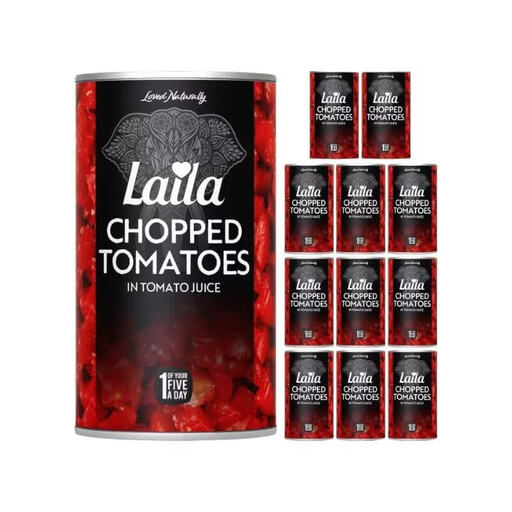 No image available
A chopped-tomato option for lunches made with a tomato base. This is a 12 x 400g multipack; check that the quantity suits your plans, and compare salt per 100g on the current tins.
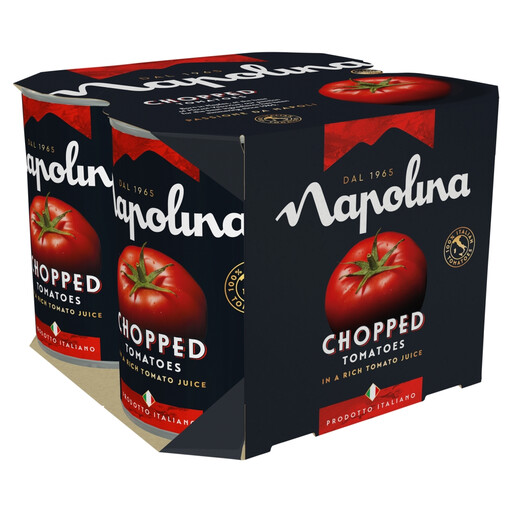 No image available
Standard chopped tomatoes for a lunch where visible tomato pieces suit the dish. The pack contains four 400g tins; compare the current salt declaration and follow the tin’s directions for any leftovers.
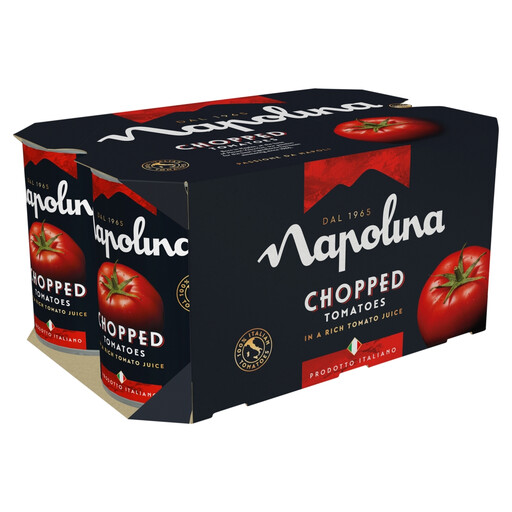 No image available
The standard chopped format may suit soups or sauces where tomato pieces are welcome. This variant contains six 400g tins, so consider how many meals you plan to make; check the current nutrition and storage directions on each tin.
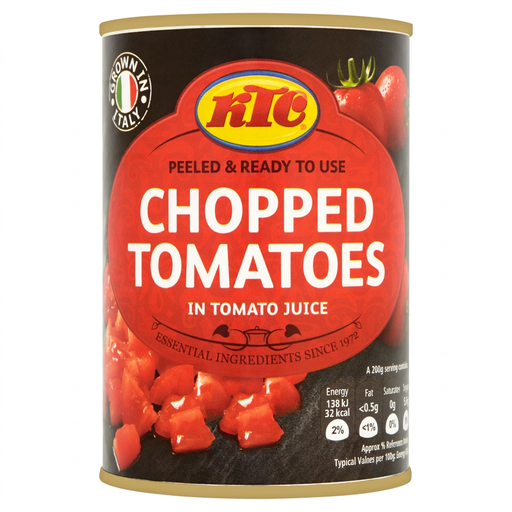 No image available
A single 400g tin is an option when you do not need a multipack. For a salt-conscious lunch, check its current per-100g figure and the pack’s instructions if you will keep any leftovers.
 No image available
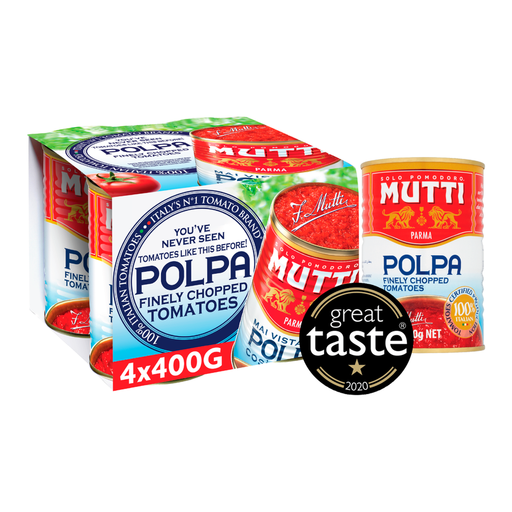
Consider the finely chopped format when you want a less chunky tomato base. The pack contains four 400g tins; compare the current salt figure and ingredients with other options rather than choosing by texture alone.
The NHS defines a food as low in salt when it contains 0.3g salt or less per 100g. Use the current tin’s per-100g declaration to compare products on the same basis.
No: compare the salt figure per 100g whether or not there is a prominent salt claim. The named M&S, Tesco, Grower's Harvest, Napolina and Heinz chopped-tomato listings each give a figure at or below the NHS low-salt benchmark, according to M&S and Tesco Groceries.
Use salt per 100g to compare tins, then consider how much tomato will go into your lunch. A per-portion figure may be useful for that second step, but portions can differ between labels and recipes.
Follow the instructions on the particular tin. For example, M&S says to move leftover Chopped Italian Tomatoes to a non-metallic container, refrigerate them and eat them within three days of opening; do not assume another product gives the same period.