Choose a no-added-salt tin when you want to decide how much salt goes into a sauce or stew, particularly if you also use stock, cheese or cured meat. A standard tin may have a similarly small declared salt value, so compare salt per 100g on the exact pack as well as its ingredients. For pantry stocking, check the tin’s condition and best-before date, then follow its instructions once opened.
Who is choosing these tins?
Home cooks controlling seasoning
If a recipe also contains stock, cheese, cured meat or a seasoned sauce, a no-added-salt tomato base lets you decide what seasoning to add later. Check the nutrition table too: no added salt does not mean zero declared salt.
Households stocking tins for regular meals
For sauces, chilli, soups and stews, match the number and size of tins to the meals you expect to cook and the space available to store them. Check salt values on the particular product rather than assuming its pack size tells you anything about its ingredients.
Shoppers seeking organic, no-added-salt tomatoes
Biona and Mr Organic each describe their organic chopped tomatoes as having no added salt. Their published nutrition tables still declare salt: 0.02g and 0.03g per 100g respectively.
What should you check before stocking up?
Start with the salt figure and ingredient list, then choose a tomato format and pack quantity that suit the dishes you cook.
| Priority | What to check | Your needs |
|---|
| Declared salt |
Compare salt per 100g on the exact tin. Consider how much tomato goes into one recipe and what else you add. |
I want to control seasoning when a meal also includes stock, cheese or cured meat. |
| Added ingredients |
Read the ingredient list for added salt, herbs and flavourings. Check a no-added-salt statement separately from the nutrition value. |
For cooking from an unseasoned base, I would choose a tin that explicitly says no added salt rather than assume a standard or flavoured tin has the same ingredients. |
| Tomato format |
Check whether the contents are chunky, finely chopped or whole plum tomatoes. Match the format to the preparation your recipe requires. |
I may use chopped tomatoes straight in a sauce, but I need to allow for extra preparation if I buy whole plum tomatoes. |
| Pack quantity |
Count the 400g tins in a multipack and check the space they will occupy. Choose a quantity you expect to use. |
A larger pack makes sense for me only if I cook with tomatoes often enough and have somewhere suitable to keep the tins. |
| Storage |
Inspect tins for damage and check their best-before dates. Read the specific pack’s refrigeration and use-by instructions for opened contents. |
I want tins that will fit into my pantry rotation and clear instructions for handling any tomatoes left after cooking. |
Common buying mistakes
-
Assuming every chopped-tomato tin declares the same salt value
The exact product matters. ASDA lists 0.01g salt per 100g for its standard chopped tomatoes, while Mutti lists 0.30g per 100g for Polpa, which includes salt as an ingredient.
Compare nutrition tables on the same per-100g basis, then consider how much tomato your dish uses.
-
Reading “no added salt” as “zero salt”
No added salt describes what has been added to the product; the nutrition table can still show a salt value. Biona, for example, states no added salt and declares 0.02g per 100g.
Use the ingredient list to check for added salt and the nutrition table to compare declared amounts.
-
Choosing a large pack without checking the quantity
A 24-tin pack takes substantially more cupboard space than a four-tin pack, whether or not the tins suit your cooking.
Count the tins against the meals you plan to make and the storage space you have before selecting a multipack.
-
Overlooking tin condition and opened storage
Reading Borough Council advises against buying damaged cans. Once a tin is opened, instructions can differ by product: M&S specifies two or three days for its cited variants after transfer and refrigeration.
Choose undamaged tins, rotate them by best-before date and follow the opened-storage instructions on the pack you bought.
Brand and product-line references
These figures describe the named products, not every tomato tin made by each brand; check the label when choosing a different variant.
ASDA
ASDA Chopped Tomatoes 400g are chopped tomatoes in concentrated tomato juice.
- ASDA declares 0.01g salt per 100g for this product.
- The ASDA Chopped Tomatoes with Herbs listing declares 0.10g per 100g, so the standard tin’s figure should not be applied to flavoured versions.
M&S
M&S lists standard and organic Italian chopped-tomato products.
- Its standard Chopped Italian Tomatoes list 0.02g salt per 100g; the organic variant lists 0.03g per 100g.
- Their opened-storage periods differ, so check the instructions for the variant you choose.
Biona
Biona describes its organic chopped tomatoes as containing no added salt or sugar.
- Biona declares 0.02g salt per 100g for its Organic Chopped Tomatoes.
- No added salt does not mean a zero-salt nutrition declaration.
Mr Organic
Mr Organic describes its Italian organic chopped tomatoes as containing no added salt or sugar.
- The product lists 0.03g salt per 100g.
- After opening, Mr Organic instructs shoppers to transfer the contents from the tin, refrigerate them and use them within 72 hours.
Napolina
Napolina describes its chopped tomatoes as chunky and packed in tomato juice.
- The texture may suit a sauce in which you want distinct tomato pieces.
- Napolina declares 0.10g salt per 100g for the cited chopped-tomato product; check other variants separately.
Mutti
Mutti Polpa is a finely chopped tomato product intended for cooking.
- Its fine texture offers a different starting point from chunky chopped tomatoes.
- Mutti lists salt as an ingredient and declares 0.30g salt per 100g for Polpa.
Tesco
Tesco Italian Finely Chopped Tomatoes 400g are described as finely chopped tomatoes in tomato juice.
- The finely chopped format is worth considering when you do not want large tomato pieces.
- Check the current pack’s salt-per-100g declaration before choosing it for salt-conscious cooking.
Sainsbury's
Sainsbury's describes its 400g chopped tomatoes as chopped tomatoes in tomato juice.
- The chopped format can be compared with other 400g chopped-tomato tins for the same recipes.
- Read the pack’s nutrition table to assess its salt value rather than judging it by the product name.
Joybuy tomato options
These options include chopped-tomato multipacks and a whole-plum-tomato multipack. Choose the format and number of tins you need, then check the exact pack’s salt declaration and ingredients if controlling added salt is central to your choice.
 No image available
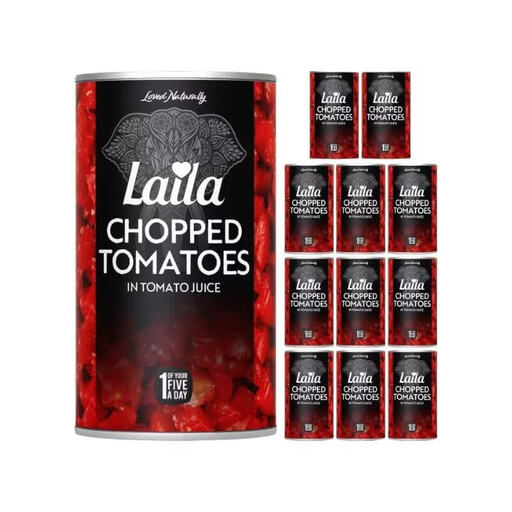
Laila Canned Chopped Tomatoes, 12 × 400g
A 12-tin chopped-tomato pack for households that use tomatoes regularly and have room to store them. Check salt per 100g and the ingredient list on the current pack if you need a particular salt value or a no-added-salt statement.
View on Joybuy
 No image available
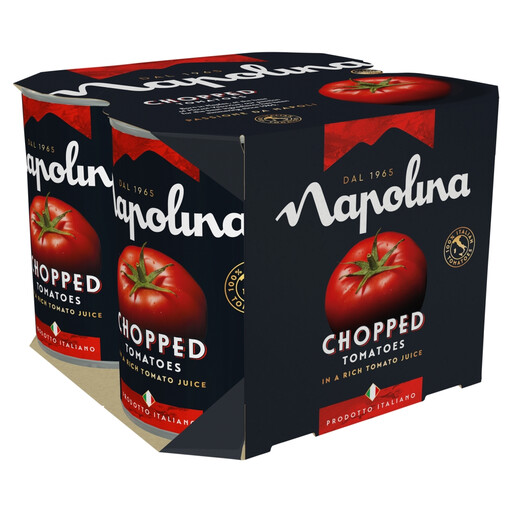
Napolina Chopped Tomatoes, 4 × 400g
Four tins offer a smaller stocking quantity than the larger multipacks here. Napolina describes these chopped tomatoes as chunky and declares 0.10g salt per 100g for its chopped-tomato product; check the pack if a no-added-salt statement matters to you.
View on Joybuy
 No image available
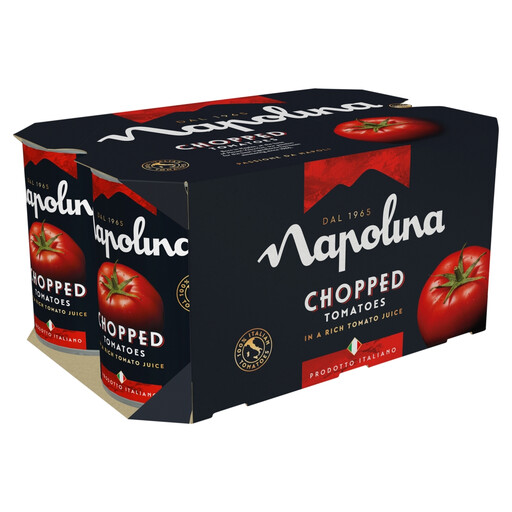
Napolina Chopped Tomatoes, 6 × 400g
This six-tin pack sits between the four- and 24-tin Napolina options for cupboard planning. Compare the salt declaration and ingredients on this pack before using it as your regular tomato base.
View on Joybuy
 No image available
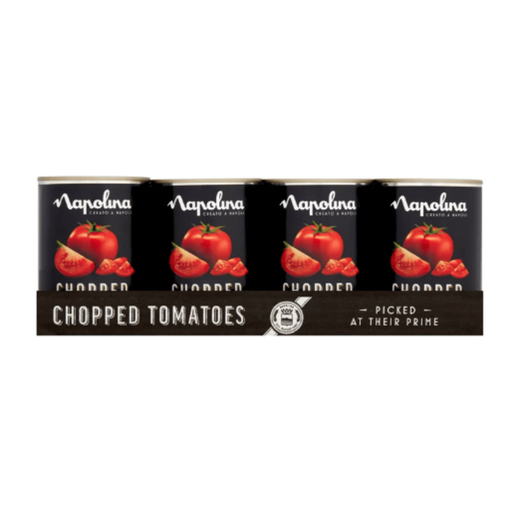
Napolina Chopped Tomatoes, 24 × 400g
Consider this 24-tin pack if your household uses chopped tomatoes frequently and can store the full quantity. Check its salt-per-100g figure and ingredients on the pack rather than assuming they match another pack size.
View on Joybuy
 No image available
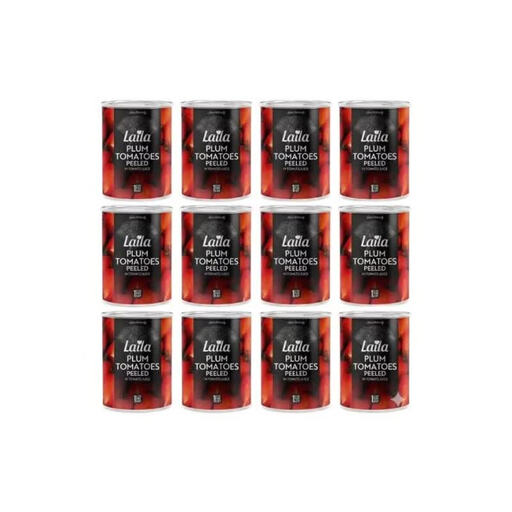
Laila Canned Plum Tomatoes, 12 × 400g
These are whole plum tomatoes, not chopped tomatoes, so choose the 12-tin pack only if that format suits your cooking or you are happy to break up the tomatoes yourself. Check the current pack’s salt declaration for your recipe.
View on Joybuy
Questions about salt and storage
Does “no added salt” mean a tin contains zero salt?
No. The statement concerns added ingredients, while the nutrition table can still declare salt. Biona lists 0.02g per 100g for its no-added-salt Organic Chopped Tomatoes, and Mr Organic lists 0.03g per 100g for its no-added-salt chopped tomatoes.
Which salt figure should I compare?
Compare the declared salt per 100g on the exact tins you are considering, then account for how much tomato goes into your recipe. Check the ingredient list separately if you want to know whether salt has been added.
Can tinned tomatoes be used after their best-before date?
A best-before date concerns quality, not the same deadline as a use-by date. GOV.UK says tinned food is usually safe after its best-before date but may have declined in quality; follow the pack’s storage instructions and do not use a damaged tin.
How should I store leftover tomatoes from an opened tin?
Follow that product’s label rather than applying one period to every tin. M&S instructs shoppers to transfer its cited tomatoes to a non-metallic container and refrigerate them, using the standard variant within three days and the organic variant within two; Mr Organic specifies 72 hours after transfer. GOV.UK says food labelled for refrigeration after opening should be kept at 5°C or below.
Should I buy a damaged tomato tin for pantry storage?
No. Reading Borough Council advises shoppers not to buy damaged cans. Inspect each tin before adding it to a pantry stock, including tins inside a multipack.


