Breakfast chefs preparing cooked tomatoes
Choose a chopped or finely chopped format to match the intended dish, then plan how it will be held during buffet service.


For a hotel breakfast buffet, choose plain tinned tomatoes by checking the ingredient list and comparing declared sugars per 100g, rather than relying on reduced-sugar wording. Total sugars do not tell you whether sugar was added; texture, salt, opened-can instructions and hot-holding controls also affect which tin suits the dish and service.
Choose a chopped or finely chopped format to match the intended dish, then plan how it will be held during buffet service.
Compare labels on a per-100g basis and check ingredients separately, so naturally occurring tomato sugars are not mistaken for added sugar.
Check whether sugar is listed as an ingredient when selecting tomatoes. The NHS explains that naturally occurring sugars in vegetables appear in total-sugars labelling but do not count as free sugars.
Start with the recipe and the label, then check whether the pack instructions fit the kitchen’s preparation and service routine.
| Priority | What to check | Your needs |
|---|---|---|
| Sugars and ingredients | Compare declared sugars per 100g across tins. Read the ingredient list separately for sugar or other sweetening ingredients; the total-sugars figure includes naturally occurring tomato sugars, as the NHS explains. | I want to choose tomatoes without mistaking their labelled total sugars for proof that sugar has been added. |
| Texture | Check whether the tomatoes are chunky chopped or finely chopped, and whether the format suits the recipe. Napolina describes its chopped tomatoes as chunky; Mutti describes Polpa as finely chopped. | Visible tomato pieces matter in one breakfast dish, while a finer pulp may fit another. I would choose the format for the recipe, not use it as a shortcut for judging sugar content. |
| Salt | Compare salt per 100g alongside sugars. Mutti declares 0.30g salt per 100g for Polpa, while Napolina declares 0.10g per 100g for its chopped tomatoes. | If the recipe specification includes salt, I need to account for what the tomatoes contribute rather than selecting on the sugar figure alone. |
| Opened packs | Read the individual pack’s transfer, refrigeration and use-by-opening instructions. Published examples differ: Sainsbury’s specifies use within 2 days after opening, M&S within 3 days and Asda within 4 days. | Our preparation schedule needs to fit the particular tin’s instructions, especially when part of a can remains after breakfast prep. |
| Hot buffet service | Plan suitable hot-holding equipment and temperature checks. Food Standards Agency guidance says hot food displayed on a buffet must be kept at 63°C or above, subject to applicable exceptions. | Once the tomatoes are cooked and displayed hot, I need a service process that maintains the required holding temperature. |
A tin can show sugars on its nutrition panel even when sugar is not listed as an ingredient. The NHS distinguishes naturally occurring vegetable sugars from free sugars.
Compare the per-100g nutrition figures, then read the ingredient list before describing what the product contains.
Plain ingredients and a particular total-sugars figure answer different questions; neither, on its own, settles whether proposed menu wording is appropriate.
Check the current product label and the applicable UK conditions for the exact nutrition claim before using it on a menu.
Mutti declares 2.8g sugars and 0.30g salt per 100g for its finely chopped Polpa. A fine pulp may not provide the visible pieces wanted in a particular dish.
Set the recipe’s texture requirements first, then compare sugars, salt and ingredients across suitable formats.
Opening, heating and displaying tomatoes introduce handling and temperature controls that do not apply to an unopened tin.
Follow the chosen pack’s instructions for leftovers. For cooked tomatoes displayed hot, Food Standards Agency guidance specifies holding at 63°C or above, subject to applicable exceptions.
These product specifications help compare formats and labels; a brand’s inclusion does not indicate which products a hotel can currently obtain.
Mutti Polpa is a finely chopped tomato product for recipes calling for a finer pulp.
Napolina describes its chopped tomatoes as chunky, for dishes where pieces should remain visible.
Tesco Italian Chopped Tomatoes come in a 4 x 400g multipack.
Sainsbury’s 400g chopped tomatoes are listed with tomatoes, concentrated tomato juice and citric acid.
Asda’s 400g chopped tomatoes provide another plain chopped format for label comparison.
M&S Chopped Italian Tomatoes are listed with tomato juice and citric acid.
These chopped and finely chopped tinned tomatoes offer different pack formats for preparing cooked breakfast dishes. Check the current pack label against your recipe and handling requirements.
 No image available
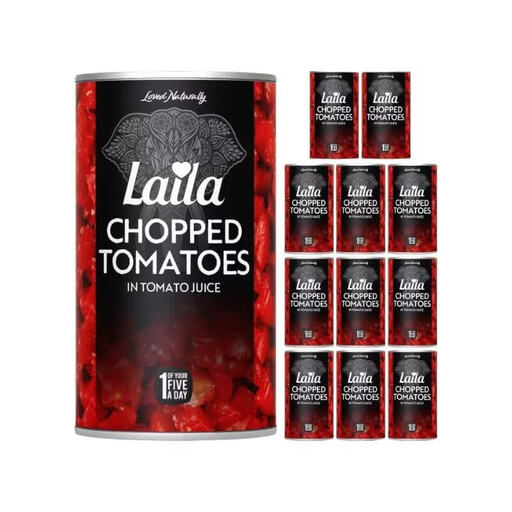
The 12-can pack is an option for a kitchen preparing chopped tomatoes across multiple batches. Check the delivered label for its nutrition figures and instructions for any contents left after opening.
 No image available
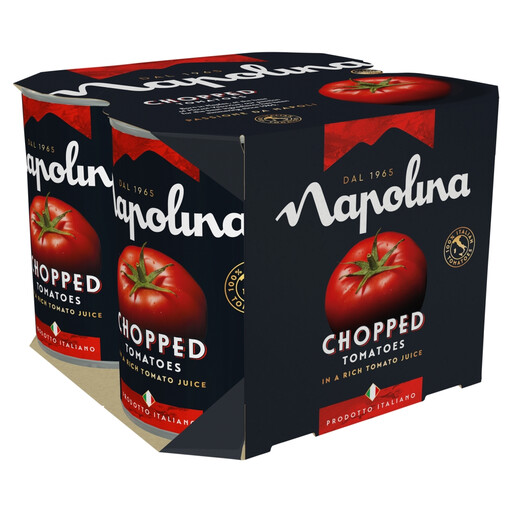
Consider this four-can pack where the dish calls for chopped tomatoes with visible pieces. Napolina declares 3.6g sugars and 0.10g salt per 100g for its chopped tomatoes; confirm the delivered pack label.
 No image available
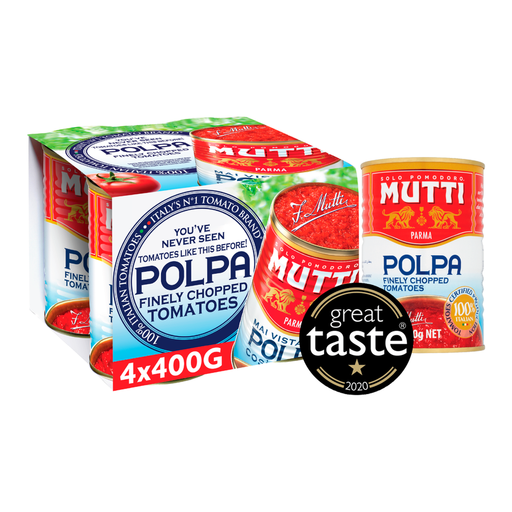
The finely chopped format suits a recipe that calls for a finer tomato pulp rather than visible chunks. Mutti declares 2.8g sugars and 0.30g salt per 100g for Polpa; check both figures on the delivered pack.
 No image available
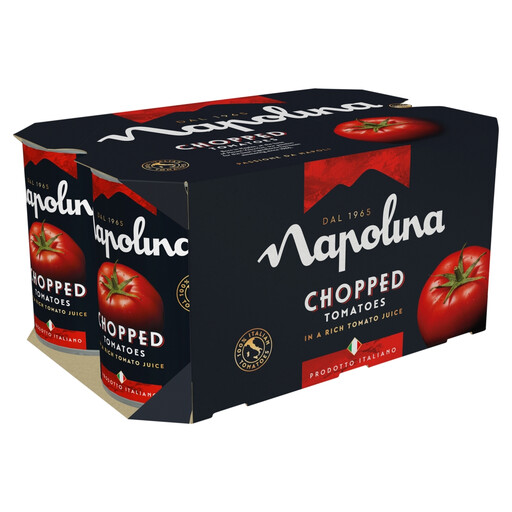
This six-can format offers the same chopped-tomato recipe choice in a different pack quantity from the four-can option. Napolina describes its chopped tomatoes as chunky; check the delivered label and opened-can instructions before service.
 No image available
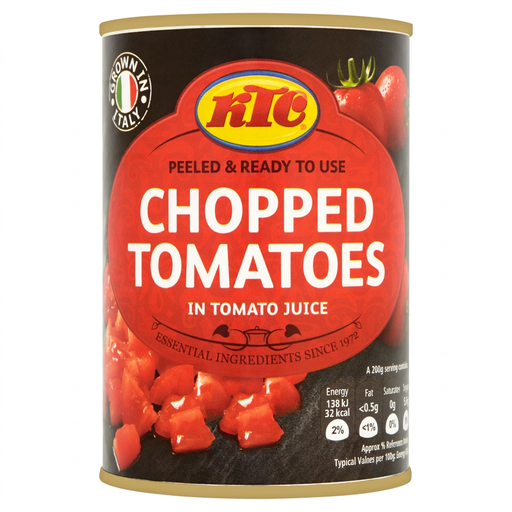
The single 400g can is a chopped-tomato option when that pack size fits the recipe. Check its current nutrition label and opened-can storage directions as part of the kitchen’s product approval.
No. The total-sugars figure includes naturally occurring sugars in tomatoes, as the NHS explains. Read the ingredient list separately to check for added sugar or other sweetening ingredients.
Do not assume that plain ingredients or a lower total-sugars figure justify that wording. Check the current delivered product and the applicable UK conditions for the specific nutrition claim before using it on a menu.
Choose the format that matches the dish: chopped tomatoes where visible pieces are wanted, or finely chopped tomatoes where a finer pulp is wanted. The format alone does not establish its sugar content, so compare the labels separately.
Follow the particular pack’s refrigeration and use instructions. Published instructions differ: Sainsbury’s specifies use within 2 days after opening, M&S within 3 days and Asda within 4 days. Fit those instructions into the hotel’s food-safety procedure.
Food Standards Agency guidance says hot food displayed on a buffet must be kept at 63°C or above, subject to applicable exceptions. Use suitable hot-holding equipment and include temperature checks in the hotel’s service controls.