Cooks comparing sugars in savoury dinners
If you are making pasta sauce, chilli, soup or a casserole, the tin’s total-sugars figure gives you a basis for comparing tomato ingredients before you add anything else to the dish.


For a comforting tomato-based dinner, compare total sugars per 100g rather than assuming a familiar brand or a naturally sweet flavour tells you what is in the tin. Choose standard chopped tomatoes when you want pieces in a sauce or stew, or finely chopped tomatoes for a more even texture; check salt and ingredients separately, because texture does not determine either figure.
If you are making pasta sauce, chilli, soup or a casserole, the tin’s total-sugars figure gives you a basis for comparing tomato ingredients before you add anything else to the dish.
Check “of which sugars” per 100g alongside the ingredients. As the NHS explains, naturally occurring sugars in vegetables appear in the total-sugars figure; that figure alone does not show whether sugar was added.
Standard chopped tomatoes leave more distinct pieces at first. Finely chopped tomatoes are worth considering when you want a more even tomato base without blending.
Compare nutrition on the same per-100g basis, then choose a tomato format that works for the dinner you are making.
| Priority | What to check | Your needs |
|---|---|---|
| Total sugars | Compare “of which sugars” per 100g across comparable tins. Read the ingredients to distinguish plain tomatoes from a prepared sauce; the sugars figure alone does not identify added sugar. NHS food-label guidance describes 5g total sugars or less per 100g as low. | I want to compare tomato bases without mistaking the tomatoes’ naturally occurring sugars for an added ingredient. |
| Tomato texture | Check whether the tin contains standard chopped, finely chopped or whole peeled tomatoes. Whole tomatoes may need crushing or chopping if the recipe calls for smaller pieces. | For a rustic stew, I can use chopped pieces; for a more even pasta sauce, I would consider a finely chopped format. |
| Salt | Read salt per 100g alongside sugars, particularly when the recipe also uses stock, cheese or other salty ingredients. Tesco lists 0.10g per 100g for Napolina Chopped Tomatoes; Mutti lists 0.30g per 100g for its Polpa. | My casserole already contains seasoned ingredients, so I want to know what the tomatoes contribute before adding more seasoning. |
| Leftovers | Follow the exact tin’s directions for transferring, covering and refrigerating unused tomatoes. Tesco lists use within 2 days after opening for its Everyday Value Chopped Tomatoes and the Napolina tin; the checked Cirio listings from Waitrose and Sainsbury’s say 3–4 days. | If one tin will cover two meals, I need to plan the second dish around its opened-pack instructions. |
Tomatoes’ naturally occurring sugars are included in the total-sugars figure, so taste or a description on the pack cannot establish what has been added.
Compare “of which sugars” per 100g and read the ingredients list.
Portion figures can make a direct comparison between tins harder to interpret.
Start with the per-100g figures, then consider how much tomato the recipe uses.
Tins with different sugars figures can also have different salt figures, which matters when choosing ingredients for an already seasoned dish.
Compare sugars and salt per 100g on the specific products you are considering.
Opened-pack directions differ between the checked Tesco, Napolina and Cirio products, so one tin’s period should not be applied to another.
Transfer unused contents where directed, cover and refrigerate them, and follow the use-within period on your tin.
These figures describe specific labelled products, not every tomato tin made by each brand.
Its Italian Tomatoes provide a chopped-tomato reference for a per-100g comparison.
Everyday Value Chopped Tomatoes are an own-label example to compare with other plain chopped tins.
The checked Chopped Tomatoes 400G product is a plain chopped option for sauces and stews.
Mutti describes its Polpa as finely chopped and suitable for long cooking when a more even tomato texture is wanted.
The checked listings include both standard chopped tomatoes and a finer Polpa Fine format.
These options include chopped and finely chopped tomatoes, plus whole peeled tomatoes for cooks prepared to crush or chop them for a sauce or stew.
 No image available
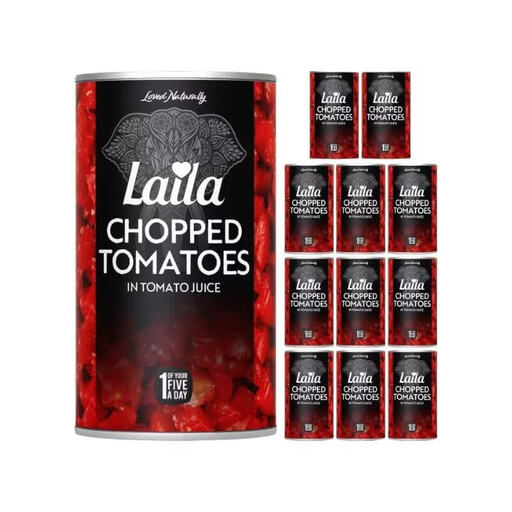
Chopped tomatoes for a sauce, soup or stew. Consider whether a 12 × 400g pack fits the number of meals you plan to make; compare sugars and salt on the tin’s per-100g label.
 No image available
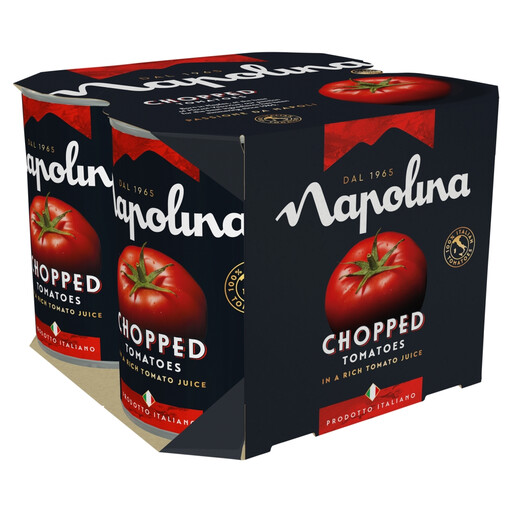
A chopped format to consider for pasta sauce, soup or a casserole. Check the nutrition and opened-pack directions on this four-tin pack rather than applying figures from another Napolina listing.
 No image available
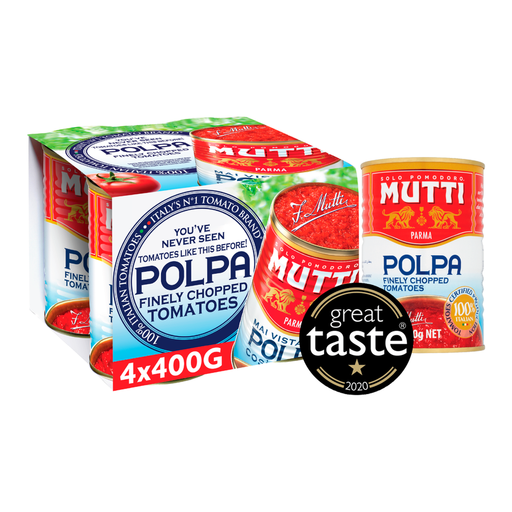
Consider the finely chopped format when you want smaller tomato pieces in a sauce or bake. This is a 4 × 400g pack; read the exact label for sugars, salt and opened-pack storage.
 No image available
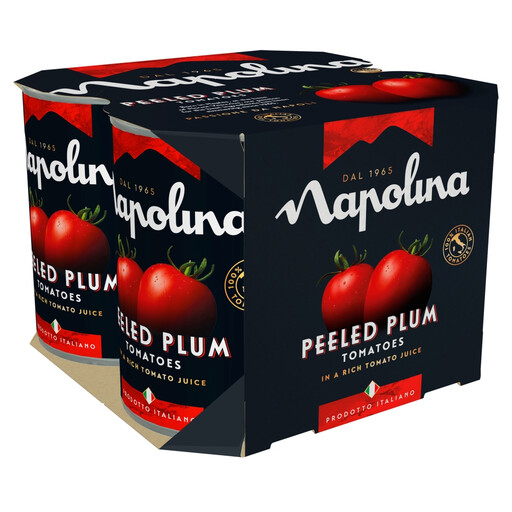
Whole peeled tomatoes are an alternative for a sauce or stew if you are willing to crush or chop them. This 4 × 400g pack is not a ready-chopped substitute; check its own per-100g label when comparing tins.
 No image available
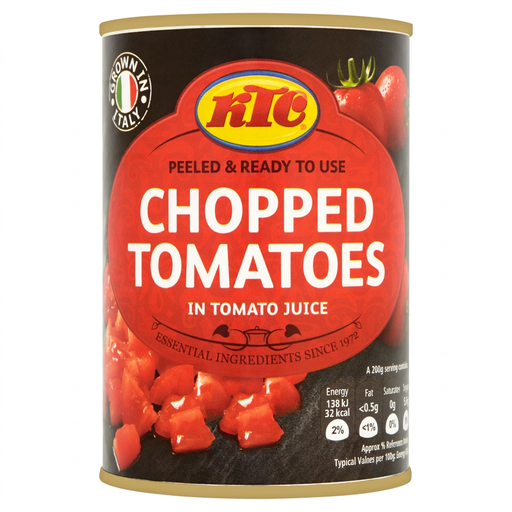
A single chopped-tomato tin to consider for a sauce, soup or stew. Compare its sugars and salt per 100g with other tins, and follow the storage directions on the tin if you have leftovers.
No. The NHS explains that naturally occurring sugars in vegetables are included in the total-sugars figure. Compare “of which sugars” per 100g to assess the labelled amount, and read the ingredients list to check what has been added.
NHS food-label guidance describes 5g total sugars or less per 100g as low for foods. Use that as context for the figure on the exact tin, while checking its ingredients and salt separately.
Choose standard chopped tomatoes if you want pieces in a chilli, soup or stew; consider finely chopped tomatoes for a more even sauce or bake. Compare the nutrition labels independently, because the size of the tomato pieces does not establish the sugars figure.
Follow the storage and use-within directions on the individual tin, including transferring unused contents where directed, covering them and refrigerating them. Tesco’s checked Everyday Value and Napolina listings say to use leftovers within 2 days; the checked Cirio listings from Waitrose and Sainsbury’s say 3–4 days.