What to check on a tin
Start with the person’s eating circumstances, then compare the ingredients and per-100g panel on tins of a similar type.
| Priority |
What to check |
Your needs |
| Added sugar |
Read the ingredients for sugar. Read the per-100g sugars figure separately: according to the NHS, total sugars include those naturally present in vegetables. |
I want to avoid sugar listed as an ingredient without rejecting a plain tomato tin simply because its nutrition panel shows sugars. |
| Comparable figures |
Compare sugars per 100g between similar tins, not one product’s serving with another product’s per-100g figure. Check the current label for any formulation changes. |
Different serving sizes should not make the choice for me; I want to compare the same quantity of each product. |
| Carbohydrate and meals |
For someone managing diabetes, read total carbohydrate per 100g as well as sugars. Consider the amount used in the meal and the person’s care plan; Diabetes UK advises using the detailed back-of-pack panel. |
If I am shopping for someone with diabetes, I need more than the sugars figure to consider how the tomatoes fit into a meal. |
| Food intake |
Consider appetite and any unintentional weight loss before making sugar reduction a rule. NHS guidance identifies malnutrition risk in older people, and NHS Harrogate and District guidance cautions against blanket dietary restriction for every older person with diabetes. |
When someone is eating poorly or losing weight, I need individual nutrition advice rather than a rule to choose the tin with the least sugar. |
| Pack and storage |
Choose a pack quantity that suits likely use. After opening, follow that tin’s instructions for transferring and refrigerating leftovers and for when to use them. |
I want to use the tomatoes while following the storage directions for the product I bought. |
Brand and product-line references
These label examples concern specific products, not every tin made by each brand; compare the product in hand before choosing.
Napolina
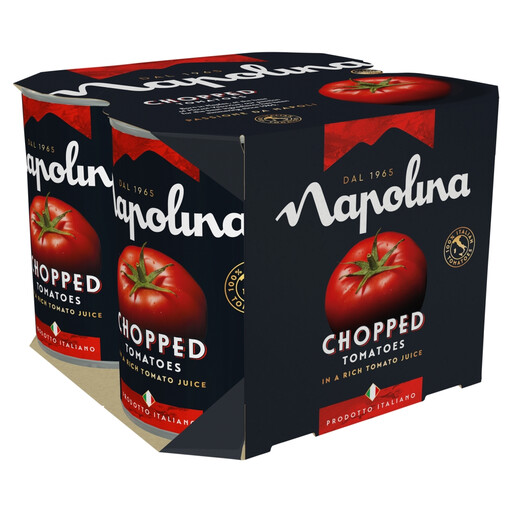
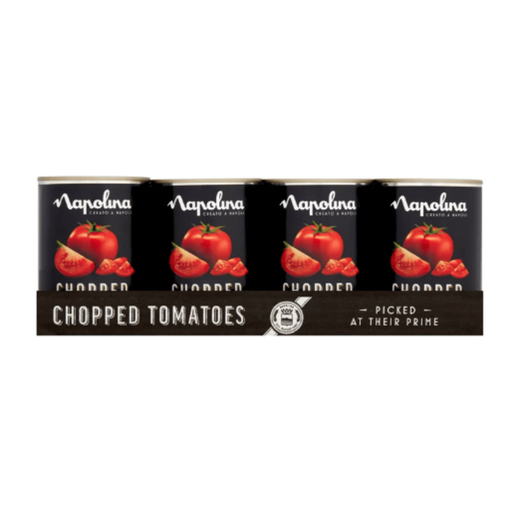
The Napolina Chopped Tomatoes 4 x 400g listing at Tesco describes a plain chopped-tomato multipack.
- Tesco lists tomatoes and citric acid as its ingredients, with no sugar listed, and declares 3.6g total sugars and 0.10g salt per 100g.
- The 3.6g figure is total sugars, not a measure of added sugar. Check the label on the pack being purchased.
Mutti
Mutti describes Polpa as finely chopped tomatoes. Polpa is a different product from the peeled-tomato tins shown below.
- Mutti’s Polpa product page lists tomato 99.8% and salt, with 2.8g sugars and 0.30g salt per 100g.
- Those figures come from Mutti’s product page, not a UK retail label. Check the UK pack before using them to compare products.
Tesco
Tesco Everyday Value Chopped Tomatoes is an own-label example for comparing plain chopped-tomato ingredients and per-100g values.
- Tesco lists tomato, tomato juice and citric acid, and declares 2.8g sugars per 100g.
- Check the current pack’s ingredients and nutrition panel, as formulations can change.
Sainsbury's
Sainsbury’s Chopped Tomatoes Can 400g is an own-label chopped-tomato example with published per-100g information.
- Sainsbury’s lists tomatoes, concentrated tomato juice and citric acid, with 3.5g sugars and 0.07g salt per 100g.
- Use the current can label for the purchase decision, since ingredients can change.
Asda
Asda Chopped Tomatoes 400g is another plain chopped-tomato label to compare.
- ASDA Groceries lists tomatoes, concentrated tomato juice and citric acid, with 3.8g sugars and 0.01g salt per 100g.
- Its declared sugars are total sugars; the figure does not establish how much, if any, is added sugar.
M&S
M&S Organic Italian Chopped Tomatoes offers an organic own-label product for a label comparison.
- Marks & Spencer lists organic tomatoes, organic tomato juice and citric acid, with 3.4g sugars and 0.03g salt per 100g.
- Check the current can label, as the product information may change.
Tinned tomato options on Joybuy
These options include Napolina chopped tomatoes in different pack sizes and Mutti peeled tomatoes. Choose the tomato format and quantity that suit your cooking, then check the current ingredients and per-100g nutrition label; none of these product names establishes a reduced-sugar claim.
 No image available
Napolina Chopped Tomatoes 4 x 400g
A four-tin chopped-tomato pack for cooking meals. Tesco’s listing for this 4 x 400g product declares 3.6g total sugars per 100g and lists no sugar in the ingredients; check the current cans before relying on those figures.
View on Joybuy
 No image available
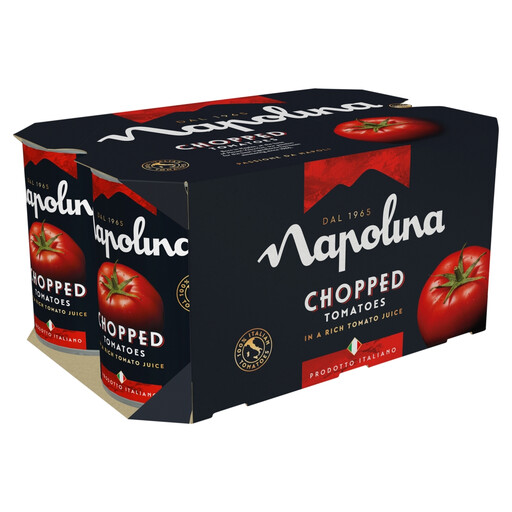
Napolina Chopped Tomatoes 6 x 400g
A six-tin chopped-tomato pack if that quantity suits planned meals and storage space. Check this pack’s current ingredients and per-100g sugars and carbohydrate rather than assuming another Napolina pack has the same label.
View on Joybuy
 No image available
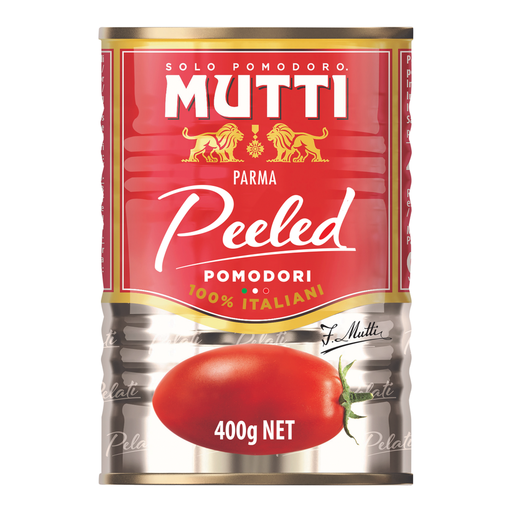
Mutti Peeled Tomatoes 400g
A single 400g tin of peeled tomatoes rather than chopped tomatoes. If comparing it with a chopped variety, check both the format you need for cooking and the current per-100g nutrition panel.
View on Joybuy
 No image available
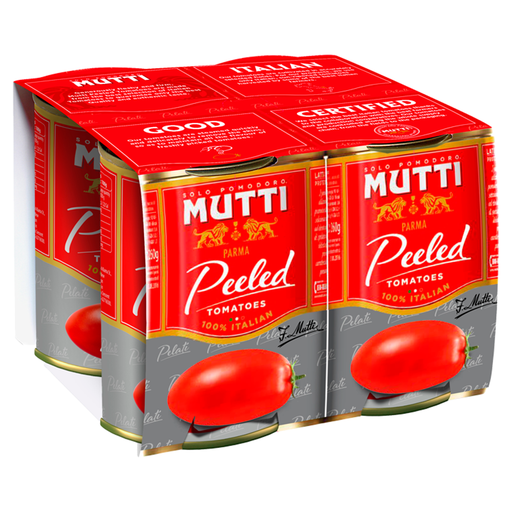
Mutti Peeled Tomatoes 4 x 400g
A four-tin pack for meals calling for peeled rather than chopped tomatoes. Compare the current ingredients and per-100g figures on this pack with any alternative you are considering.
View on Joybuy
 No image available
Napolina Chopped Tomatoes 24 x 400g
A 24-tin chopped-tomato pack for households that can use and store that quantity. Check the current can label for ingredients, per-100g figures and opened-tin storage directions.
View on Joybuy
Questions about sugar and tinned tomatoes
Does “of which sugars” mean sugar was added to tinned tomatoes?
No. The NHS explains that total sugars on a food label include sugars naturally present in vegetables, which do not count as free sugars. Read the ingredients to check whether sugar is listed, and use the per-100g figure to compare similar tins.
Should an older person with diabetes choose the tin with the least sugar?
Not automatically. Diabetes UK advises checking carbohydrate information on the food label and says there is no single special “diabetic” diet. Consider the amount of tomatoes eaten and the rest of the meal within the person’s care plan, rather than treating a small difference in total sugars as a treatment decision.
When should sugar reduction take a back seat to other nutrition concerns?
If an older person is eating poorly or losing weight unintentionally, seek GP or dietitian advice before applying a blanket restriction. The NHS identifies people aged 65 and over as particularly at risk of malnutrition, while NHS Harrogate and District guidance says restricting sugar, fat and salt may not be appropriate for every older person with diabetes.
How should I compare and store tinned tomatoes?
Compare similar products using the same per-100g basis, then check the quantity you will use. After opening, follow the storage and use-within instructions on that exact tin rather than carrying over directions from another product.


