Office lunch meal-preppers
If you cook pasta sauce, soup, chilli or bean dishes at home for work lunches, choose a tomato texture that fits the recipe. Check the tin’s instructions before planning to use any remainder in another meal.


For make-ahead office lunches, plain chopped tomatoes give you a flexible base for sauces, soups and chilli; choose a chunkier or finer texture according to the dish you plan to cook. An organic or seasoned tin makes sense when that particular attribute suits your recipe. If you use only part of a tin, follow its own instructions for refrigerating and using the remainder.
If you cook pasta sauce, soup, chilli or bean dishes at home for work lunches, choose a tomato texture that fits the recipe. Check the tin’s instructions before planning to use any remainder in another meal.
If you use tinned tomatoes for repeated lunches, consider how many tins you will use and whether plain chopped tomatoes cover your usual recipes. A larger pack is useful only if its contents suit your cooking plans.
A chunky sauce base, fine pulp, organic ingredients and a particular declared salt value are different reasons to choose a tin. Compare the attributes that matter for your dish on the exact product label.
Start with the dish you intend to make, then check the format, ingredients and opened-tin instructions. Pack quantity matters when you are planning several lunches.
| Priority | What to check | Your needs |
|---|---|---|
| Tomato texture | Check whether the tin contains chopped tomatoes, finely chopped pulp or plum tomatoes. Consider whether the recipe calls for visible pieces or whether you want to crush or blend the tomatoes. | For a sauce with tomato pieces, I would choose chopped tomatoes. For a finer base, I would look at finely chopped pulp. |
| Ingredients and seasoning | Read the ingredient list rather than assuming every chopped-tomato tin is plain. Asda’s chopped tomatoes with herbs, for example, list sugar, basil, oregano and flavourings. | If I am seasoning several portions myself, I want to know whether herbs or other ingredients are already in the tin. |
| Pack quantity | Check both the size of each tin and the number of tins in a multipack. Match the quantity to the recipes you expect to cook. | A single tin may suit one cooking session; for repeated batches, I may want several separate tins in the cupboard. |
| Opened-tin storage | Follow the exact product’s instructions for transferring, covering and refrigerating unused contents. Stated open-life differs: Sainsbury’s SO Organic says two days, M&S says three days and Asda’s plain chopped tomatoes say four days. | When a recipe uses only part of a tin, I need a plan to use the remainder within that tin’s stated period. |
| Organic and salt labels | Check that an organic claim applies to the product you are buying. To compare declared salt, use the same basis on each label, such as per 100 g, and check the current pack. | If organic ingredients or a particular declared salt value matters to me, I will compare those details on the exact tins. |
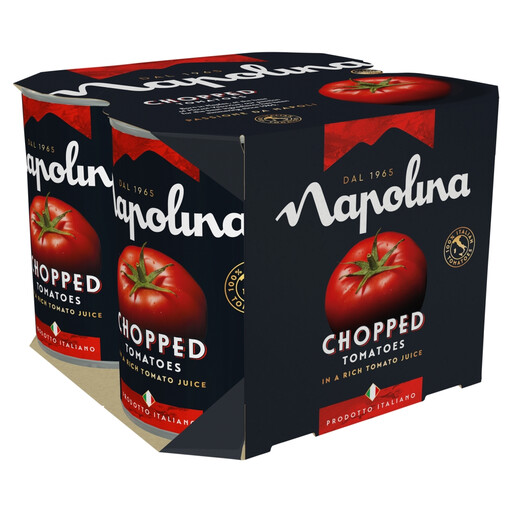
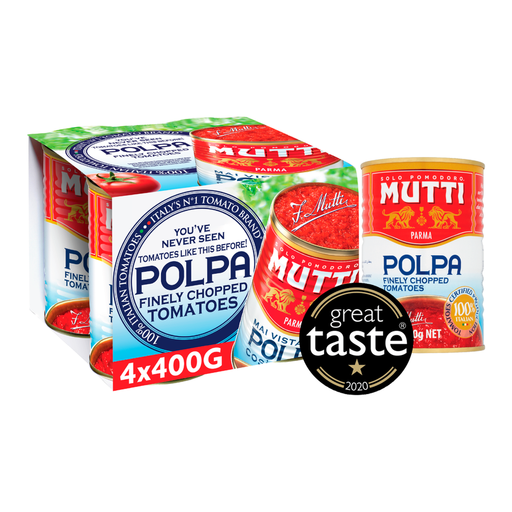
Napolina describes its chopped tomatoes as chunky, while Mutti describes Polpa as finely cut pulp. Those formats will not give a sauce the same texture.
Decide whether you want visible pieces or a finer tomato base before selecting a tin. If you choose plum tomatoes, allow for crushing or blending when the recipe needs a finer texture.
Opened-tin instructions vary by product. The stated periods for Sainsbury’s SO Organic, M&S and Asda’s plain chopped tomatoes are not interchangeable.
Read your tin’s directions, refrigerate unused contents as instructed and plan another dish within its stated open-life.
A seasoned product can change the flavour of a batch-cooked sauce. Asda’s chopped tomatoes with herbs list sugar, basil, oregano and flavourings as well as tomato ingredients.
Choose a plain ingredient list when you want to control the seasoning yourself, and check the label if comparing declared salt.
These examples show different product attributes to check; a brand name alone does not tell you the texture, ingredients or storage instructions of every tin in its range.
Tesco Italian Chopped Tomatoes are a plain chopped option for recipes where you want to add your own seasoning.
Asda has plain chopped tomatoes and a separate chopped-tomato product with herbs.
Sainsbury’s SO Organic Italian Chopped Tomatoes are an option when organic ingredients are a specific requirement.
Napolina describes its chopped tomatoes as chunky and intended for thick sauces.
Mutti Polpa is a finely chopped tomato pulp with juice for cooks who prefer smaller pieces in a sauce.
M&S Chopped Italian Tomatoes provide another labelled option for comparing ingredients and declared salt.
These options cover chopped and finely chopped tomatoes for preparing lunches, plus plum tomatoes for recipes where you want to control the final texture. Pack sizes range from a single tin to multipacks.
 No image available
Consider these chopped tomatoes for a sauce where you want tomato pieces; Napolina describes the texture as chunky. The pack contains four 400 g tins. For this pack, the product information says to refrigerate opened contents and use them within two days.
 No image available
Choose the finely chopped format when you want smaller tomato pieces in a sauce. This is a pack of four 400 g tins. The product information specifies refrigeration after opening and use within five days; check the pack for the full handling directions.
 No image available
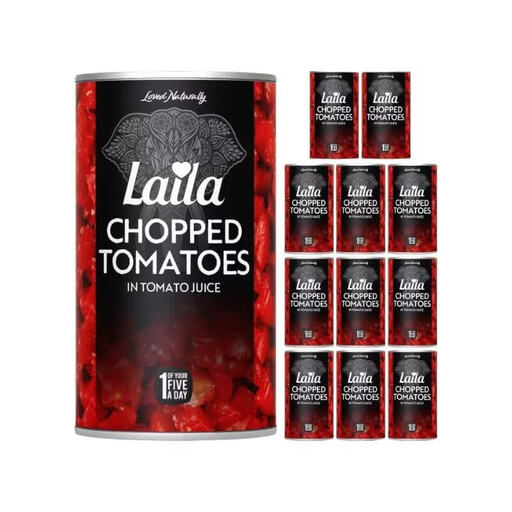
The twelve-tin pack suits repeated cooking if chopped tomatoes are a regular ingredient in your lunches; it is a substantial quantity if you use them only occasionally. Each tin is 400 g. The product information says to transfer opened contents to a non-metallic airtight container, refrigerate and use within two days.
 No image available
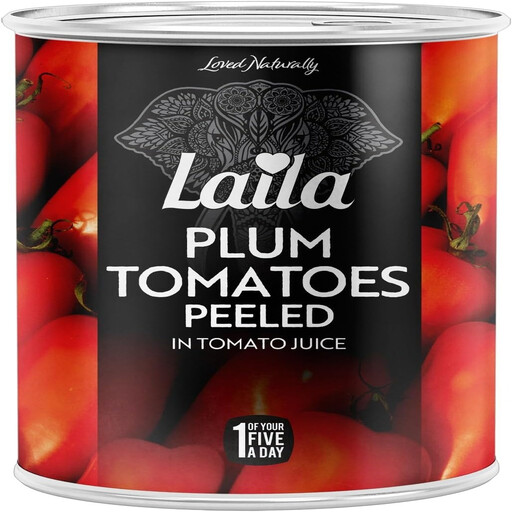
This single 400 g tin offers plum tomatoes for a recipe where you want to decide how far to break them down. Crush or blend them if your sauce needs a finer texture. The product information says to transfer leftovers to a non-metallic container, refrigerate and use within two days.
Use them as an ingredient when preparing a lunch at home, such as a pasta sauce, soup, stew or chilli. Chopped tomatoes give you pieces of tomato; finely chopped pulp is an option when you want a finer sauce base. Plan how the finished meal will be stored and carried separately from how you store an unopened tin.
Follow that tin’s instructions for storing and using the remainder. For example, Sainsbury’s SO Organic says to transfer contents to a non-metallic container, refrigerate and use within two days; M&S states three days, while Asda’s plain chopped tomatoes state four days. Do not apply one product’s period to another.
A best-before date concerns quality rather than being a use-by date. GOV.UK says tinned food is usually safe after its best-before date but may not be of the same quality. Follow the label’s storage directions and check the tin and its contents before use.
No particular certification or brand is needed simply because the tomatoes are for a work lunch. Choose Sainsbury’s SO Organic when its organic attribute matters to you, or consider the textures described by Napolina and Mutti when they suit your recipe; a plain chopped product may cover other dishes.
Check the ingredients before substituting them. Asda’s chopped tomatoes with herbs contain sugar, basil, oregano and flavourings alongside tomato ingredients, which may change the seasoning of a batch-cooked dish. Plain tomatoes leave that seasoning choice to you.