
24/7 Customer Support

Free returns

Same-day & Next-day Delivery

Quality Guaranteed

Unlock Your Welcome Offers: FREE Delivery | Up to 80% OFF | Free 30-day JoyPlus trial
Download the APP
Tinned tomatoes are a dependable UK cupboard staple, but choosing the wrong format can leave you with a watery pasta sauce, uneven texture or more product than you can use before opening. Families, meal planners, vegetarians, vegans and caterers all have different requirements, so the most suitable option depends on how you cook and how quickly you use it.
The main buying mistakes are easy to overlook:
Different tomato products perform different jobs:
A short ingredient list makes it easier to understand what you are buying. For example, some products contain tomatoes and tomato juice with citric acid, while others may include salt, onion, garlic or added sugar.
Compare the salt per 100g, especially if you regularly use several cans in one meal. The listed carbohydrate and sugar values also vary between products, although the figures should always be checked on the current packaging because formulations and labelling can change.
For dietary requirements, look for the relevant suitability statement and allergen information on the label. Several products in this selection are marked as suitable for vegetarians or vegans, but packaging remains the final reference.
A standard 400g can is useful for many household recipes and commonly provides around two larger portions, depending on the dish. A 4-pack or 6-pack can suit weekly meal planning, while bulk tinned tomatoes in a 12- or 24-can case may be more practical for families, caterers and restaurants.
Unopened cans should generally be kept in a cool, dry place. Once opened, transfer leftovers to a non-metallic container, refrigerate and follow the stated use-by guidance. The recommended period varies: some supplied product information advises using opened chopped or plum tomatoes within two days, while certain concentrated purées allow longer storage. Always follow the label for the product you purchase.
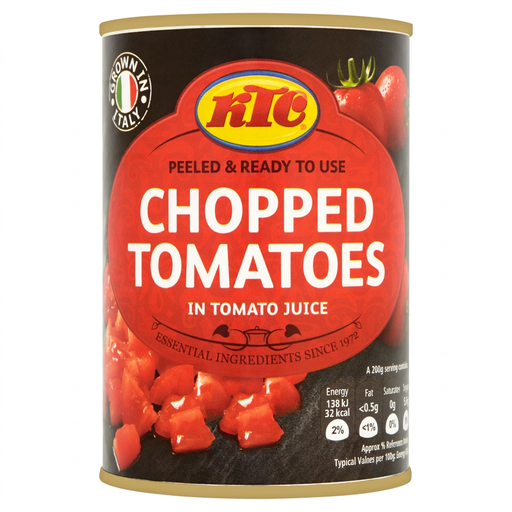
Why This Fits Their Persona: A single 400g can is a manageable starting point for students, small households and occasional cooks making pasta, soup or a simple stew.
The product format is clearly stated as chopped tomatoes in tomato juice, avoiding confusion with passata or concentrated purée.
400g ready-to-use format; listed as peeled and suitable for vegetarians.
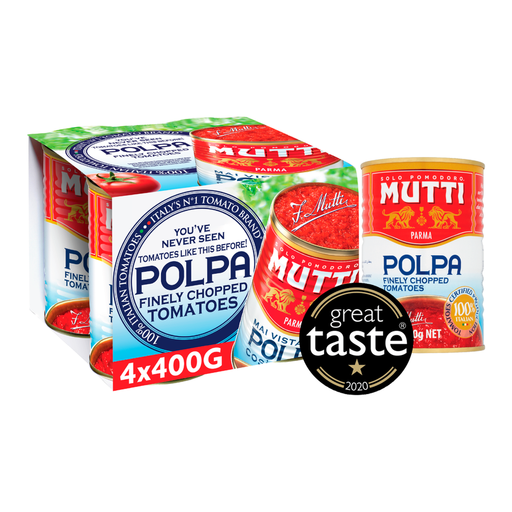
Why This Fits Their Persona: Suitable for home cooks who regularly prepare pizza, fish dishes, pasta sauces or recipes requiring extended cooking.
The finely chopped texture is specified clearly, making it easier to avoid buying whole tomatoes when an even texture is needed.
Four 400g cans; ingredients list tomato and salt, with tomatoes stated as 99.8%.
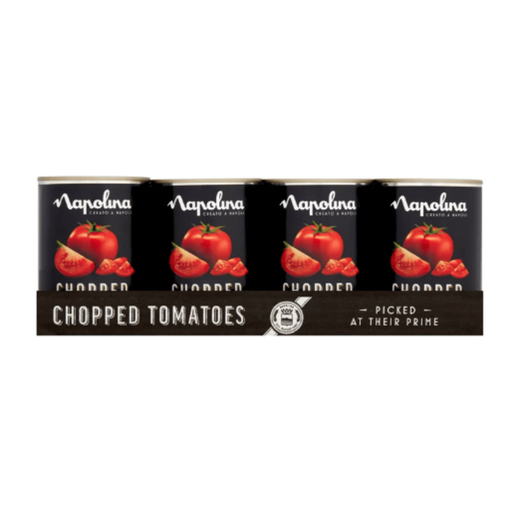
Why This Fits Their Persona: A bulk option for large families, meal planners, caterers and restaurants that use chopped tomatoes frequently.
The case quantity and individual 400g can size are both visible, helping buyers judge storage needs and portion planning before purchase.
24 x 400g multipack; chopped texture suited to sauces, soups, stews and casseroles.
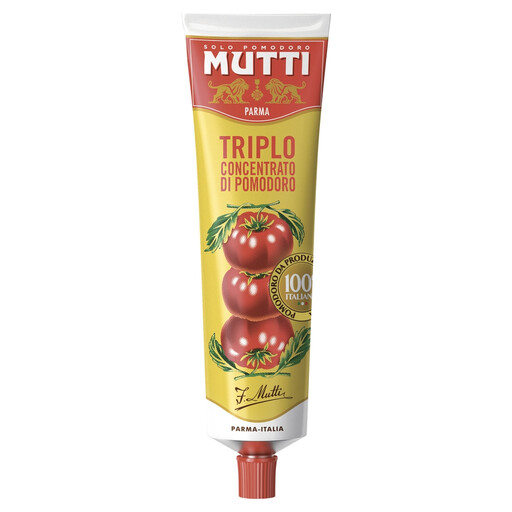
Why This Fits Their Persona: Designed for cooks who build flavour in braises, stews, gravies and slow-cooked sauces using small measured quantities.
Its triple-concentrate format is stated directly, so it is not mistaken for a pourable tomato sauce or passata.
200g tube; ingredients list 99.6% tomato and salt; dry matter content is listed as 36% minimum.
We have compiled a complete, real-time list of products that fully satisfy these strict selection criteria and UK safety regulations.
Yes. Chopped tomatoes, peeled plum tomatoes and passata can all be used in batch-cooked pasta sauces, soups, curries and stews. Cool cooked food promptly, refrigerate or freeze it in suitable containers, and follow standard food-safety guidance. For unopened cans, check that the packaging is intact and store them in a cool, dry cupboard.
The period depends on the product. Many chopped and peeled tomato products advise transferring leftovers to a non-metallic container, refrigerating them and using them within two days. Some purées provide a longer window after opening. Check the individual label rather than applying one storage period to every product.
Passata provides a smooth base that can be seasoned and spread easily. Finely chopped tomatoes can also work, particularly when a more textured sauce is preferred, but they may need simmering to reduce excess liquid. For a quick choice, compare the texture, drained consistency and storage instructions before buying.