Shoppers checking sugar on the label
If the tuna itself needs to contribute little sugar to a Bonfire Night dish, compare the per-100g figure on the exact tin. Sauces and other additions need checking separately.


For a lower-sugar tuna base, compare the sugar figure on the exact tin rather than relying on its packing liquid or looking for a reduced-sugar label. The plain spring-water examples listed by Tesco Groceries and M&S show 0g sugars per 100g, while the Sainsbury's brine example shows less than 0.5g per 100g; check whether each figure is for drained tuna or the product as sold. For a shared Bonfire Night dish, also weigh up drained quantity and pack count, or choose a no-drain format if quick assembly matters more.
If the tuna itself needs to contribute little sugar to a Bonfire Night dish, compare the per-100g figure on the exact tin. Sauces and other additions need checking separately.
For a shared jacket-potato topping, pasta bake or sandwich filling, pack count and drained weight help you work out how much tuna is available for the planned portions.
A no-drain tin can remove a preparation step when food needs assembling quickly. Check its packing liquid, salt figure and instructions for storing opened contents.
| Concern | What to check | Who this matters to |
|---|---|---|
| Sugar in the tuna | Compare “of which sugars” per 100g on the same drained or as-sold basis. Check the ingredients of dressed or flavoured products separately. | If I want to keep sugar in the tuna base to a minimum, I need its own label figure rather than a figure for the finished dish. About 36% of consumers put a comparable sugar value first. |
| Quantity for a shared meal | Check the number of tins and their drained weight where shown; follow the tin's instructions for any opened leftovers. | When making a shared Bonfire Night dish, I need enough usable tuna without opening tins I cannot finish. Having the right quantity is the primary concern for about 29% of consumers. |
| Quick serving | Confirm that the exact variant is no-drain, then check its packing liquid and per-100g salt figure. | If I am assembling food close to serving time, skipping the draining step matters more to me than the format of a conventional tin. Quick, low-mess serving comes first for about 21% of consumers. |
| Sourcing information | Look for a certification or fishing-method statement on the precise product, rather than assuming it applies to a whole brand. | I want to see a sourcing statement for the tin I am actually buying before choosing it for the meal. About 14% of consumers make that product-level information their primary concern. |
A plain tin can list 0g sugars per 100g while sauces, chutney or other ingredients contribute sugar to a tuna topping or filling.
Choose the tuna using its own label, then check the other ingredients when assessing the finished recipe.
Tesco Groceries lists 102g drained weight for its 145g spring-water tin. Its Princes four-pack listing gives four 145g tins with 102g drained weight each, so the weight on the front of a tin is not necessarily the amount available after draining.
Use drained weight where stated to plan portions, and check the exact pack if that figure matters to your meal.
The checked Sainsbury's brine product lists 0.42g salt per 100g drained, while the John West no-drain spring-water chunks listed by Tesco Groceries show 0.80g per 100g. These are figures for specific products, not rules for brine or spring water.
Compare the salt panels on the tins you are considering, using the same nutrition basis.
Tuna contains fish, and some product listings warn that bones may remain. Those details matter when preparing food for other people.
Read the allergen and possible-bones statements on each product before serving it.
Its 145g Tuna Chunks in Spring Water offer a single-tin format for a plain tuna base.
The spring-water four-pack gives cooks separate tins for a shared meal or more than one preparation.
The checked No Drain Tuna Chunks with a Little Spring Water are a 3 x 100g option when preparation time or mess matters.
Its checked 145g Tuna Chunks in Brine provide a brine option for shoppers comparing plain tins.
Its 160g Tuna Chunks in Spring Water combine a plain format with a product-specific fishing-method statement.
These tins cover no-drain options for quick assembly and plain brine or spring-water multipacks for a shared Bonfire Night dish. Check the sugar figure and nutrition basis on the exact variant; pack size alone does not establish drained quantity.
 No image available
A no-drain spring-water option for assembling a tuna dish without a draining step. The Joybuy listing states 0g sugars and 0.80g salt per 100g. Check the label's nutrition basis before comparing those figures with drained-weight values on other tins; the product contains fish.
 No image available
This no-drain pack is for shoppers who want tuna in sunflower oil rather than spring water. The Joybuy listing states 0g sugars and 0.90g salt per 100g; check the nutrition basis before a like-for-like comparison. It contains fish, and the listing warns that some bones may remain.
 No image available
Four separate brine-packed tins may suit a shared dish or meals prepared at different times. The Joybuy listing gives sugars as nil and salt as 0.9g per 100g drained. Check the drained weight on the pack when working out how much tuna the dish needs; it contains fish.
 No image available
This four-can spring-water pack offers separate tins for planning several portions. The Joybuy listing gives 0g sugars and 0.80g salt per 100g drained. Check the drained weight per can for portion planning and the exact pack's handling instructions; it contains fish.
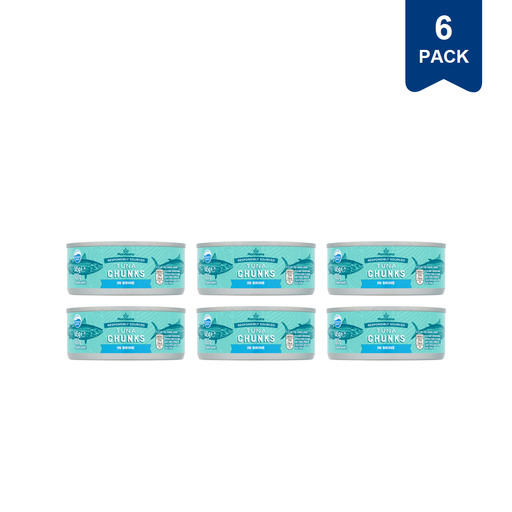 No image available
This six-pack is a brine option when several tins are useful for a shared meal. The Joybuy listing gives sugars as nil and salt as 0.9g per 100g drained. Check the total drained weight before planning portions; the product contains fish, and the listing warns that some bones may remain.
Choose by comparing the sugar figures on the tins you are considering, using the same per-100g basis. Tesco Groceries lists 0g sugars for its checked Tesco, Princes and John West spring-water products, M&S lists 0.0g for its checked spring-water tuna, and Sainsbury's lists less than 0.5g for its checked brine tuna. Sauces and other ingredients need separate consideration for the finished dish.
Follow the instructions on the exact tin. The checked Tesco and Princes products say to transfer unused contents to a non-metallic container, refrigerate them and use them within two days; the checked Sainsbury's product gives the same transfer and refrigeration instructions but says to use the contents within one day.