Shoppers who can eat fish but avoid another ingredient
Compare the ingredients and allergen information on the exact tin. A short recipe gives you fewer declared ingredients to assess, but does not establish suitability for your particular allergy.


If you must avoid fish, tinned tuna is not a suitable choice, however short its ingredient list. If fish is permitted, a single tin in spring water can be a starting point for comparing ingredients, but check the exact can for your allergen, any precautionary statement and the ingredients in that particular variant.
Compare the ingredients and allergen information on the exact tin. A short recipe gives you fewer declared ingredients to assess, but does not establish suitability for your particular allergy.
Spring-water, brine and oil recipes are not interchangeable. The Tesco, Sainsbury's, Princes and M&S spring-water examples list tuna and water; the documented Princes brine and John West oil examples include salt or oil.
A single can may contain more than one serving. Check its serving information and instructions for storing any leftovers before deciding which size fits your meals.
First establish whether fish is permitted. Only then compare the exact variant's ingredients, allergen information and instructions for an opened tin.
| Concern | Buying check | Who this matters to |
|---|---|---|
| Whether fish is permitted | Check whether fish is an allergen you must avoid before comparing tuna products. | If I must avoid fish, I need to rule out tuna regardless of what else is in the tin; about 50% of consumers put fish exclusion first. |
| Added ingredients | Read the current ingredient and allergen declarations for the precise spring-water, brine or oil variant. | When fish is permitted but another ingredient matters, I want a recipe I can assess against my requirements; about 30% of consumers make added ingredients their primary concern. |
| Portion and leftovers | Check the serving information and the can's specific after-opening storage directions. | One tin could leave me with unused tuna, so I need its portion and storage instructions to fit my meals; about 20% of consumers chiefly prioritise leftover planning. |
The documented spring-water tins still declare tuna as fish. Two listed ingredients do not settle whether a product meets another individual allergy requirement.
Rule out tuna if you must avoid fish. Otherwise, check the exact can's ingredients, allergen declaration and any relevant precautionary statement.
Princes spring-water tuna lists tuna and water, while its documented brine variant also lists salt. The documented John West No Drain oil product lists sunflower oil and salt.
Compare the full name and ingredient list of the tin you intend to buy, rather than applying one variant's information to another.
Tesco, Sainsbury's and M&S advise shoppers that product ingredient and allergen information can change.
Use listings to narrow your options, then read the packaging on the exact can before buying or eating it.
Sainsbury's describes its 145g spring-water tin as two servings. Instructions for handling an opened tin are product-specific.
Check the serving information and follow that can's directions if you expect to keep leftovers.
Its documented 145g spring-water tin offers a single-can option with a published ingredient list.
Its documented 145g spring-water tin is another single-can option for checking a plain recipe.
The documented 145g single tins include spring-water and brine variants.
Its documented 160g spring-water tin has a published ingredient list.
The documented No Drain sunflower-oil product is a 3 x 100g multipack, useful for comparing recipes but not a single-tin option here.
These selections are individual tuna tins: two spring-water products and one seasoned product. If fish is permitted, compare each exact can's current label with the ingredients you need to avoid; a spring-water description alone does not establish a two-ingredient recipe.
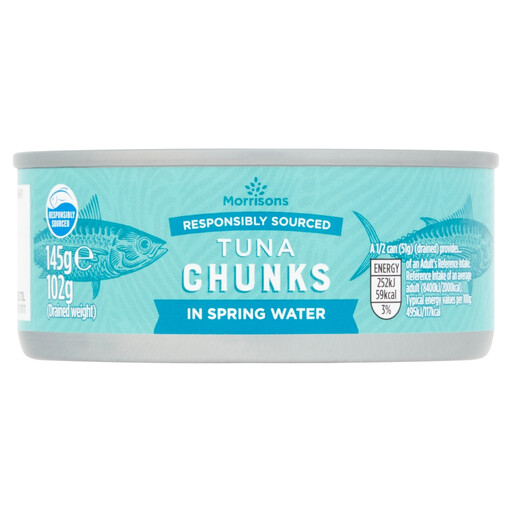 Image unavailable
Consider this single spring-water tin if fish is permitted and its current ingredient list fits your requirements. The selection information identifies salt as well as tuna and spring water, so do not assume it has the same recipe as another spring-water tin. Check the physical can for allergen and precautionary statements and for directions if you will keep leftovers.
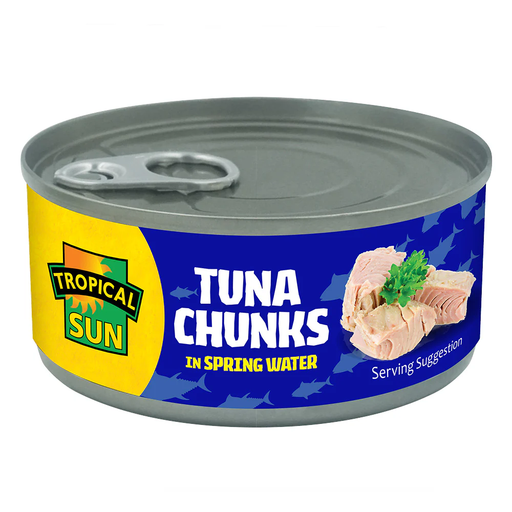 Image unavailable
This single spring-water tin warrants a close label check if soybeans or wheat matter to you. Its selection information identifies fish, lists salt among the ingredients and flags possible traces of soybeans and wheat. Check those statements on the current can against your own requirements before buying or eating it.
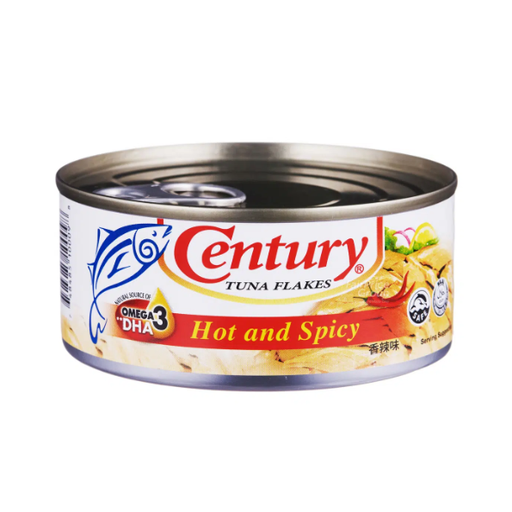 Image unavailable
Consider this single seasoned tin only if its full recipe fits your requirements; it is not a plain spring-water alternative. The selection information identifies fish and soybean and describes chilli, spices and flavourings among the ingredients. Check the exact can's complete label and after-opening directions before choosing it.
No. The documented Tesco, Sainsbury's, Princes and M&S spring-water tins all identify tuna as fish; packing it in water does not change that.
No. It describes the listed ingredients, not suitability for every allergy. Read the exact can for your allergen and any relevant precautionary statement; retailers advise that ingredient and allergen information can change.
Compare the exact recipes if fish is permitted. The documented plain spring-water examples list tuna and water, while the Princes brine example includes salt and the John West oil example includes sunflower oil and salt. Other products, including spring-water tins, may have different ingredients.
Follow the storage directions on that can, including its container, refrigeration and use-by instructions. A single tin is not necessarily a single serving, and directions differ between products.