What matters when choosing tuna
Decide whether fish can be eaten before comparing tuna recipes. For a household where it can, the current label comes before the choice of packing liquid or tin size.
| Concern |
What to check |
Who this matters to |
| Fish avoidance |
Establish whether the intended eater must avoid fish; if so, choose another food unless their allergy specialist has advised otherwise. |
If someone in my household must avoid fish, changing the brand or packing liquid will not make tuna suitable for them. About 33% of consumers put fish exclusion first. |
| Current allergen information |
Read the tin’s full ingredients, emphasised allergens and any precautionary statement. |
When I need to avoid another allergen, I need to assess the tin I will actually serve, not rely on an earlier online description. Current-label verification is the primary need for about 27% of consumers. |
| Additional ingredients |
Check the exact recipe, including any named oil or added salt, rather than relying on the front-of-pack description. |
If fish is permitted but another ingredient matters to my household, the difference between water, brine and oil can determine which recipe I consider. About 20% of consumers primarily need to distinguish those ingredients. |
| Usable quantity |
Compare tin count and net or drained quantity, then follow the chosen product’s after-opening instructions. |
Once a tin meets our allergy requirements, I want an amount we can use without leaving unwanted leftovers. Matching the pack to planned meals comes first for about 20% of consumers. |
Brands to consider as references
These product-line examples show why the exact variant matters more than the brand name when checking ingredients.
Princes
Princes lists tuna chunks in spring water, brine and sunflower oil, allowing a comparison of three named recipes within its range.
- Its spring-water listing names tuna and spring water; the cited brine and oil versions also name salt.
- Every cited variant contains fish. Check the current tin rather than assuming the same ingredients apply across the range.
John West
Cited retailer listings include John West tuna chunks in brine and spring-water multipacks.
- The cited Asda brine listing names tuna, water and salt and identifies fish as an allergen.
- The cited Sainsbury’s spring-water listing gives a drained quantity for its tins; check the particular pack and current label when comparing formats.
Tesco
Tesco’s cited own-label examples include a spring-water multipack of 3 x 80 g tins and a 145 g brine tin.
- The different tin formats offer a practical way to match a purchase to planned portions.
- Tesco advises shoppers to read the product label because ingredients and allergen information can change.
Sainsbury’s
Cited own-label spring-water tuna listings include single-tin and multipack formats.
- Its listings let shoppers distinguish a 145 g tin from a 4 x 145 g pack.
- Sainsbury’s advises reading the label before use because ingredients can change.
Asda
Cited Asda own-label examples cover spring water, brine and sunflower oil in different tin formats.
- The cited brine listing names tuna, water and salt and identifies fish as an allergen.
- The cited sunflower-oil recipe includes sunflower oil and salt; do not apply one variant’s ingredients to another.
M&S
M&S lists 160 g tuna chunks in spring water and sunflower oil.
- The cited spring-water product names skipjack tuna and spring water; the oil version also names sunflower oil and salt.
- Both cited listings say the products may contain bones. Check the current label for the ingredients and handling instructions of the tin chosen.
Tinned tuna options on Joybuy
These spring-water, brine and sunflower-oil tins offer different pack formats for households where fish is permitted. Check each current tin against the household’s allergy requirements before choosing between them.
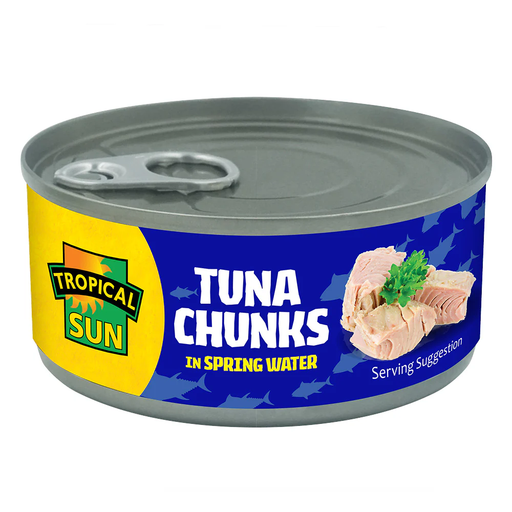 Image unavailable
Topical Sun Tuna Chunks in Springwater 160g
A single 160 g spring-water tin to consider when fish is permitted and this pack size fits a planned meal.
The product information flags possible traces of soybeans and wheat. Anyone avoiding either should assess the current tin against their allergy-management advice before choosing it.
View on Joybuy
 Image unavailable
John West Tuna Chunks in Springwater 4 x 125g
Four separate 125 g spring-water tins may suit meals planned across several occasions, provided fish and the current recipe meet the household’s requirements.
Read each tin’s ingredients and any precautionary allergen statement before use.
View on Joybuy
 Image unavailable
Princes Tuna Chunks in Sunflower Oil 4 x 145g
This four-tin format is an option when fish and the sunflower-oil recipe fit the household’s needs.
Princes lists tuna, sunflower oil and salt for its Tuna Chunks in Sunflower Oil. Check the current pack’s complete allergen information before use.
View on Joybuy
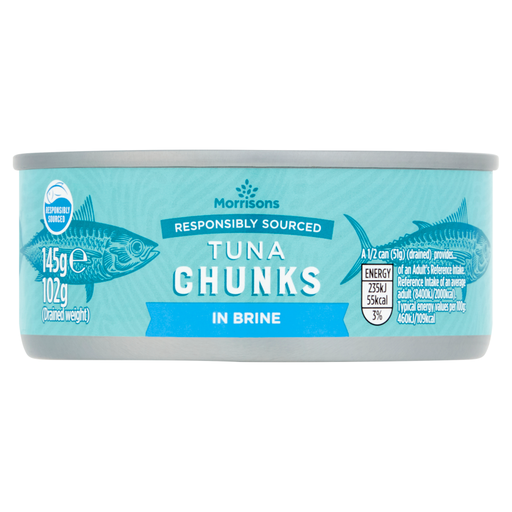 Image unavailable
Morrisons Fad Free Tuna Chunks in Brine 145g
A single 145 g brine tin may fit a meal that calls for one tin, if fish is permitted and the current ingredients suit the household.
The product information warns that some bones may remain. Read the tin’s allergen and handling information before use.
View on Joybuy
 Image unavailable
Morrisons Fad Free Tuna Chunks in Spring Water 145g
This single 145 g spring-water tin is an option for a meal using one tin, where fish is permitted.
Check the current ingredients and any precautionary allergen statement against the household’s requirements before use.
View on Joybuy
Common questions
Can someone with a fish allergy choose tuna in a different liquid?
Changing the liquid does not remove the fish: tuna in water, brine and oil is still tuna. Anaphylaxis UK advises that someone allergic to one fish has a high chance of reacting to others; any decision about a particular fish needs individual specialist advice.
What allergen information should I check on a UK tuna tin?
Read the actual tin’s ingredients, emphasised allergens and any precautionary statement. Food Standards Agency guidance says UK prepacked food must carry an ingredients list and emphasise allergens present in the product each time they appear in that list.
Does a “may contain” statement mean the allergen is an ingredient?
No. The Food Standards Agency distinguishes precautionary allergen labelling, which communicates possible unintended presence, from an ingredient deliberately used in the recipe. Assess both types of information against the individual’s allergy-management advice.
How should I store tuna left after opening a tin?
Follow that product’s pack instructions rather than applying one brand’s directions to another. For its cited spring-water tuna, M&S instructs shoppers to transfer unused contents to a non-metal container, refrigerate them and eat them within two days.
How can I compare tins once they pass the allergy check?
Compare the number of tins, net or drained quantity, packing liquid and after-opening instructions with the meals you plan to make. A pack that leaves more tuna than you can use may not fit your household as well as smaller separate tins.


