Choose no-drain tuna when avoiding a draining step matters most, and look for an explicitly easy-open tin if opening it is also a concern. Choose tuna steak for larger pieces, or an oil-packed version if you prefer its flavour; compare the exact products’ salt, portion size and storage instructions before deciding.
Who these formats suit
Shoppers who want fewer preparation steps
If draining a tin is awkward or messy, a no-drain format is worth considering. Check opening separately: Tesco describes a twist-open SmartStrip on the cited John West spring-water chunks, while Sainsbury’s describes the cited Princes steak as easy-open.
Shoppers comparing nutrition labels
If protein and salt matter to your choice, compare the figures per 100g and for the portion you expect to eat. The NHS advises adults to have no more than 6g of salt a day; a spring-water label still needs checking rather than assuming its salt content.
Shoppers choosing by texture and flavour
If larger pieces appeal for a simple lunch or salad, look at tuna labelled steak rather than chunks. An oil-packed choice brings a different flavour and nutrition profile: Marks & Spencer lists its cited olive-oil tuna steak at 12.3g fat per 100g.
What to check when buying
Start with the preparation step or eating experience that matters most, then compare labels on tins in that format.
| Concern |
What to check |
Who this matters to |
| Opening and draining |
Look for stated easy-open and no-drain features; one does not establish the other. |
If handling a tin or draining liquid makes a quick meal less straightforward, fewer preparation steps take priority. About 33% of consumers put that need first. |
| Protein and salt |
Compare both figures per 100g and for the intended serving, using the current label. |
When choosing tuna for regular meals, I want to see how its protein and salt figures fit alongside the rest of what I eat. For about 25% of consumers, label-based nutrition comparison is the primary concern. |
| Texture and flavour |
Check whether the tin contains steak or chunks, its packing liquid, and fat per 100g. |
For a simple salad or lunch, larger pieces or oil-packed flavour may matter more than preparation convenience. Roughly 25% of consumers prioritise texture and flavour. |
| Routine cupboard use |
Check tin size, pack quantity and the after-opening instructions against likely portions. |
If tuna is a regular cupboard ingredient, I would rather choose a pack size I can use without leaving an opened tin too long. About 17% of consumers put practical repeat use first. |
Common buying mistakes
-
Assuming every premium tin has a similar nutrition profile
Premium may describe the cut, packing liquid or convenience features, not a particular nutrition profile. Marks & Spencer lists 12.3g fat per 100g for its cited olive-oil tuna steak, while Tesco lists 0.9g per 100g for the cited John West no-drain spring-water chunks.
Choose the texture and packing liquid you want, then compare the nutrition panels on those exact tins.
-
Counting tinned tuna as an oily-fish portion
The NHS says fresh and canned tuna do not count as oily fish, even though tuna can be one of the fish you eat.
If you are following NHS fish guidance, check its oily-fish examples separately rather than treating a tuna tin as that portion.
-
Using one storage rule for every opened tin
Instructions differ between products. The cited John West and Princes products say to refrigerate after opening and use within two days; the cited Sainsbury’s chunks say to transfer leftovers to a non-metallic container, refrigerate and use within one day.
Read the instruction on your tin and choose a size that suits the portions you plan to use.
A larger tin can leave more to store or discard if you will not use the remainder within its labelled period.
Brands and ranges to consider
John West
Its cited No Drain spring-water chunks are relevant when avoiding liquid draining is the main aim.
- Tesco describes a twist-open SmartStrip on the cited 3 x 100g pack and lists 27g protein and 0.80g salt per 100g.
- The product information warns that some bones may remain and says to refrigerate after opening and consume within two days. Check other John West variants individually.
Princes
The cited drained-ready spring-water steak offers larger pieces without a draining step.
- Sainsbury’s describes the cited 3 x 110g product as easy-open and lists 28.2g protein per 100g.
- Its listed salt figure is 0.80g per 100g; check the portion you intend to use rather than relying on the spring-water description alone.
M&S
Its cited tuna steak in olive oil is a reference point for shoppers choosing an oil-packed steak for flavour and texture.
- Marks & Spencer describes the cited steak as olive-oil packed and lists 24.5g protein per 100g.
- The same product lists 12.3g fat per 100g, so compare its label with a water-packed option if that difference matters to you.
Sainsbury’s
Its cited own-label spring-water chunks provide a conventional format to compare with no-drain tins.
- The cited product information lists 26.1g protein and 0.70g salt per 100g drained.
- Its instructions say to transfer leftovers to a non-metallic container, refrigerate and use within one day.
Tesco
Tesco’s tinned-tuna range is a useful place to compare own-label and branded formats, including chunks, steak and different packing liquids.
- Its range includes spring-water, brine, oil and no-drain options, allowing format labels to be compared.
- Tesco advises checking the current package label because food product information can change.
Tinned tuna selections on Joybuy
These tins cover no-drain chunks, a spring-water multipack and an oil-packed steak. Choose by the stated format, and check the current can label for opening and storage details that matter to you.
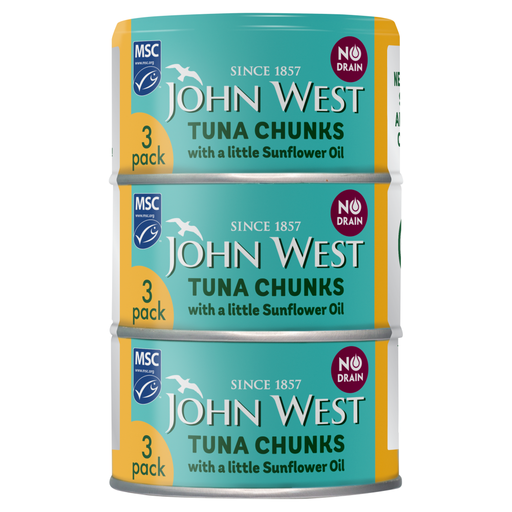 Image unavailable
John West No Drain Tuna Chunks in Sunflower Oil, 3 x 100g
Consider these chunks if you want to avoid draining and prefer tuna packed in sunflower oil. The pack contains three 100g tins; check the current label for opening, fish allergen and bone information before serving.
View on Joybuy
 Image unavailable
John West No Drain Tuna Chunks in Spring Water, 3 x 100g
This three-tin spring-water pack suits shoppers who want chunks without a draining step. If opening effort is important, confirm the mechanism on the exact can; no-drain wording alone does not describe its lid.
View on Joybuy
 Image unavailable
Morrisons Fad Free Tuna Chunks in Spring Water, 6 x 145g
The six-tin pack suits planned repeat use of spring-water chunks. Check the can format if opening or draining is a concern, and choose a tin size that fits the portions you expect to use.
View on Joybuy
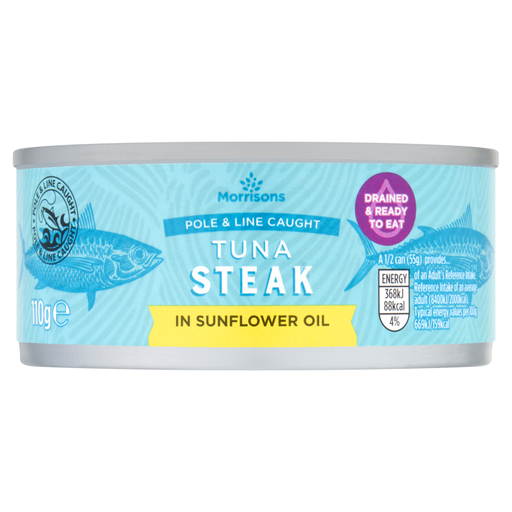 Image unavailable
Morrisons Drained Tuna Steaks with Sunflower Oil, 110g
Consider this 110g oil-packed steak if you want larger pieces rather than chunks. Confirm what the tin requires before serving: its drained wording should not be taken as a promise that no handling is needed. Check the can for after-opening storage instructions.
View on Joybuy
Questions about tinned tuna
Does tinned tuna count as oily fish?
No. The NHS says fresh and canned tuna do not count as oily fish. Its examples of oily fish include salmon, sardines and mackerel.
Should I choose spring-water tuna to reduce salt?
Not on the packing liquid alone. Compare salt per 100g and for your serving on the exact tins: the cited spring-water products list different figures. The NHS advises adults to have no more than 6g of salt a day.
Is there one weekly tuna limit for every retired shopper?
No universal tinned-tuna limit for all adults is stated in the cited NHS fish guidance. The Food Standards Agency discusses specific tuna limits for people who are pregnant or trying for a baby, so those circumstances call for the guidance that applies to them rather than a rule inferred from age.
What should I do with tuna left after opening a tin?
Follow that product’s label and refrigerate leftovers as directed. The cited John West and Princes products say to use opened contents within two days; the cited Sainsbury’s chunks instruct you to transfer leftovers to a non-metallic container and use them within one day.
What should I check if I need to avoid fish?
Tuna is fish, so check the ingredients and allergen statement on the exact package before buying. Check flavoured or sauce-containing variants individually rather than assuming they have the same ingredients as plain tuna.


