Choose tinned tuna when the recipe calls for fish mixed into a bake or filling and you want to store the unopened cans without managing chilled raw fish. Choose chilled tuna fillets when distinct, freshly cooked pieces matter to the recipe and you can follow the pack’s refrigeration, use-by and raw-fish handling instructions. Whichever you use, confirm the school event’s allergen process and check every ingredient in the finished item.
Who is this for?
School-event organisers handling allergen information
You need to identify fish in the finished item, account for other ingredients and agree how allergen information will be communicated. GOV.UK and Food Standards Agency guidance identifies fish among the 14 allergens covered by food-business requirements; Somerset Council distinguishes occasional voluntary sales by individuals who are not food businesses.
Volunteers preparing several portions
You want to plan the amount of tuna for a batch without buying raw fish close to the event. Tesco’s cited tinned-tuna packs specify cool, dry storage before opening; check the drained weight when calculating how much tuna the recipe will contain.
Cooks whose recipe needs fillet pieces
You may prefer chilled steaks when freshly cooked, distinct pieces are central to the bake. The cited Waitrose tuna steaks require refrigeration, so the shopping and preparation timetable matters.
What matters when choosing tuna?
Tinned tuna
Choose it when: Chunks or flakes will be mixed into a bake or filling, and storing unopened cans in a cool, dry place fits the preparation plan.
Allow for: Drained quantity varies by pack, and opened leftovers need to be stored and used according to the label; the cited Tesco packs specify refrigeration and use within two days.
Chilled tuna fillets
Choose them when: The recipe depends on distinct pieces cut from a freshly cooked steak.
Allow for: Chilled storage, the use-by date and raw-fish handling. The cited Waitrose steaks must be kept below 5°C, and their chilled presentation does not mean they have never been frozen.
| Concern |
What to check |
Who this matters to |
| Allergens and cross-contact |
Read the tuna and other ingredient labels. Ask the organiser how ingredients should be recorded and communicated, and keep raw fish away from ready-to-eat food during preparation. |
If I am organising a sale, I need people to know that a tuna bake contains fish and to account for allergens in its other ingredients. About 46% of consumers put allergen communication and cross-contact first. |
| Batch preparation |
Compare drained weights for the recipe quantity, then choose a pack format that fits the number of portions and the plan for opened leftovers. |
When I am making several portions, I need an ingredient I can buy ahead and measure into the recipe without leaving multiple opened cans. For about 36% of consumers, batch convenience is the primary concern. |
| Fillet texture and handling |
If choosing chilled steaks, check the use-by date, refrigeration and cooking instructions, and any previously frozen statement. |
If distinct, freshly cooked tuna pieces are central to my bake, I can plan for chilled storage and raw-fish preparation. Fillet texture comes first for about 18% of consumers. |
Buying pitfalls
-
Checking the tuna but not the whole recipe
Tuna contains fish, while pastry, cheese, mayonnaise or sauces may bring other allergens into the finished bake. The tuna label alone cannot describe the complete item.
Keep the packaging or an ingredient record for every component, and ask the organiser what information it needs for the finished food.
-
Reading “fresh fillets” as a reason to buy chilled fish
Chilled steaks add refrigeration and raw-fish handling to the preparation. Waitrose also states that the cited chilled steaks have previously been frozen.
Choose steaks when their cooked texture matters to the recipe; otherwise, consider whether tinned chunks will work in the mixed bake or filling. Read the individual pack before describing fish as never frozen.
-
Planning portions from the can’s outer weight
The amount of tuna added to a recipe can differ from the stated weight of the can and its contents. Opened leftovers also need a storage plan.
Check drained weight when calculating the batch, and choose the number of cans around the portions you intend to make. Follow the storage directions on the pack you buy.
-
Assuming chunks are bone-free
The cited Tesco and John West product information cautions that minor bones may remain.
Flake and check the tuna before mixing it into a bake or filling, where a small bone could be harder to spot.
Brands to consider
Princes
Princes lists tuna chunks in spring water, a format to consider when the recipe calls for chunks mixed into a filling or bake.
- The cited Princes product lists tuna and spring water as its ingredients.
- It contains fish; the finished recipe and the school event’s allergen arrangements still need checking.
Tesco
Tesco’s cited spring-water tuna packs include a multipack and a larger can, giving batch cooks different quantities to assess.
- The cited packs provide storage directions for unused tuna after opening.
- Tesco cautions that its cited 400g product can contain minor bones. Check the label of the pack you purchase.
John West
The cited John West No Drain Tuna Chunks with a Little Spring Water offers a no-drain format for assembling a mixed filling.
- The cited product lists tuna, spring water and salt, and its pack is described as easy to open.
- It contains fish, and the cited pack cautions that some bones may remain; follow its directions for opened contents.
Tinned tuna on Joybuy
These tinned-tuna options suit recipes using tuna chunks in a bake or filling. Four are labelled as packed in spring water; the brine-packed option needs to be considered separately for the recipe. Check each pack’s allergen, draining and storage directions before preparing food for the event.
 Image unavailable
John West No Drain Tuna Chunks in Springwater, 3 x 100g
The three-can no-drain format is an option for a filling made in stages without a draining step. The cited product lists tuna, spring water and salt; it contains fish, and its pack cautions that some bones may remain. Check the pack’s quantity and directions against your recipe.
Joybuy
 Image unavailable
John West Tuna Chunks in Springwater, 4 x 125g
Four separate cans may fit a recipe prepared in several batches. Check the pack’s drained weight and whether these chunks need draining before use; do not assume they have the same instructions as John West’s No Drain range. Tuna contains fish.
Joybuy
 Image unavailable
Morrisons Fad Free Tuna Chunks in Spring Water, 145g
This single can is an option when the recipe calls for a smaller quantity of tuna chunks. Check its drained weight before calculating the batch and follow the label’s directions for any unused contents. Tuna contains fish.
Joybuy
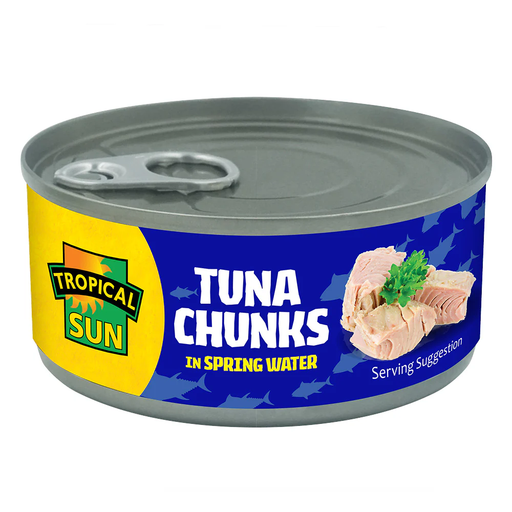 Image unavailable
Topical Sun Tuna Chunks in Springwater, 160g
This spring-water option is a single can of chunks for a mixed bake or filling. Check the pack’s draining directions, drained quantity and full allergen statement before using it for a school event. Tuna contains fish.
Joybuy
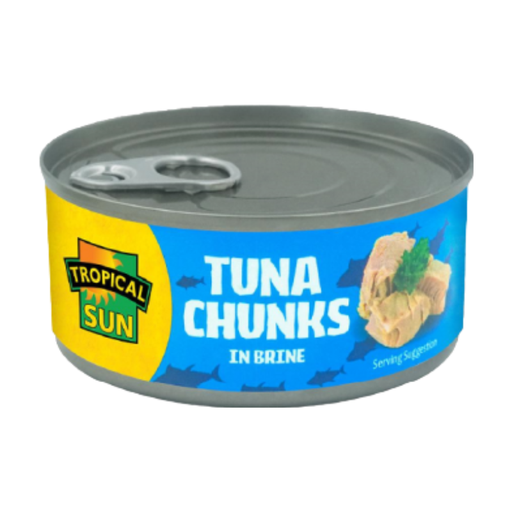 Image unavailable
Topical Sun Tuna Chunks in Brine, 125g
Consider this brine-packed can only if its packing liquid suits the recipe; it is not the same format as the spring-water options above. Check its draining directions, drained quantity and full allergen statement. Tuna contains fish.
Joybuy
Frequently asked questions
Does a school bake sale need to identify fish as an allergen?
A tuna bake contains fish, so make that clear to the event organiser and check the other ingredients too. GOV.UK and Food Standards Agency guidance for food businesses in England, Northern Ireland and Wales covers fish among the 14 allergens. Somerset Council says individuals who occasionally provide food at voluntary sales without operating as food businesses do not have to follow those food-business requirements; confirm how the particular event is run and what the school requires.
Does a wrapped tuna bake need a full ingredients label?
A food business producing food classified as prepacked for direct sale must label it with the food’s name and a full ingredients list, according to GOV.UK and Food Standards Agency guidance. Whether a particular bake falls into that category depends on how and where it is packed and sold; agree the arrangements with the organiser rather than assuming every wrapped school-sale item is classified alike.
Can I open tinned tuna the day before the sale?
You can plan ahead if you follow the specific pack’s directions for opened tuna. The cited Tesco and John West packs say to refrigerate unused contents and consume them within two days; where a label instructs you to transfer leftovers to another container, follow that instruction.
Can chilled tuna steaks replace tinned tuna in a bake?
Use chilled steaks when the recipe calls for distinct cooked pieces and you can manage refrigerated storage, the use-by date and raw-fish preparation. The cited Waitrose steaks require storage below 5°C; follow the cooking and handling directions on the pack you buy.


