Regular family-bake planners
If tuna pasta bakes or traybakes are frequent meals, compare the drained quantity with what each recipe uses. That helps you choose between a multipack and a larger can without leaving an awkward amount unused.


For a family tuna bake, choose a pack by the amount of drained tuna the recipe needs, rather than the number or nominal weight of the tins. Separate cans make portioning easier; a large can makes more sense when you can use its contents within the label’s storage period. Check the fish allergen declaration, any bone warning and the salt figure before children help prepare the bake.
If tuna pasta bakes or traybakes are frequent meals, compare the drained quantity with what each recipe uses. That helps you choose between a multipack and a larger can without leaving an awkward amount unused.
Separate portions can simplify measuring ingredients. An adult should handle opening and draining tins, check for any bones and follow the pack’s instructions for leftovers.
If fishery sourcing influences your choice, look for the statement on the exact tin. Sainsbury’s, Princes and M&S describe sourcing attributes for particular tuna products, rather than every product they sell.
| Concern | What to check | Who this matters to |
|---|---|---|
| Drained quantity | Compare the drained weight with the tuna your recipe calls for; nominal tin weight includes the packing liquid. | When I make family bakes regularly, I want enough usable tuna without opening more tins than the recipe needs. About 31% of consumers put drained quantity first. |
| Portions and handling | Choose a single tin or multipack to suit the portion needed, and read the bone warning and after-opening storage instructions. | If children are helping, manageable portions and less leftover handling matter to me. Those needs come first for about 31% of consumers. |
| Fishery sourcing | Check whether an MSC or pole-and-line statement applies to the exact product and variant. | I want to check how the fish was sourced before choosing a tin for the bake. Sourcing credentials are the primary concern for about 23% of consumers. |
| Ingredients and suitability | Read the fish allergen declaration, salt figure and any bone warning on the pack. | Where the bake has other ingredients, I want to check what the tuna itself contributes and whether its warnings matter to my household. About 15% of consumers prioritise these checks. |
The weight printed on the front includes packing liquid, so two tins of similar nominal size need not provide the same amount for a bake.
Use the drained weight to work out how many tins the recipe needs.
Salt figures differ between the cited spring-water products, and the bake may also contain ingredients such as cheese or sauce.
Read the salt figure on the exact tin rather than using the packing liquid as a shortcut.
Once opened, tuna needs transferring from the can and refrigerating. The cited products’ use-within instructions vary.
Match the can to the recipe, or plan how you will use the remainder within the period stated on its label.
A sourcing statement does not change the fact that tuna is fish, and some product listings warn that small bones may remain.
Check the exact pack’s allergen declaration, ingredients, bone warning and storage instructions before children take part.
Asda lists spring-water skipjack chunks in a 4 × 145g multipack, a format to consider for repeated family bakes.
Tesco lists spring-water tuna chunks in multipacks and a 400g can; its 400g listing gives a drained weight of 280g.
Sainsbury’s lists spring-water chunks in 145g tins and a 3 × 80g pack, with 56g drained tuna stated per small tin.
John West offers spring-water chunks and separately identified no-drain formats for households choosing between preparation styles.
The cited Princes 4 × 145g multipack contains tuna in spring water.
M&S describes its 160g spring-water tuna chunks as pole-and-line caught under its Forever Fish policy.
These spring-water tuna chunks include separate-can multipacks, single tins and one identified no-drain format. Choose according to the amount your bake needs and how you plan to handle any opened tuna.
 Image unavailable
The three separate tins suit a bake where portioning matters and you want a no-drain format. Check the pack for any bone warning, and refrigerate unused contents according to its after-opening instructions.
 Image unavailable
Six separate tins allow you to open only the amount needed for a family bake. For unused tuna from an opened tin, the listing says to transfer it to a non-metallic container, refrigerate it and consume it within two days; check the pack for any bone warning.
 Image unavailable
This four-tin pack offers separate portions for pasta bakes. It is not identified as the No Drain variant: check the exact pack’s preparation directions and any bone warning. The listing instructs shoppers to transfer and refrigerate unused tuna and consume it within two days.
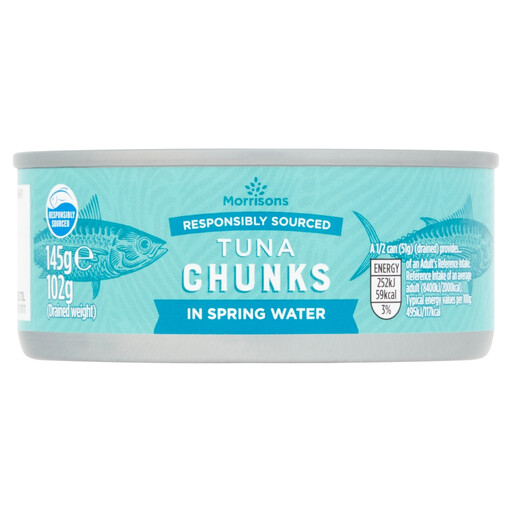 Image unavailable
A single tin may suit a recipe that needs a smaller amount than a multipack provides. Check its drained weight against the recipe and read the pack for any bone warning; the listing gives instructions to refrigerate opened leftovers and use them within two days.
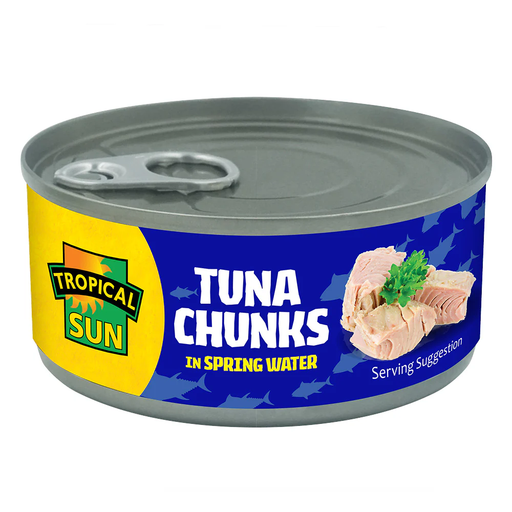 Image unavailable
This single tin is presented for pasta dishes as well as other recipes. Its description advises supervising children and checking for small bones; it also states that the product may contain traces of soybeans and wheat, so read the exact pack if those allergens matter.
Use the drained weight, not just the weight printed prominently on the tin: the latter includes packing liquid. Compare the drained amount with your recipe before deciding how many tins to open. Tesco, for example, lists 280g drained tuna for its cited 400g can.
Choose chunks if you want to distribute smaller pieces through the pasta and sauce; choose steaks if you want larger pieces to break up yourself. For either format, check the drained weight, salt figure and any bone warning on the exact product.
Transfer it to a suitable non-metallic container, cover it and refrigerate it rather than leaving it in the opened tin. Follow the exact product’s use-within instruction: the cited Sainsbury’s product says one day, while several other cited products say two days.
Check the fish allergen declaration and any warning about small bones, and have an adult handle opening and draining the tin. Read the ingredients and storage directions for the particular product before preparation.
The NHS advises people who are pregnant or trying for a baby to have no more than four cans of tuna or two tuna steaks a week. Count tuna eaten in bakes alongside tuna in other meals when applying that guidance.