Family-bake shoppers
If you make several portions of tuna pasta bake, potato bake or a savoury traybake, the drained weight helps you judge how many tins the recipe needs.


For a tuna pasta bake, spring-water chunks let you decide how much richness to add through the sauce; check the drained weight to see how much tuna will go into the dish. Brine is another option if you account for its salt when seasoning, while oil-packed tuna suits a filling where you intend to use the added richness.
If you make several portions of tuna pasta bake, potato bake or a savoury traybake, the drained weight helps you judge how many tins the recipe needs.
If your bake already contains cheese or a creamy sauce, the packing liquid and the tuna's listed fat and salt help you decide how to finish the dish.
If you use only part of a tin at a time, consider the can size, draining step and label instructions for any tuna left over.
| Concern | What to check | Who this matters to |
|---|---|---|
| Usable tuna quantity | Check the drained weight, not just the total tin weight, against the amount your bake needs. | I want enough tuna for a family bake without mistaking packing liquid for an ingredient I can use. About 40% of consumers put usable quantity first. |
| Packing liquid and seasoning | Read the ingredients and the fat and salt values, noting whether nutrition is stated for drained tuna. | When my filling already has cheese or sauce, I want to choose its richness and seasoning deliberately; about 30% of consumers put recipe control first. |
| Preparation and leftovers | Check the can size, whether draining is needed and the label's instructions after opening. | For a small bake, I would rather open an amount I can use promptly. Managing preparation and leftovers comes first for about 20% of consumers. |
| Product-level sourcing | Check the exact tin for species, catch-method or certification wording. | I want to see sourcing information on the particular tuna I choose, rather than assume it applies across a brand; about 10% of consumers put that information first. |
A tin includes its packing liquid. Tesco lists 280g drained tuna for its 400g spring-water tin, so the two weights answer different recipe questions.
Use drained weight to work out how much tuna will reach the filling, particularly when comparing a large tin with several smaller ones.
For its checked products, Asda lists 6.4g fat per 100g drained for tuna in sunflower oil and 1.0g for tuna in brine. Oil-packed tuna changes the starting point for a filling that already contains sauce or cheese.
Choose the packing liquid with the rest of the recipe in mind, and decide whether you intend to use any of the oil.
Asda lists 0.90g salt per 100g drained for its checked brine-packed tuna. Other ingredients can also contribute salt.
Combine the filling and taste it before adding further seasoning.
Opening more tuna than the bake needs creates a storage decision as well as a portioning decision.
Follow the product label. The checked Tesco and M&S products instruct shoppers to transfer unused tuna to a non-metallic container, refrigerate it and use it within two days; Food Standards Scotland advises checking each food label for its open-life instructions.
Tesco lists own-label skipjack tuna chunks in spring water, including a 400g tin.
Sainsbury's lists own-label four-packs of 145g tuna chunks in spring water and in brine.
Asda lists own-label four-packs of 145g tuna chunks in brine and sunflower oil.
Princes lists tuna chunks in spring water in single-tin and multipack formats.
John West has spring-water multipacks and no-drain tuna formats relevant to savoury cooking.
M&S lists 160g spring-water tuna chunks with product-specific sourcing information.
These spring-water, brine and sunflower-oil tuna packs offer different tin sizes and preparation options for savoury cooking. Match the drained quantity and packing liquid to the bake you plan to make.
 Image unavailable
The four-can spring-water pack is an option for a pasta bake when you want to add richness through the other ingredients. Check the drained quantity when deciding how many cans to open.
 Image unavailable
This three-can no-drain format may suit a smaller savoury dish when you want to skip the draining step. Compare the amount needed for your recipe with the quantity stated on the current pack.
 Image unavailable
This four-can brine pack is a route for a multi-portion pasta bake. Check the current label's drained weight and salt information, then taste the filling before adding more seasoning.
 Image unavailable
The six 145g spring-water tins provide several cans to draw on for savoury dishes. Check the drained weight per tin to plan a bake without opening more than you expect to use.
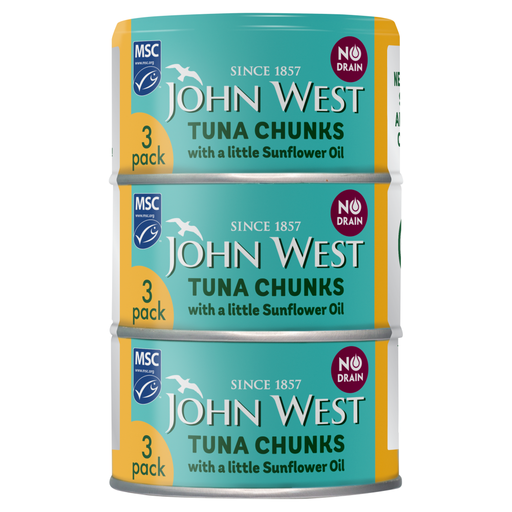 Image unavailable
This three-can no-drain option uses sunflower oil, so consider it when that packing liquid suits the filling you intend to make. Check the current label for the quantity and nutrition basis of this variant rather than applying figures from a different oil-packed product.
Choose spring water if you want the sauce and cheese to determine the richness, or oil-packed tuna if you intend to use its added oil in the filling. Brine gives you another starting point, but check its salt information before seasoning; Asda lists 0.90g salt per 100g drained for its checked brine and sunflower-oil products.
Follow the instructions on the tin you opened. The checked Tesco and M&S listings instruct shoppers to move unused tuna to a non-metallic container, refrigerate it and use it within two days; Food Standards Scotland also advises checking the label for storage and open-life instructions.