Weekly batch cooks making mixed dishes
If tuna is going into pasta bakes, fishcakes or bean fillings, chunks are easy to distribute across portions. Spring-water packs leave the choice of sauce and added oil to the recipe.


For batch recipes that already have a sauce or dressing, spring-water chunks let you decide what else goes into the dish. Brine adds salt to account for, while oil-packed tuna suits recipes where you want the packing oil; choose steaks when larger pieces matter. Compare drained weight for portions and check the individual tin’s instructions if you expect leftovers.
If tuna is going into pasta bakes, fishcakes or bean fillings, chunks are easy to distribute across portions. Spring-water packs leave the choice of sauce and added oil to the recipe.
If you plan portions using fat, salt or protein figures, compare the same quantity and nutrition basis on each pack. Packing medium and drained weight both matter.
Steaks are worth considering when you want larger pieces in a salad or jacket-potato topping. For a catch-method, traceability or certification claim, check the particular tin rather than the brand name alone.
Start with the dish and the amount of tuna it needs, then compare packing liquid, label values and what will happen to any opened leftovers.
| Priority | What to check | Your needs |
|---|---|---|
| Packing liquid | Check whether the tuna is packed in spring water, brine or oil. If the recipe has its own sauce or dressing, decide whether the packing liquid fits it. | I’m making several different dishes and want to choose the seasoning and added oil for each one. |
| Usable quantity | Use drained weight, where shown, to work out the tuna available for a recipe; total tin weight includes liquid. Compare pack formats on that basis rather than by tin size alone. | One batch needs enough tuna for all its portions, without leaving more opened tuna than I can use. |
| Label values | Compare fat, energy, protein and salt using the same label basis. Princes Food and Drinks lists 0.5 g fat and 99 kcal per 100 g drained for its spring-water chunks, against 9.5 g and 180 kcal for its sunflower-oil chunks; these are figures for those products, not every tuna pack. | I’m portioning a recipe and need its ingredients’ label values to reflect the packing medium I actually buy. |
| Texture | Check whether the pack contains chunks or steaks. Consider whether tuna will be mixed through a filling or left in larger pieces on the plate. | For a pasta bake, I can mix in chunks; for a salad topping, I may want pieces that stay more distinct. |
| Opened-tin storage | Read the exact pack’s transfer, refrigeration and use-within instructions before choosing a large tin. Marks & Spencer gives a two-day window for some tuna products, but 24 hours for its 200 g oil-packed steak. | If a batch uses only part of a tin, I need a realistic plan for the remainder within that product’s stated timeframe. |
| Sourcing claims | Look for the certification mark or stated catch method on the specific product. Marks & Spencer describes particular tuna-steak products as pole-and-line caught; that does not establish the method for every tuna product. | A stated catch method or certification matters to me, so I’ll check the tin I intend to buy. |
The stated tin weight can include packing liquid, so it may not tell you how much fish will go into each serving.
Plan portions with drained weight where the label gives it, and use the same basis when comparing pack sizes.
Princes Food and Drinks lists different fat and energy values for its spring-water and sunflower-oil chunks, despite listing 23.5 g protein per 100 g drained for both. Its brine and spring-water chunks also have different stated salt values.
Choose the liquid for the finished recipe, then check the exact pack’s values before adding seasoning or oil.
An opened tin may have a short, product-specific storage window. A larger format only fits the plan if its contents can be used in time.
Work out the batch quantity before shopping; transfer unused tuna as directed, refrigerate it and follow that pack’s use-within instruction.
Catch-method and traceability statements can refer to particular tuna products rather than everything sold under a brand.
Check the exact tin or product listing for the catch method, traceability statement or certification mark you want.
These ranges illustrate formats and label details to compare; a brand name alone does not determine the contents of a particular tin.
Princes lists tuna chunks in brine, spring water and sunflower oil, giving batch cooks a choice of packing liquid.
Tesco Groceries lists own-label tuna alongside branded options in different pack sizes and packing liquids.
John West includes no-drain tuna formats as well as conventional tinned chunks, offering a choice in how portions are assembled.
Marks & Spencer lists spring-water chunks and tuna steaks, including an 800 g steak format.
These options cover spring-water and brine chunks for mixed dishes, plus oil-packed chunks and steaks for recipes where their packing medium or texture suits the meal.
 No image available
The six-pack offers separate tins of spring-water chunks for recipes made across several batch-cooking sessions. Use the pack’s drained weight, rather than 145 g tin weight, to plan the amount of tuna in each batch; check its salt value if seasoning several portions.
 No image available
Spring-water chunks can be mixed into a pasta bake or portioned across other sauced dishes. The pack contains four 125 g tins; check the drained weight for the fish quantity available, and follow the pack’s refrigeration instructions for anything left after opening.
 No image available
Brine-packed chunks are an option for mixed batch dishes when the recipe can accommodate the salt on the label. The four-tin pack states 145 g per tin; check its drained weight for portions and its salt figure before seasoning the finished dish.
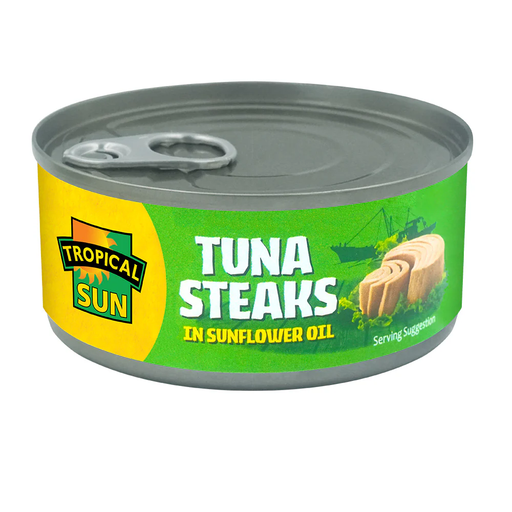 No image available
Choose the steak format when larger pieces suit a salad or plated meal, and account for the sunflower oil in the recipe. Check the drained weight for portions. After opening, transfer leftovers to a non-metallic container, refrigerate and use within the stated 24 hours.
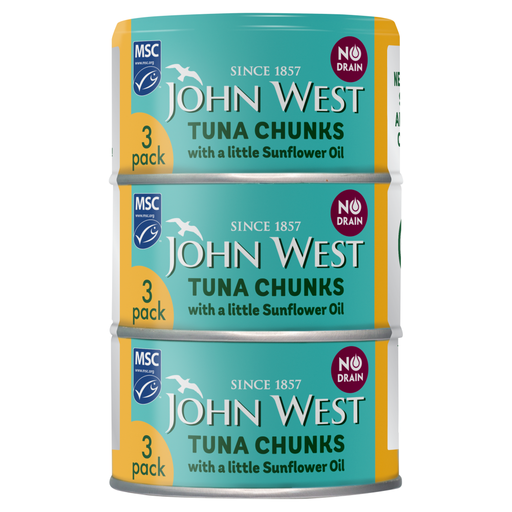 No image available
The no-drain format removes a step when assembling tuna portions for salads or pasta. This is a three-tin pack in sunflower oil; check the label’s nutrition basis before comparing its per-100 g figures with those for drained tuna in other packs.
Choose spring water when the batch recipe supplies its own sauce or dressing, brine when its salt fits the planned dish, or oil when you want that packing medium in the result. Princes Food and Drinks lists different fat and energy values for its spring-water and sunflower-oil chunks, so compare the exact labels rather than treating the variants as interchangeable.
Use drained weight where it is shown: it describes the tuna after packing liquid has been removed. Total tin weight alone is not a like-for-like measure of usable fish when comparing packs.
Follow that product’s transfer, refrigeration and use-within instructions. Marks & Spencer specifies a non-metallic container and refrigeration for its spring-water chunks and an 800 g steak product, with use within two days; its 200 g oil-packed steak specifies consumption within 24 hours.
No. The NHS says fresh and canned tuna do not count as oily fish.
A best-before date concerns quality rather than safety, according to UK government food guidance. Check the tin’s date, storage and product instructions; do not treat that general distinction as a reason to ignore an individual product warning.