BBQ hosts feeding several people
For shared salads, wraps or toppings, check how much tuna remains after draining each tin. The number of tins and their total packed weight do not answer that question on their own.


For tuna salads, grilled flatbread fillings and other mixed BBQ sides, start with chunks in a pack that supplies enough drained tuna for your guests. Choose steak-format tuna when recognisable pieces matter, or an explicitly no-drain product when easier assembly matters more; check the exact pack for drained weight, packing medium and salt.
For shared salads, wraps or toppings, check how much tuna remains after draining each tin. The number of tins and their total packed weight do not answer that question on their own.
If you are putting together flatbreads or sides while other food is on the grill, a product explicitly labelled no-drain can remove a preparation step. John West describes this feature for its No Drain range.
Steak pieces may suit a dish where the tuna stays visible. If fishing method or certification shapes your choice, check the claim on the particular pack rather than assuming it applies across a brand.
Start with what the tuna must do in the finished dish: provide enough drained pieces, retain its shape, open with little preparation or meet a stated sourcing requirement.
| Concern | What to check | Who this matters to |
|---|---|---|
| Enough drained tuna | Check the drained weight per tin and the number of tins before planning portions. | A host making shared salads or fillings needs enough tuna for the dishes, not merely a large-looking multipack. About 36% of consumers put usable drained quantity first. |
| Visible pieces | Look for the exact description: steak, chunks, or a mixture of chunks and flakes. | For tuna served on grilled toast or a composed salad, I would want pieces that remain recognisable. Keeping that texture is the primary concern for about 29% of consumers. |
| Quick assembly | Check whether the pack explicitly says no-drain; also read its packing-medium and salt information. | When wraps and sides need assembling beside the grill, avoiding a draining step can matter more than presentation. Roughly 21% of consumers prioritise that convenience. |
| Sourcing information | Read the particular pack for fishing-method, certification or traceability wording. | Some consumers want a stated sourcing claim before choosing tuna for a BBQ spread. For about 14%, that is the main consideration. |
Water, brine or oil contributes to packed weight but not to the drained tuna available for a filling or salad.
Use the drained weight on each pack when working out how much tuna you can serve.
The distinct pieces that make steak-format tuna useful for presentation will be less apparent once the tuna is broken up and mixed.
Choose chunks for mixed fillings; consider steaks when the finished dish calls for visible pieces. M&S describes its spring-water tuna steak as firm in texture.
The checked Princes and Sainsbury's spring-water chunks list different salt amounts per 100g drained. Packing medium alone does not tell you the salt content.
Read the nutrition information on the exact tin, particularly if the tuna will be combined with other strongly seasoned ingredients.
Storage instructions can differ between products, so a use-within period from another tin should not be applied to yours.
Transfer leftovers to a non-metallic container, refrigerate them and follow the opened-pack instructions on the product you bought.
Its range includes standard chunks and No Drain products, a distinction worth checking when preparing BBQ sides away from the kitchen.
Princes offers different packing media and piece formats, making the exact product description useful when matching tuna to a recipe.
Tesco's own-label range includes chunks and steaks in different packing media.
Its checked own-label spring-water chunks come in a 4 x 145g format for shoppers planning several mixed dishes.
Its tuna steak format is relevant when intact pieces are part of the dish rather than mixed into a filling.
These Joybuy selections are multipacks of tuna chunks in brine, spring water or sunflower oil for salads, wraps and other mixed BBQ sides. Check each pack's drained weight when planning how much to serve.
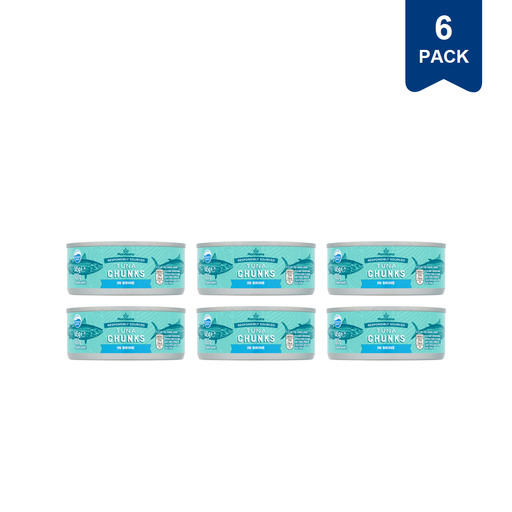 Image unavailable
Chunks in brine are an option for tuna that will be mixed into shared BBQ salads or fillings. The pack is labelled as six 145g tins; check the drained quantity on the pack when planning servings.
 Image unavailable
This spring-water chunk format suits mixed salads and wraps where the dressing supplies much of the finished flavour. The listing identifies six 145g tins; use the pack's drained weight to judge the quantity of tuna.
 Image unavailable
For a mixed BBQ salad using oil-packed tuna, this is a four-tin chunk format. The stated 125g is the tin size; read the label for the drained amount before planning portions.
 Image unavailable
These spring-water chunks are suited to salads or flatbread fillings that will be mixed with other ingredients. The pack contains four 125g tins; check drained weight and salt on the exact pack.
 Image unavailable
This four-tin chunk pack can be used for mixed BBQ salads or sandwich fillings. Each tin is labelled 145g; consult its drained weight for the amount available after opening.
Use chunks when the tuna will be mixed into salads, wraps or toppings. Steak-format tuna suits dishes where you want pieces to remain visible; M&S describes its checked spring-water tuna steak as firm in texture.
Move unused tuna into a non-metallic container, refrigerate it and follow the opened-pack instruction on that product. The checked Sainsbury's chunks specify use within one day, while the checked M&S steak product specifies up to two days, so read your own pack rather than applying one period to every tin.
Tuna is fish, so check the current pack's fish allergen and ingredient information before serving it. Read the labels of any dressings or other ingredients in the finished dish too.