Savoury-bake cooks
If you are making a savoury cracker or similar bake, compare plain tuna by its ingredients, packing liquid and salt rather than looking for a reduced-sugar claim.


For conventional sweet biscuits, tinned tuna is not a useful way to reduce sugar: its low labelled sugar content does not make it a substitute for the recipe’s sweetening, flour or fat. If the recipe is a savoury biscuit or cracker, plain tuna in spring water gives you a short ingredient list and lets you control added oil; drain it as the recipe requires, then check the tin’s salt content and the mixture’s moisture.
If you are making a savoury cracker or similar bake, compare plain tuna by its ingredients, packing liquid and salt rather than looking for a reduced-sugar claim.
If your aim is less sugar in a conventional sweet biscuit, reconsider the recipe’s sweetening choices. A low sugar value on a tuna label does not establish that tuna can replace a biscuit ingredient.
If fish allergens, possible bones or leftovers affect your plans, check the exact tin and its storage instructions before choosing a size or format.
Settle whether the bake is sweet or savoury first. For a savoury recipe, compare the packing liquid, salt and the amount of tuna you will use.
| Concern | What to check | Who this matters to |
|---|---|---|
| Sweet-biscuit ingredient fit | Confirm that the recipe is savoury before buying tuna. For a sweet biscuit, review the recipe’s intended sweetening ingredients instead. | If I am baking a sweet biscuit, I need an ingredient that serves the recipe, not merely one with little sugar on its label. About 50% of consumers put avoiding that ingredient mismatch first. |
| Moisture and seasoning | Check the packing liquid and labelled salt; drain the tuna as the recipe requires before judging the mixture. | For a savoury cracker, I want to control how much liquid and seasoning enter the dough. Moisture and seasoning are the main concern for about 33% of consumers. |
| Label and storage details | Read the fish allergen and bones information, then check the instructions for any tuna left after opening. | If a tin will leave leftovers, or dietary guidance affects my household, I need to check the pack before using it. About 17% of consumers place those label and storage details first. |
Princes Food & Drinks lists 0.0g sugars per 100g drained for its brine chunks and less than 0.1g for its sandwich tuna in spring water. Those values describe the tuna, not its ability to replace ingredients in a sweet biscuit.
Check the recipe style before shopping. If the biscuit is sweet, address sugar through the recipe rather than comparing tuna tins.
Spring-water tins can differ in salt, while the Rio Mare olive-oil tuna listed by Tesco Groceries declares 37g fat per 100g. Neither format should be treated as interchangeable in a savoury dough without considering its liquid and seasoning.
Read the exact nutrition panel and drain as the recipe requires. Adjust any added salt or oil with the chosen tin in mind.
Storage instructions vary: the reviewed Sainsbury’s spring-water tuna says to use refrigerated leftovers within one day, while the reviewed John West multipack specifies two days.
Choose a tin size that suits the recipe and follow its own instructions for storing unused contents.
Tuna is fish, and the reviewed John West label warns that bones may remain. Baking the tuna does not remove the need to check who will eat it.
Read the allergen and bones information on the exact pack. Where NHS tuna-intake guidance applies, include tuna used in a bake when considering the weekly total.
Princes Food & Drinks lists plain chunks in brine and sandwich tuna in spring water, giving savoury-bake cooks different packing formats to compare.
The reviewed spring-water chunks come in an easy-open multipack for cooks who prefer individually portioned tins.
Its reviewed 145g spring-water chunks provide product-specific ingredients and nutrition information for comparison.
The reviewed spring-water chunks offer another plain-tuna label to compare for a savoury recipe.
Tesco Groceries lists tinned tuna in oil, spring water, brine and drained formats, including Tesco-labelled options.
These tins are plain spring-water or brine options, including a no-drain format, to consider when a savoury biscuit or cracker recipe calls for tuna. They are not substitutes for ingredients in conventional sweet biscuits.
 No image available
Consider the separately portioned tins if a savoury recipe uses tuna in stages or makes several batches. Spring-water tuna still needs to be drained as the recipe requires; check the salt on the pack before seasoning.
 No image available
This single tin is an option for a savoury recipe using tuna in spring water. Drain it as directed, and check the exact pack’s nutrition basis before comparing its sugar or salt figures with values stated per 100g drained on other tins.
 No image available
Consider this single spring-water tin when its size is close to the tuna quantity in a savoury recipe. Drain it to suit the mixture, and check the pack’s salt value before adding seasoning.
 No image available
The no-drain format may suit a savoury preparation where avoiding a draining step matters. Check whether the recipe can accommodate the tin’s remaining moisture rather than assuming it will behave like thoroughly drained chunks.
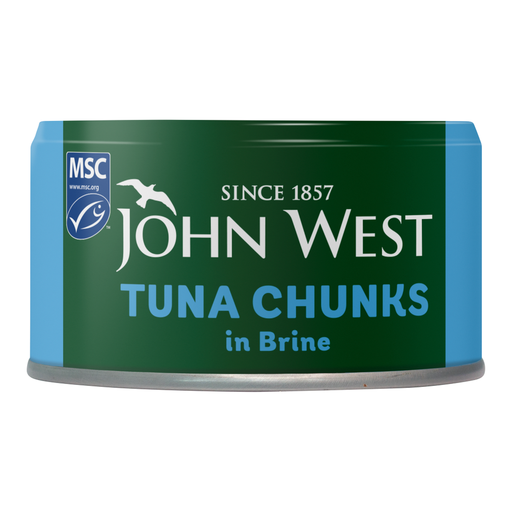 No image available
This brine-packed tin is an option if the savoury recipe can accommodate a salt-containing packing liquid. Drain it as directed and check the exact pack’s salt value before seasoning the mixture.
Not for a conventional sweet biscuit: a low sugar value on plain tuna does not make it a substitute for the recipe’s sweetening, flour or fat. For a savoury biscuit, compare the exact tin’s ingredients, packing liquid and salt instead of assuming a reduced-sugar claim distinguishes it.
Plain tuna in spring water is a starting point if you want to control added oil. Drain it as the recipe requires and check its salt; a no-drain or oil-packed tin may change the amount of liquid or fat entering the mixture.
Follow the storage directions on the tin you opened. The reviewed Sainsbury’s spring-water product says to transfer unused contents to a non-metallic container, refrigerate and use within one day; the reviewed John West multipack specifies refrigeration and use within two days.
Yes. NHS guidance says people who are pregnant or trying for a baby should have no more than four cans of tuna a week or two tuna steaks a week; tuna used in a bake still counts as tuna.