Group-meal planners
If tuna will go into several jacket potatoes, sandwiches or pasta dishes, compare the amount of drained fish in each pack before deciding how many to buy.


For several Bonfire Night portions, start by checking how much drained tuna a multipack provides, rather than relying on its can count or net weight alone. Choose the packing liquid and labelled salt level to suit the food you plan to make; a no-drain pack can simplify serving, but check its quantity against a conventional multipack.
If tuna will go into several jacket potatoes, sandwiches or pasta dishes, compare the amount of drained fish in each pack before deciding how many to buy.
Spring water, brine and oil suit different recipes. Check the exact tin’s ingredients and nutrition panel, particularly when several cans will go into one shared dish.
A no-drain format can remove a preparation step. If sourcing matters most, look for a claim or certification on the specific pack rather than assuming it applies across a brand’s range.
Decide how much tuna the gathering needs, then check the liquid, labelled nutrition and preparation format against your menu.
| Concern | What to check | Who this matters to |
|---|---|---|
| Usable quantity | Compare can count and drained weight, not just net pack weight. Tesco Groceries lists 4 × 10²g drained tuna for its 4 × 145g spring-water pack. | If I am preparing several portions, I need to know how much tuna will remain after draining. About 33% of consumers put usable quantity first. |
| Liquid and labelled nutrition | Check whether the tuna is in spring water, brine or oil, and read salt and other values on the exact pack per 100g drained. | For a shared filling, I want the liquid and labelled salt level to fit the dish before I add other ingredients. That is the primary concern for about 27% of consumers. |
| Serving effort | Check for an explicit no-drain claim and compare the pack quantity with a conventional multipack. | When I need to assemble sandwiches or toppings quickly, skipping the draining step matters most; about 20% of consumers prioritise serving convenience. |
| Sourcing information | Look for certification or a sourcing statement on the specific tin. The Marine Stewardship Council says its blue label identifies wild-caught seafood independently assessed against its sustainability requirements. | I want to identify the sourcing claim on the tuna I am serving, even if I still need to check its quantity and liquid. About 20% of consumers make sourcing information their first concern. |
A larger net weight does not necessarily mean the same weight of fish. Tesco Groceries lists 4 × 10²g drained tuna for its 4 × 145g spring-water pack.
Use drained weight to work out whether a pack provides enough for the portions you plan to serve.
The researched Tesco spring-water pack lists 0.90g salt per 100g drained, while Sainsbury's lists 0.12g for its spring-water pack. Those figures describe the specific products, not every tin from either retailer.
Read the nutrition panel on the exact variant, particularly if several cans will be combined in one dish.
Asda lists 0.90g salt per 100g drained for its brine four-pack. Its sunflower-oil four-pack lists 160 kcal and 6.4g fat per 100g drained.
Check the liquid and the labelled values against the other ingredients you intend to use.
No-drain wording addresses preparation, while a sourcing label addresses how the fish was sourced. Neither establishes how much tuna the pack provides for your gathering.
Confirm the pack format, drained amount where stated, and fish allergen information before choosing.
Its researched spring-water product is a 4 × 145g own-label multipack for preparing several portions.
Its researched spring-water product is a 4 × 145g own-label multipack.
The researched own-label four-packs include tuna in brine and in sunflower oil.
The researched spring-water product is a branded 4 × 145g multipack.
Its researched No Drain spring-water product is a 3 × 100g pack suited to quick assembly.
The researched spring-water product is a 160g single can for shoppers considering its sourcing statement.
These multipacks offer spring-water, brine and sunflower-oil tuna for preparing several portions at a Bonfire Night gathering. Check the exact pack’s drained weight before planning quantities.
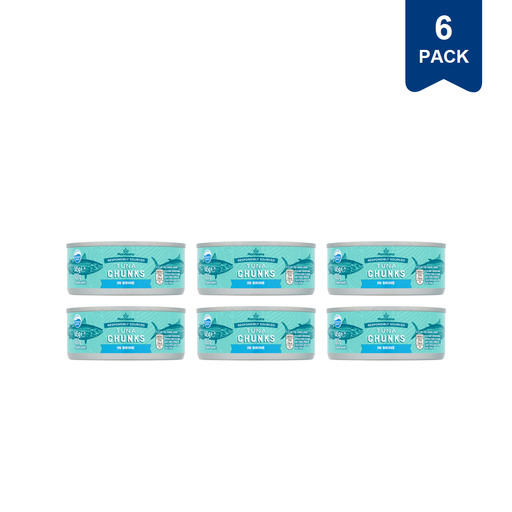 Image unavailable
The six-can brine format may suit a gathering where tuna will go into more than one dish. Check the drained weight and fish allergen information on the pack before planning portions.
 Image unavailable
The spring-water format is an option for sandwiches, pasta or jacket-potato fillings. Confirm the six-pack contents and drained weight on the exact pack before working out how many portions it will provide.
 Image unavailable
Choose this four-can oil format when sunflower oil fits the planned dish. Check its nutrition panel and drained weight on the exact pack; the 125g figure is the weight stated for each can, not its drained tuna weight.
 Image unavailable
This four-can spring-water pack can be considered for sandwiches, salads or pasta. Check the drained weight for portion planning, and check the exact pack if a no-drain format is important to you.
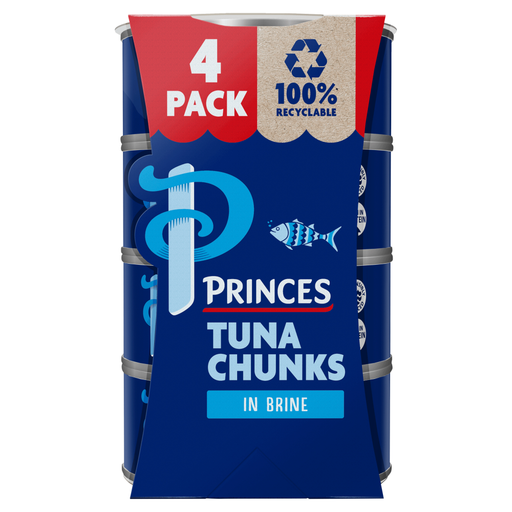 Image unavailable
The four-can brine format may suit a planned sandwich or pasta filling. Check the exact pack’s drained weight, labelled salt and fish allergen information before using several cans in a shared dish.
Use the labelled drained weight, then check the can count against the portions you need. Tesco Groceries lists 4 × 10²g drained tuna for its 4 × 145g spring-water pack, so its net pack weight includes more than the drained fish.
Follow the instructions on that product’s label. The researched Tesco, Princes and M&S products instruct shoppers to transfer unused tuna to a suitable container, refrigerate it and use it within two days; instructions for unopened tins do not apply once they have been opened.
Tuna is fish, so do not treat a tuna dish as suitable for someone who has told you they have a fish allergy. Check the exact pack’s allergen information and ask the guest about their requirements before preparing food for them.
Yes. NHS guidance says people who are pregnant or trying for a baby should have no more than four cans of tuna a week or two tuna steaks a week because tuna contains more mercury than other fish. That limit is specific to those circumstances, rather than a portion rule for every guest.
The Marine Stewardship Council says its blue label identifies wild-caught seafood from fisheries independently assessed against its environmental sustainability requirements. It does not tell you the tin’s drained weight, salt level or suitability for your recipe.