Make-ahead buffet hosts
If tuna is going into sandwiches, salads and pasta, plan how much each dish needs and check the drained weight before opening more tins than you can use.


For several buffet dishes, compare the tuna available after draining rather than choosing by tin count alone. A four-tin chunk pack lets you open cans for separate fillings or salads; consider a no-drain pack when quick preparation matters, or larger steak tins when the tuna will remain visible in a dish. Match the packing liquid to the recipe and follow the label’s instructions for opened tuna.
If tuna is going into sandwiches, salads and pasta, plan how much each dish needs and check the drained weight before opening more tins than you can use.
When you are assembling food shortly before guests arrive, a no-drain format avoids a conventional draining step. Check its total pack size against the number of fillings you intend to make.
For a salad or platter where the tuna remains visible, consider steak tins as well as chunks. Larger tins deserve particular thought if only a small amount will be served.
Work out the tuna needed across your dishes before settling on a pack size. Then choose a cut, packing liquid and preparation format that fit those dishes.
| Concern | What to check | Who this matters to |
|---|---|---|
| Usable quantity | Check the can count, net weight and stated drained weight; divide the amount needed between your planned dishes. | If I am making several fillings and salads, I need enough tuna without opening a large tin for just one small dish. About 40% of consumers put usable quantity first. |
| Recipe fit | Read the exact packing-liquid variant and ingredients; decide whether chunks or steaks suit the finished dish. | For a dressed salad, I want the liquid and cut to work with the other ingredients rather than changing the dish unexpectedly. Roughly 30% of consumers make recipe fit their primary concern. |
| Preparation | Check whether the pack explicitly says no-drain and whether its total contents cover the dishes you plan to assemble. | When sandwiches are being made shortly before guests arrive, I would rather avoid a draining step. Around 20% of consumers prioritise preparation convenience. |
| Labels and handling | Check the fish-allergen statement, any product-specific sourcing claim and the after-opening storage instructions. | If guests need clear allergen information or tuna may be left over, I want the relevant instructions on the tin before serving. About 10% of consumers make label and handling checks their main concern. |
Four tins do not necessarily provide the same amount of tuna across different pack sizes, and packing liquid affects how much remains after draining.
Check each pack’s net and drained weights, then plan how many tins to open for each dish.
Spring water, brine and oil give different starting points for a filling or salad. Chunks and steaks also serve different presentation needs.
Choose the exact liquid and cut for the dishes you are preparing, rather than relying on the brand or pack count alone.
Opened tuna needs refrigerated storage according to its product label. A large bowl of prepared buffet food also leaves less scope to keep the remainder chilled.
Open what you expect to use, follow the tin’s storage directions and replenish smaller serving bowls from food kept chilled.
Opening more tins than needed can leave unused fish requiring prompt storage or disposal.
Tuna contains fish. Guests avoiding fish need to be able to identify tuna dishes and avoid contact through shared serving utensils.
Identify the dishes clearly, check the product label and use separate utensils where needed. Check the tuna for bones while preparing it.
Tesco Groceries lists own-label tuna chunks in 4 × 145g multipacks with spring water, brine or sunflower oil, alongside larger single tins.
Sainsbury's Groceries lists own-label 4 × 145g tuna-chunk multipacks in spring water, brine, olive oil and sunflower oil.
Princes Food and Drinks lists its spring-water tuna chunks in single tins and multipacks including 3 × 80g, 4 × 145g, 6 × 145g and 8 × 145g.
A Tesco Groceries listing identifies a John West No Drain spring-water multipack as 3 × 100g, aimed at preparation without conventional draining.
Ocado lists an M&S spring-water tuna-steak multipack of 4 × 200g, a format to consider when tuna will be visible in a salad or platter.
These multipacks cover no-drain chunks for quick assembly and conventional chunk packs for dividing between buffet dishes. Choose the packing liquid for your recipe and check each pack’s usable quantity.
 Image unavailable
Consider this pack when you are assembling sandwiches or salads and want to avoid conventional draining.
Three 100g cans of tuna chunks in spring water. Check the label’s fish-allergen and after-opening instructions before serving.
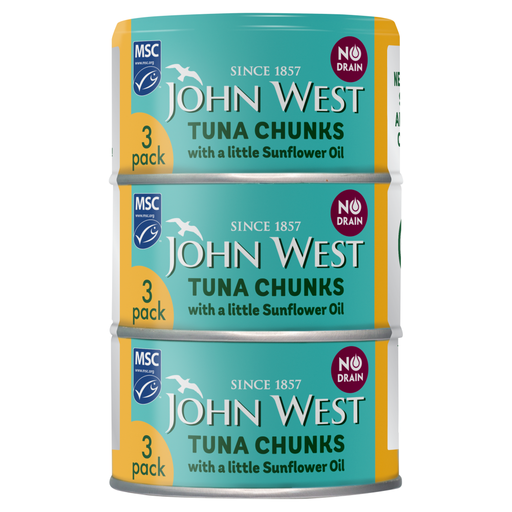 Image unavailable
Consider this no-drain format for quick preparation when sunflower oil suits the planned filling or salad.
Three 100g cans of tuna chunks. The oil gives a different recipe starting point from spring water; check the label’s fish-allergen information and storage directions.
 Image unavailable
Four separate tins can be opened as needed across sandwiches, salads or pasta dishes where brine suits the seasoning.
Four 145g cans of tuna chunks in brine. Check the drained weight when planning the usable amount, and follow the label after opening.
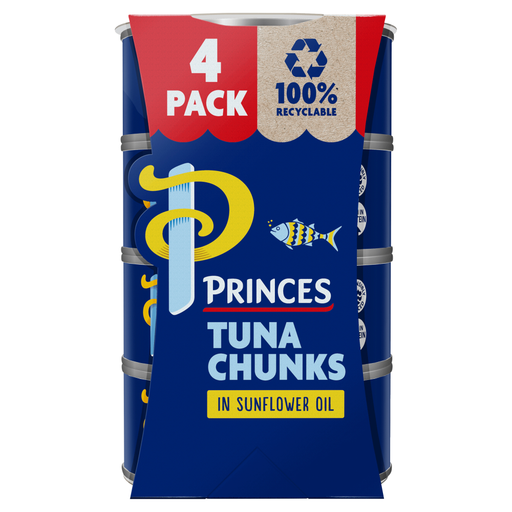 Image unavailable
Choose this four-tin format when you want to divide tuna between dishes and sunflower oil fits their dressing or filling.
Four 145g cans of tuna chunks in sunflower oil. Check the drained weight for quantity planning and the fish-allergen statement before serving.
 Image unavailable
Consider these smaller separate cans when planning spring-water tuna for several fillings or salads.
Four 125g cans of tuna chunks. Check the exact can’s draining directions before preparing the buffet, as well as its drained weight and after-opening instructions.
Start with the dishes and guest numbers, then compare packs using their stated drained weights where available. Tesco Groceries and Sainsbury's Groceries list 4 × 145g chunk formats, while Ocado lists an M&S 4 × 200g steak pack; neither pack size alone tells you how much your particular spread needs.
Choose the liquid for the recipe: spring water offers a more neutral starting point, while brine brings salt and oil changes the dressing or filling. Tesco Groceries and Sainsbury's Groceries list chunk multipacks in different liquids, so check the exact variant and ingredients rather than relying on the product line name.
A no-drain pack makes sense when avoiding the conventional draining step matters during last-minute assembly. Tesco Groceries lists a John West 3 × 100g No Drain spring-water pack; compare its total contents with the quantity needed for your dishes before choosing it over a larger multipack.
Follow the directions on the exact tin and keep prepared chilled dishes refrigerated until they are needed for serving. ASDA Groceries’ listing for Princes 4 × 145g spring-water tuna says to refrigerate opened contents and use them within two days; Marks & Spencer also instructs buyers of its listed tuna chunks to move unused contents to a non-metallic container. Serve smaller amounts and replenish them from chilled food.
Tuna contains fish, so identify tuna dishes clearly and avoid sharing their serving utensils with food intended for a guest avoiding fish. Check each product’s allergen label when planning and preparing the buffet.