Hosts making several tuna dishes
Sandwiches, jacket potatoes, pasta salad and dips can call for different amounts of tuna. Plan the portions, then compare the drained quantity in each pack so opened tins are likely to be used.


Choose a pack by how much drained tuna your buffet dishes will use, rather than by the number of tins alone. Spring water or brine may suit fillings to which you will add dressing; choose oil-packed tuna when its oil fits the recipe. Check the exact tin for drained weight, fish allergen information, storage instructions and any sourcing certification you want.
Sandwiches, jacket potatoes, pasta salad and dips can call for different amounts of tuna. Plan the portions, then compare the drained quantity in each pack so opened tins are likely to be used.
Choose the packing liquid and texture with the finished dish in mind. Spring water, brine and oil are not interchangeable in every filling; read the exact tin’s ingredients and nutrition panel when those details matter to you.
For a shared buffet, check fish allergen information, possible-bones warnings and instructions for unused tuna. If certified sourcing is a priority, look for the MSC mark on the product you choose.
For a Boxing Day buffet, settle the quantity you will use and the dish you are making before choosing between pack formats and packing liquids.
| Concern | What to check | Who this matters to |
|---|---|---|
| Usable quantity | Compare drained weight and pack size with the portions you plan to make. | If I am making several fillings, I need enough drained tuna without opening more tins than I can use. About 42% of consumers put usable quantity first. |
| Recipe fit | Check the packing liquid and whether chunks, flakes or a ready-drained format suit the dish. | For a pasta salad or sandwich filling, I want the tuna’s liquid and texture to work with the other ingredients. Recipe fit comes first for about 33% of consumers. |
| Labels and leftovers | Read the fish allergen and storage instructions; check the exact tin for an MSC mark if certification matters. | When serving guests or keeping unused tuna, I need clear product instructions and any sourcing claim I rely on to appear on the tin. About 25% of consumers make those checks their primary concern. |
A four-pack and a three-pack can contain different tin sizes and different drained quantities. The number of tins alone does not tell you how much tuna will go into your dishes.
Check drained weight alongside pack size, then choose an amount your buffet is likely to use.
The nutrition panels for Princes tuna in sunflower oil and Asda tuna in spring water list 9.5g and 1.0g fat respectively per 100g drained. They are different products, so check the exact tin rather than applying either figure to all oil- or water-packed tuna.
Choose the liquid for your recipe and read the tin’s nutrition panel, including its stated measurement basis.
The Marine Stewardship Council reported in 2026 that Tesco and Sainsbury’s had reached MSC-labelled status across their own-brand tuna ranges. That does not establish the certification of a third-party product sold by either retailer.
If MSC certification is part of your decision, check for its mark on the exact product.
Some product labels direct shoppers to transfer unused tuna, refrigerate it and use it within two days. Food Standards Scotland advises checking each food label for its instructions after opening.
Plan portions before opening tins, then follow the storage directions on the pack you use.
Tesco’s own-label range includes spring-water tuna in a 4 x 145g format, a pack size to consider when preparing several dishes.
Sainsbury’s own-label tuna is a route for shoppers who want to examine a supermarket’s own-brand product labels.
Asda product listings include a 4 x 145g brine pack and a smaller 3 x 80g spring-water pack.
Princes offers tuna chunks in brine and sunflower oil, as well as sandwich tuna and a ready-drained range.
John West offers brine and spring-water tuna, including a listed 125g MSC-labelled spring-water tin with 102g drained weight.
M&S lists spring-water tuna in a 160g single tin and a 640g four-pack.
These John West and Princes multipacks offer spring-water, brine and sunflower-oil options for buffet dishes. Compare each pack’s quantity and instructions with what you plan to prepare.
 No image available
Consider this four-tin pack when the recipe calls for oil-packed tuna across several servings. Check the drained quantity for portion planning; the product information identifies fish as an allergen and warns that bones may remain.
 No image available
This four-tin spring-water pack is an option for salads or sandwich fillings to which you plan to add other ingredients. Check its drained quantity against your portions and follow the pack’s refrigeration instructions for unused tuna.
 No image available
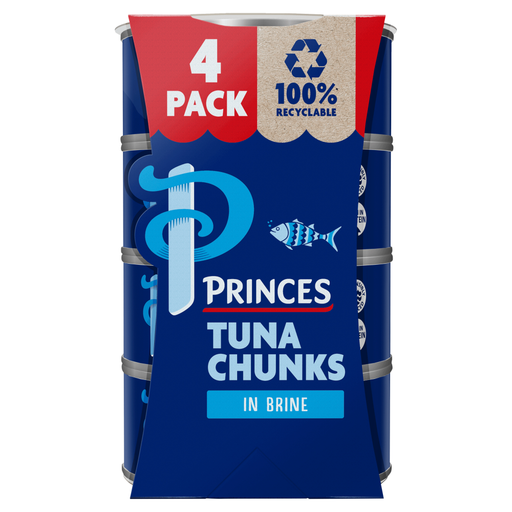
For several brine-packed buffet fillings, this pack contains four 145g tins. Check the drained weight before deciding how many portions it will make, and read the exact pack’s nutrition basis and fish allergen information.
 No image available
The three 100g tins offer a smaller pack format for spring-water tuna dishes. No Drain is part of this product’s name, but the description discusses both draining and using tuna straight from the tin; check the specific pack instructions before relying on no-drain use.
 No image available
Choose this four-tin format if sunflower oil fits several planned sandwiches, salads or pasta dishes. Check its drained quantity for portion planning and the exact pack label before comparing nutrition with other tuna.
Compare the packs’ drained quantities, then estimate how much tuna your planned dishes will use. Tin count or net weight alone may not describe the amount that goes into the finished food.
Choose the packing liquid that fits your recipe: spring water or brine if you will add your own dressing, or sunflower oil if you want that oil in the dish. Check the exact product’s fat and salt figures rather than assuming all tins packed in the same liquid have identical nutrition.
Follow that tin’s storage directions. Marks & Spencer’s listed spring-water product instructs shoppers to move unused contents to a non-metallic container, refrigerate them and eat them within two days; Food Standards Scotland likewise advises checking the label for instructions after opening.
Tuna contains fish, which the listed product labels identify as an allergen. If guests have allergies, identify tuna-containing dishes clearly and check every ingredient’s current label when preparing the buffet.
Look for the MSC mark on the exact tin you intend to buy. A retailer’s own-brand sourcing statement does not establish whether a different brand or product on its shelves carries that certification.