Organic-claim verifiers
If organic status will determine your purchase, look for an explicit product-level claim and certification details on the exact tin. A fishing-method statement or green-looking pack answers a different question.


For a savoury bread filling or topping, choose the tuna’s format and packing medium to suit the recipe: plain chunks in spring water let you control added oil and seasoning, while oil-packed or flavoured tuna brings ingredients you need to account for. If organic status matters, check the exact product’s organic label and certification separately from any fishing-method or traceability claim; organic olive oil alone does not establish that the whole tin is organic.
If organic status will determine your purchase, look for an explicit product-level claim and certification details on the exact tin. A fishing-method statement or green-looking pack answers a different question.
If tuna is going into a filling or onto baked bread, consider its liquid, oil, seasoning and texture alongside the other ingredients. Plain chunks offer more control; a flavoured tin makes sense only when its additions suit the dish.
If catch method, fishery certification or traceability matters to you, check which claim applies to the particular product. These sourcing details should be assessed separately from organic labelling.
For a bread bake, decide whether organic status is a requirement, then check that the tuna’s packing medium and sourcing information meet your separate needs.
| Concern | What to check | Who this matters to |
|---|---|---|
| Organic claim | Look for an explicit organic claim for the product and its certification details; do not substitute a sourcing claim. | If organic status is the deciding factor, I need to establish what the claim covers before choosing a tin. About 44% of consumers put that product-level assurance first. |
| Recipe control | Read the packing medium and ingredients; consider draining, added oil and seasoning in the planned filling or topping. | For a bread filling, I want the tuna’s moisture and flavour to fit what I am making. Recipe control comes first for about 33% of consumers. |
| Seafood sourcing | Check the exact product’s catch-method, fishery-certification or traceability wording and its scope. | When two tins otherwise suit my bake, I want to distinguish their stated sourcing practices. About 23% of consumers make that their primary concern. |
Pole-and-line, MSC and traceability wording concerns sourcing; it does not establish that tinned tuna meets organic labelling requirements.
Check for an explicit organic claim and certification on the exact product, then assess its sourcing information separately.
Marks & Spencer lists 0.6g fat per 100g for its spring-water chunks and 6.4g per 100g for its sunflower-oil tuna steak. Those figures describe the cited products, not every tin in either format.
Drain plain tuna where the filling needs it. If using oil-packed or flavoured tuna, account for its oil, salt and seasonings in the dish.
The cited Marks & Spencer tuna products give different periods for using refrigerated leftovers after opening.
Follow the instructions on your tin, move unused tuna to a suitable container and refrigerate it promptly.
The NHS advises people who are pregnant or trying for a baby to have no more than four cans of tuna or two tuna steaks a week because tuna contains higher levels of mercury than other fish.
Apply the NHS tuna guidance to tuna used in bread dishes as well as other meals; an organic claim does not change that limit.
A tuna range that includes plain chunks for use in savoury dishes.
A canned-tuna range with chunks, steaks and other formats.
A retailer whose tinned-tuna category includes different formats and packing media.
A retailer offering plain tuna and flavoured ready-to-eat options.
A retailer with a tuna category and a corporate seafood-sourcing policy.
A retailer with tuna chunks in spring water and tuna steak in sunflower oil among its formats.
These tins offer spring-water chunks for fillings and olive-oil tuna steaks for a topping or filling where the oil suits the recipe. Check the exact pack for any product-level organic claim.
 No image available
A plain spring-water option for a filling whose seasoning you want to control. The pack contains four 125g cans; check the exact tin for organic certification and storage instructions.
 No image available
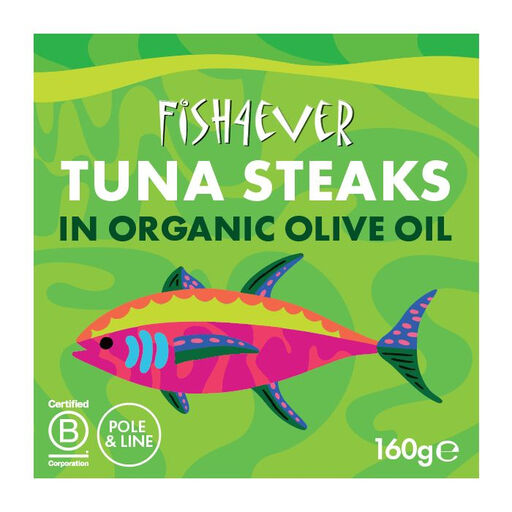
Consider this oil-packed tuna when olive oil suits the bread topping or filling. The stated organic ingredient is the olive oil; check the exact tin before treating the whole product as organic, and account for its oil and salt in the recipe.
 No image available
The six-pack may suit several plain tuna fillings. The listed ingredients are skipjack tuna, spring water and salt; check the exact pack for an organic claim and follow its storage instructions.
 No image available
The no-drain format is an option for a bread filling when you want to avoid a separate draining step. This pack contains three 100g cans; check the exact tin for organic status and storage instructions.
 No image available
A single can offers plain tuna for a filling or topping you will season yourself. Its listed ingredients are skipjack tuna, spring water and salt; verify any organic claim on the exact can.
No: an organic claim for one ingredient does not establish that the whole product is organic. Check the exact tin’s product-level wording and certification; GOV.UK distinguishes an organic product claim from identifying an individual organic ingredient.
No. Pole-and-line describes a fishing method, while MSC wording concerns fishery certification; neither establishes an organic product claim. Assess each claim on the particular tin.
Plain chunks in spring water are a starting point when you want to control the filling’s seasoning and added oil. Drain them if the recipe needs a less wet filling; choose oil-packed or flavoured tuna when its added ingredients suit the dish.
Follow that product’s label and move unused tuna to a suitable container in the fridge. Marks & Spencer instructs consumers to use its cited spring-water chunks within two days of opening, but its cited sunflower-oil steak within 24 hours.
No. The NHS advises people who are pregnant or trying for a baby to have no more than four cans of tuna or two tuna steaks a week because tuna contains higher levels of mercury than other fish. An organic claim does not alter that tuna-specific advice.