Shoppers planning several breakfasts
If you are making tuna mayo, toast toppings or sandwiches across the weekend, compare drained quantity and the number of tins. A larger-looking pack does not necessarily contain more tuna to use.


For several weekend breakfasts, standard chunks or sandwich tuna work for fillings you are happy to drain, while no-drain portions remove that preparation step. Compare the amount of drained tuna rather than tin count alone, then choose the texture and packing liquid that suit your meal. Check sourcing claims on the particular pack or stated own-brand range.
If you are making tuna mayo, toast toppings or sandwiches across the weekend, compare drained quantity and the number of tins. A larger-looking pack does not necessarily contain more tuna to use.
No-drain portions remove a step when you want to put breakfast together quickly. If you do not mind draining a standard tin, consider the texture you want before choosing a convenience format.
Look for an MSC ecolabel or a stated fishing-method or traceability claim on the relevant pack. A claim about a retailer’s own-label range does not automatically cover the branded tins it sells.
Start with the usable quantity and breakfast format, then check packing liquid and any sourcing information that matters to your choice.
| Priority | What to check | Your needs |
|---|---|---|
| Usable quantity | Compare the stated drained weight as well as tin size and pack quantity. Check whether the quantity shown describes one tin or the whole pack. | I am making more than one breakfast and want to know how much tuna the pack will provide after draining. |
| Texture and preparation | Check whether the product contains chunks, a chunks-and-flakes mix or more intact pieces, and whether it is labelled no-drain. Princes describes its sandwich tuna as a mix of chunks and flakes. | For tuna mayo or a sandwich, flakes may work for me; for visible pieces on toast, I would look for chunks. A no-drain pack matters more when I have little preparation time. |
| Packing liquid | Read whether the tuna is packed in spring water, brine or oil, and compare nutrition information on the same drained-weight basis. Princes lists 99 kcal and 0.5g fat per 100g drained for its spring-water chunks; Sainsbury’s lists 180 kcal and 9.5g fat per 100g drained for Princes sunflower-oil chunks. | I want to choose the packing liquid deliberately rather than assume the two Princes chunk products have the same nutrition values. |
| Sourcing information | Check the individual pack for an MSC ecolabel and read the scope of any pole-and-line or traceability statement. Sainsbury’s describes its own-label canned tuna as MSC-certified and pole-and-line caught; M&S makes pole-and-line claims for its stated canned-tuna products. | If sourcing affects my choice, I want the claim to apply to the tin or own-brand range I am buying, not merely to the shop. |
| Weekly intake | If pregnancy guidance applies, account for tuna eaten at other meals. The NHS advises people who are pregnant or trying for a baby to have no more than four cans of tuna or two tuna steaks a week. | If I am pregnant or trying for a baby, a weekend multipack is part of my weekly tuna total, not a separate allowance. |
Tins of different sizes can provide different amounts of tuna after draining, so the number on the outer pack does not settle how many fillings it will make.
Check the drained weight and whether the stated quantity is per tin or per pack before planning several breakfasts.
The cited Princes spring-water and sunflower-oil chunks have different stated nutrition values per 100g drained. The packing liquid also changes what you need to drain or mix into a filling.
Read the pack’s packing-liquid and nutrition information, then choose the product that fits the breakfast you intend to make.
A retailer’s own-label statement may not describe a branded product alongside it.
Check the claim on the individual pack and whether a retailer statement covers that product or its own-brand range.
The NHS weekly guidance for people who are pregnant or trying for a baby applies across meals, including weekend breakfasts.
If that guidance applies to you, count tuna from other meals when planning how to use a multipack.
These product and own-brand statements help identify what to check; they do not describe every tuna tin sold by each retailer.
Princes offers spring-water chunks and a sandwich tuna made with chunks and flakes, giving breakfast shoppers different textures to consider.
John West No Drain Tuna Chunks are an option when avoiding the draining step matters for a quick breakfast.
Tesco’s own-label tuna is a separate range to the branded tins listed by the retailer.
Sainsbury’s makes a sourcing statement specifically about its own-label canned tuna.
M&S states sourcing information for its canned-tuna products, including chunks in spring water.
These options include no-drain portions and standard chunks in different packing liquids for weekend toast and sandwich fillings. Check each pack’s usable quantity and preparation instructions before choosing.
 No image available
The three-can no-drain format suits a quick toast or sandwich filling when you would rather skip draining. It contains tuna chunks in springwater.
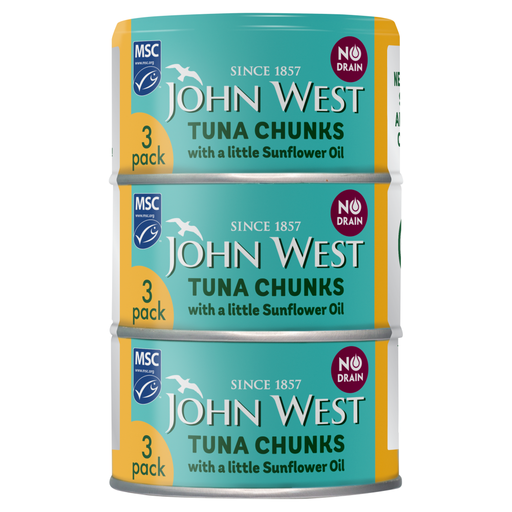 No image available
This three-can no-drain option is for a filling where you want tuna packed in sunflower oil rather than springwater. Compare the pack’s nutrition information with other packing liquids if that distinction matters to you.
 No image available
Four tins offer portions for repeated toast or sandwich fillings. This title identifies springwater chunks but not a no-drain product, so check the pack’s preparation instructions if avoiding draining is important.
 No image available
This four-tin pack provides chunks for breakfasts made on more than one day. It is packed in brine, so check that packing liquid and the nutrition label against your preferences.
 No image available
Spring-water chunks are a format to consider for sandwich fillings. Confirm the number of tins and total quantity on the pack: the stated 145g quantity does not, by itself, establish the contents of the six-pack.
Not necessarily. Compare the number of tins with their stated drained weight to work out how much tuna you can use; tin count alone does not account for different sizes or packing liquid.
They are packed in different liquids, and the cited Princes products have different nutrition values. Princes lists 99 kcal and 0.5g fat per 100g drained for its spring-water chunks; Sainsbury’s lists 180 kcal and 9.5g fat per 100g drained for Princes sunflower-oil chunks. Check the values on the variant you buy.
No. Sainsbury’s MSC and pole-and-line statement applies to its own-label canned tuna, while M&S makes statements about specified products and its canned-tuna range. Check the individual pack when choosing a branded or different own-brand tin.
The NHS advises people who are pregnant or trying for a baby to have no more than four cans of tuna or two tuna steaks a week because tuna can contain higher levels of mercury than other fish. The guidance concerns the weekly total across meals, not a separate breakfast allowance.
Follow the instructions for the product you have opened. Sainsbury’s information for Princes Tuna Chunks in Sunflower Oil says to put leftovers in a sealed container in the fridge and eat them within two days.