Shoppers planning several meals
If tuna is one part of a wider breakfast shop, compare the usable drained quantity and choose a pack size you expect to use. Tesco and Sainsbury’s list both multipack tuna formats and other tin options.


For tuna served as an optional addition to a Full Scottish breakfast, start with standard chunks in spring water or brine and compare drained weight as well as tin size. Spring water avoids added oil, while brine offers a different seasoning; choose sunflower oil for its richer flavour or a no-drain pack when that format suits how you plan to serve it. Live Breathe Scotland’s breakfast recipe focuses on items such as Lorne sausage and tattie scones, so tuna need not replace the dishes you want in the breakfast itself.
If tuna is one part of a wider breakfast shop, compare the usable drained quantity and choose a pack size you expect to use. Tesco and Sainsbury’s list both multipack tuna formats and other tin options.
Spring-water chunks are a starting point if you want tuna alongside eggs, tattie scones or toast without an oil packing medium. Check the exact ingredients: Tesco’s cited spring-water chunks list skipjack tuna and spring water, while other variants may differ.
A no-drain pack may appeal if you want fewer preparation steps; steak-style pieces offer another way to serve tuna separately rather than mixing in chunks. Check the wording on the particular tin before choosing it for either purpose.
For tuna as an optional breakfast addition, decide how much usable fish you need, which packing medium suits the plate and whether draining is inconvenient.
| Concern | What to check | Who this matters to |
|---|---|---|
| Usable quantity | Compare drained weight, tin count and whether you will use a multipack before its best-before dates. | If I only want a little tuna with breakfast, I need a tin size that will leave little unused; for several meals, a multipack may suit me. About 38% of consumers put usable quantity and pack fit first. |
| Packing medium | Read the ingredients and nutrition panel for the exact spring-water, brine or oil variant. Asda lists 109kcal and 1.0g fat per 100g drained for its cited brine chunks, compared with 160kcal and 6.4g fat for its cited sunflower-oil chunks. | When the rest of my breakfast is already rich, I may prefer tuna without added oil; at other times, flavour matters more. Packing medium is the primary concern for about 37% of consumers. |
| Preparation and texture | Check whether the tin is labelled no-drain, chunks or steak, and whether that format fits the way you will serve it. | If I am putting tuna straight onto toast, avoiding a draining step or choosing a particular piece size can matter. About 25% of consumers prioritise preparation or serving texture. |
A tin’s total weight includes its packing liquid, so two tins of similar size need not provide the same amount of tuna to serve.
Check the drained weight and consider how many tins you will actually use.
The packing medium changes the ingredients and can change the nutrition values. Asda’s cited brine and sunflower-oil chunks both list 25g protein per 100g drained, but their listed energy and fat values differ.
Choose the medium for the flavour and serving style you want, then read the exact tin’s ingredients and nutrition panel.
Storage instructions matter if tuna is only a small breakfast addition and some remains. Tesco instructs shoppers to transfer unused contents from its cited product to a non-metallic container, cover and refrigerate them, and consume them within two days.
Check your tin’s instructions and plan another use for any remainder.
Sainsbury’s describes independently MSC-certified fisheries for its cited spring-water product. Princes and M&S describe their own sourcing programmes or policies; those are different kinds of statement.
If sourcing affects your choice, check what the exact product label says and whether it names a certification, retailer policy or brand programme.
Packing medium and tin format vary within a brand, so use these product-specific examples as a starting point and check the variant you intend to buy.
Tesco lists own-label tuna chunks in spring water, alongside other packing media and tin formats.
Sainsbury’s lists own-label spring-water and brine multipacks, as well as other tuna formats.
Asda’s cited four-tin chunk packs include brine and sunflower-oil versions, making the packing medium a practical point of comparison.
Princes offers tuna chunks in spring water, brine and sunflower oil, including multipack formats.
John West is worth considering when a no-drain pack or steak-style format suits how you intend to serve tuna.
M&S lists spring-water tuna chunks and describes a specific sourcing approach for that product.
These tins cover spring-water chunks, sunflower-oil chunks and a no-drain spring-water format for an optional breakfast addition. Compare their pack sizes and the drained weight shown on the product you choose.
 Image unavailable
Choose this spring-water multipack if you plan to use tuna across several meals without an oil packing medium. The pack contains four 125g tins; compare the drained weight when deciding how much usable tuna it provides.
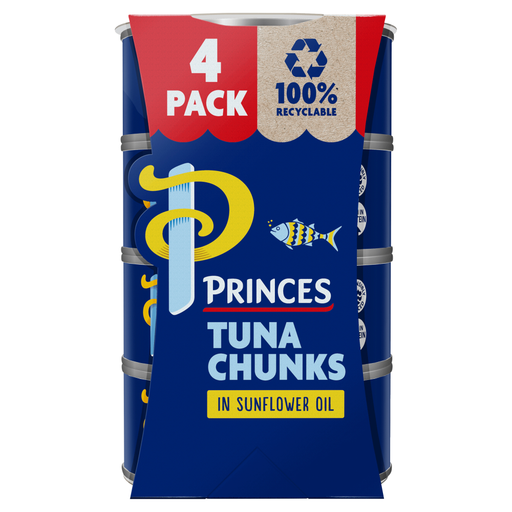 Image unavailable
Consider these oil-packed chunks when you want that packing medium for serving tuna on toast or alongside breakfast. The pack contains four 145g tins; check the nutrition panel’s measurement basis before comparing its figures with another product’s drained values.
 Image unavailable
This six-pack suits a plan to use spring-water tuna on more than one occasion. Each tin is 145g; consider whether you will use the full pack, and follow the tin’s instructions for any leftovers after opening.
 Image unavailable
Consider this no-drain format if avoiding a draining step matters when preparing breakfast. It contains three 100g tins; compare the serving quantity with standard chunks before choosing between formats.
 Image unavailable
This single tin is an option if you want spring-water chunks without choosing a multipack. It contains 145g before draining; check the drained weight for your intended serving and follow the pack’s storage instructions after opening.
Treat tuna as an optional addition rather than a defining ingredient. Live Breathe Scotland’s Full Scottish breakfast recipe highlights foods including Lorne sausage, haggis, black pudding and tattie scones, rather than tuna.
Choose by the ingredients and flavour you want on the plate, then compare the exact tins’ labels. For Asda’s cited chunk products, the brine version lists 109kcal and 1.0g fat per 100g drained; the sunflower-oil version lists 160kcal and 6.4g fat on the same basis.
No: tuna is fish, and the cited Tesco and Asda tuna listings identify fish as an allergen. Check the label of the exact product each time, as ingredients and formulations can change.
Follow that tin’s storage instructions. Tesco says to transfer unused contents of its cited product to a non-metallic container, cover and refrigerate them, and consume them within two days; check your product’s label for its own directions.
Yes. For people who are pregnant, NHS guidance says no more than four cans of tuna or two tuna steaks a week because tuna can contain mercury. That guidance is specific to pregnancy, not a limit stated here for every adult.