What matters when buying?
Decide whether tuna belongs on your breakfast plate at all, then choose its packing medium and a pack size you can use.
| Concern |
What to check |
Who this matters to |
| Keeping the meal traditional |
Buy the recognised breakfast ingredients first; treat tuna as an optional variation. |
If I’m serving a recognisable full Scottish breakfast, I want its usual ingredients on the plate before considering tuna. About 33% of consumers put that traditional line-up first. |
| Fat from the tuna |
Compare the packing medium and nutrition per 100 g drained on the exact tin. |
When adding fish to a fry-up, I may want it without oil from the tin. Roughly 25% of consumers make that packing-medium choice their primary concern. |
| Portions and leftovers |
Check drained weight, tin count and the opened-can storage directions. |
For a single breakfast addition, I want a portion I can use without leaving much open. About 25% of consumers prioritise manageable portions and leftovers. |
| Wider cupboard use |
Choose a single tin, multipack or larger format according to how often you expect to use it. |
If tuna will cover other meals as well as breakfast, I need a format that works across those occasions. Roughly 17% of consumers put that storecupboard flexibility first. |
For a product-specific comparison, Princes lists 99 kcal and 0.5 g fat per 100 g drained for its spring-water chunks, against 180 kcal and 9.5 g fat for its sunflower-oil chunks. Those values do not describe every spring-water or oil-packed tuna.
Tinned tuna on Joybuy
These spring-water, brine and sunflower-oil packs suit an intentional fish variation or use beyond breakfast. None is needed to make a traditional full Scottish breakfast.
 Image unavailable
Morrisons Fad Free Tuna Chunks in Spring Water, 6 × 145 g
For an optional tuna addition or several cupboard meals, this pack has six separate 145 g tins in spring water. Check the drained quantity when planning portions; follow the can’s directions for any leftovers.
View on Joybuy
 Image unavailable
John West Tuna Chunks in Spring Water, 4 × 125 g
Four separate spring-water tins offer a way to open tuna for one meal while keeping the others sealed. The stated 125 g is the tin size; check its drained weight if your portion depends on the amount of tuna.
View on Joybuy
 Image unavailable
Princes Tuna Chunks in Brine, 4 × 145 g
This four-tin brine pack is an option when tuna is also intended for meals after breakfast. If salt matters to your comparison, read this product’s nutrition panel rather than using values from a spring-water or oil-packed tin.
View on Joybuy
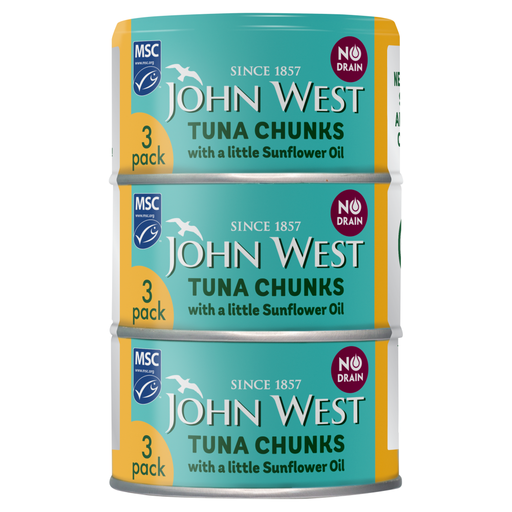 Image unavailable
John West No Drain Tuna Chunks in Sunflower Oil, 3 × 100 g
For a fish addition where you want a no-drain, sunflower-oil format, this pack contains three separate 100 g tins. Check the can’s nutrition basis before comparing its figures with values stated per 100 g drained for another product.
View on Joybuy
 Image unavailable
Princes Tuna Chunks in Sunflower Oil, 4 × 145 g
Four separate sunflower-oil tins suit cupboard use across several meals if you prefer tuna in oil. Check the nutrition panel’s stated basis before comparing it with a spring-water tin, and use the opened-can directions for leftovers.
View on Joybuy
Questions about tuna and breakfast
Is tinned tuna part of a traditional full Scottish breakfast?
No. VisitScotland’s typical list includes eggs, bacon, sausages, baked beans, tattie scones, toast and haggis or black pudding, but not tuna. Add it only if you want your own fish-based variation.
Should I choose tuna in spring water, brine or oil?
Choose by the packing medium you want, then compare the exact labels. For its cited chunks, Princes lists 0.5 g fat per 100 g drained in spring water and 9.5 g in sunflower oil; check a brine tin’s own salt value if that affects your choice.
How should I store tuna left after breakfast?
Follow the instructions on the tin you opened. Sainsbury’s says to transfer leftovers from its cited own-label spring-water tin to a non-metallic container, refrigerate and use within one day; the cited John West and Princes products give a two-day period after opening.
What should someone with a fish allergy check?
Tuna is fish, so check the current physical can’s allergen and ingredient information before serving it. Do not rely on the name or label details of a different tuna product.
Does pregnancy change how much tuna to consider?
Yes. NHS pregnancy guidance says not to eat more than four cans of tuna or two tuna steaks a week because tuna can contain pollutants including mercury. That pregnancy-specific limit is not a general limit for every adult.


