Brunch hosts serving tuna visibly
If tuna will sit on toast, a bagel or a composed plate, the labelled cut matters: fillets and steaks give you a more specific format to choose than a can described simply as tuna chunks.


If tuna will be served visibly on toast or a brunch plate, look for labelled fillets in olive oil when you want the oil to be part of the dish. If you plan to mix the tuna with a dressing or other ingredients, a steak packed in spring water gives you control over what you add; check the exact cut, ingredients and local availability before choosing.
If tuna will sit on toast, a bagel or a composed plate, the labelled cut matters: fillets and steaks give you a more specific format to choose than a can described simply as tuna chunks.
If you plan to add a dressing, eggs or avocado, tuna steak in spring water lets you choose those additions without also using the preserving oil.
If tuna appears often in your meals, check current NHS advice when planning your fish choices. The NHS states that fresh and canned tuna do not count as oily fish.
Start with how you will serve the tuna, then compare the cut and preserving medium on the exact product label.
| Priority | What to check | Your needs |
|---|---|---|
| Cut and species | Read whether the product is labelled ventresca, fillets, steak or chunks. Check the named tuna species if it matters to your choice; an olive-oil label alone does not identify the cut. | I want the tuna to be visible on toast, so I would choose a clearly labelled fillet or steak format rather than rely on the preserving oil to tell me what is inside. |
| Preserving medium | Check whether the tuna is packed in olive oil or spring water, and whether the oil is specifically described as extra virgin. Compare ingredients and nutrition labels for the products you are considering. | If I intend to use the oil on the plate, an olive-oil product fits that plan. For tuna mixed with a dressing, I would rather decide what to add myself. |
| Sourcing claims | Look for catching-method or certification wording on the exact product. Marks & Spencer describes its Ventresca Tuna Fillets as pole-and-line caught; Sainsbury's makes that claim for its albacore tuna steak. | I care about how this particular tuna was caught, so I want a product-specific claim rather than an assumption about the whole brand. |
| Availability | Check the current listing and your local store before planning a meal around a particular line. Sainsbury's listed its 220g Taste the Difference albacore fillets as out of stock on the product page supplied. | For a planned breakfast, I need to know whether my chosen format is available and have another suitable cut in mind if it is not. |
| Fish variety | Keep tuna distinct from oily fish when planning fish meals: the NHS states that fresh and canned tuna do not count as oily fish. | If tuna is a regular choice for me, I do not want to mistake it for an oily-fish portion. |
Olive oil describes the preserving medium, not the cut. Product names distinguish ventresca fillets from tuna steaks and chunks.
Read the cut and species on the exact product label, particularly if the tuna will be served visibly.
Oil-packed tuna and tuna in spring water contribute different ingredients to the finished plate.
Decide whether you will use the preserving oil or add your own dressing, then compare the products' ingredient and nutrition labels.
A preferred cut may not be available when you shop. Sainsbury's listed its 220g albacore fillets as out of stock on the supplied product page.
Check current local availability and identify another fillet or steak format that would work for the meal.
The NHS states that fresh and canned tuna do not count as oily fish.
If you are planning fish meals around NHS guidance, consider oily-fish options separately rather than counting a tuna breakfast towards that category.
These examples show how named cuts and preserving media differ; they do not imply that every product in a brand's range has the same characteristics.
M&S lists Collection Ventresca Tuna Fillets and a separate tuna steak in olive oil.
The range includes albacore fillets and a separate albacore tuna steak in extra virgin olive oil.
Princes Tuna Steaks in Spring Water provide a water-packed steak format for a breakfast with other added ingredients.
Tesco lists John West No Drain Fridge Pot Tuna Steak among its tinned-fish options.
Tesco lists own-label tuna steaks with a little spring water, sunflower oil or brine.
These Joybuy options cover tuna steaks and fillets in olive oil for a breakfast where you want to serve the tuna visibly. Check each label if a particular species, cut or type of olive oil matters to you.
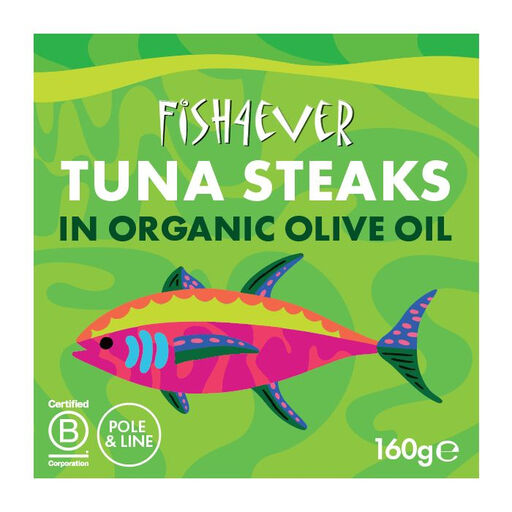 Image unavailable
Consider this steak format if you want to serve tuna with its preserving oil on toast. The product name specifies organic olive oil and a 160g pack; check the label if you specifically want ventresca, albacore or extra virgin olive oil.
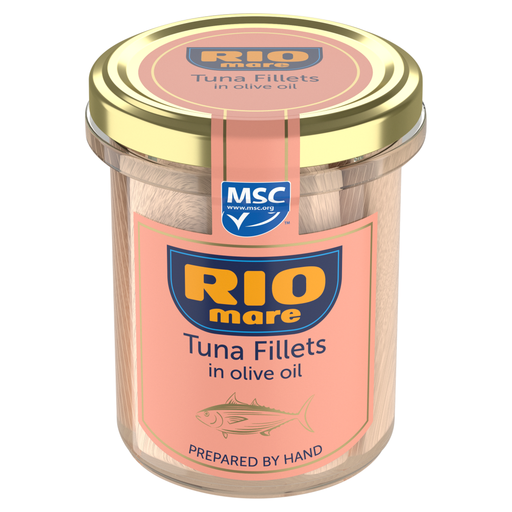 Image unavailable
The labelled fillet format suits a breakfast where the tuna will remain visible on the plate. This 180g glass jar is packed in olive oil; check the label if the species or an extra virgin oil designation is important to your choice.
Choose a labelled fillet format when you want to serve the tuna visibly and that cut matters to you. Tuna steak is another option for pieces on toast, particularly when you plan to flake or mix them; check the preserving medium separately.
No: ventresca and chunks are different product descriptions, so do not use an olive-oil label as a substitute for checking the cut. M&S, for example, labels its Collection product as Ventresca Tuna Fillets.
No. The NHS states that fresh and canned tuna do not count as oily fish, so consider oily-fish options separately when planning fish meals.
Read the claim on the exact product label or listing rather than applying a brand-wide statement to every can. For example, Marks & Spencer describes its Ventresca Tuna Fillets as pole-and-line caught, and Sainsbury's makes that claim for its albacore tuna steak.