Buyers preparing mixed tuna dishes
For breakfast salads and sandwich fillings, record how much tuna is available after draining so recipes and repeat orders use the same quantity basis.


For tuna mixed into breakfast salads or sandwich fillings, start by comparing the drained yield of chunk products: the weight printed on a tin includes its packing liquid. Consider no-drain or steak formats when preparation or guest-visible presentation calls for them, then check the exact product’s allergen information and instructions for opened tins.
For breakfast salads and sandwich fillings, record how much tuna is available after draining so recipes and repeat orders use the same quantity basis.
When guests see individual pieces or portions, compare the presentation and preparation requirements of chunks, steak and no-drain formats before choosing a pack.
Keep the received product label alongside the recipe information, and make sure procedures cover fish allergen information, cross-contact and storage after opening.
Set the recipe and serving format first, then compare pack yields and the instructions your team will need to follow.
| Priority | What to check | Your needs |
|---|---|---|
| Usable yield | Check drained weight per tin and pack count. Keep net weight and drained weight separate in the recipe specification. | I need a dependable quantity of tuna for each batch, not a calculation that counts the packing liquid as tuna. |
| Serving format | Check whether the product contains chunks, steak or a no-drain format. Consider whether staff will mix, drain or portion it. | Chunks suit the salad or filling I am preparing; a more visible serving or a different preparation step may call for another format. |
| Packing medium | Check whether the tuna is packed in spring water, brine or oil, and use the specification for the exact product. | Will this packing medium work in the finished recipe without changing how the kitchen prepares it? |
| Sourcing information | Check the certification, fishing-method statement or sourcing policy on the exact pack. Retain the current label or supplier specification for any guest-facing claim. | If we describe how the tuna was sourced, I need wording that applies to the product actually served. |
| Buffet controls | Check the fish allergen declaration and instructions for unused contents after opening. Include service temperature and cross-contact controls in the hotel’s procedures. | Guests need accurate allergen information, while staff need clear instructions for the tuna held and served on the buffet. |
A 4 × 145g pack can contain 4 × 10²g of drained tuna, as shown on the checked Tesco and Princes product information. Using the larger figure in a recipe can overstate the tuna available to serve.
Record drained weight beside pack size, and use the same weight basis when comparing products.
The storage directions for unopened tins do not replace the instructions for unused tuna once a tin has been opened.
Follow the received label’s container, refrigeration and use-by instructions, and include opened tuna in the hotel’s food-safety procedures.
A certification or fishing-method statement for one tuna product does not establish the characteristics of every pack from that brand.
Check the exact purchased product before putting sourcing information on a buffet sign or menu.
These ranges illustrate different pack and presentation choices; check the specification of the product you intend to receive rather than assuming that every product under a brand is alike.
Tesco’s own-label spring-water chunks offer a retail four-pack format to consider for mixed buffet dishes.
Asda lists own-label tuna chunks in spring water in a 4 × 145g retail pack.
Sainsbury’s lists own-label spring-water chunks alongside other tuna formats, making pack type an important distinction.
Princes is a branded option for hotels considering spring-water chunks.
John West offers chunk and no-drain formats relevant to different buffet preparation methods.
M&S is relevant when the hotel wants to assess a stated fishing method and sourcing policy.
These listings cover tuna chunks in spring water or brine, including a no-drain option. For buffet planning, check the received pack quantity, drained yield and label against the recipe.
 No image available
Spring-water chunks are an option for buffet salads or sandwich fillings. Confirm the delivered pack quantity and drained weight when setting the batch recipe.
 No image available
A four-can chunk format for salads or sandwich fillings. Check drained yield for the exact pack rather than using its 125g-per-can net weight as the tuna quantity.
 No image available
The no-drain format is worth considering where draining is a preparation step the kitchen wants to avoid. Check the received product’s usable quantity and instructions before using it in a buffet recipe.
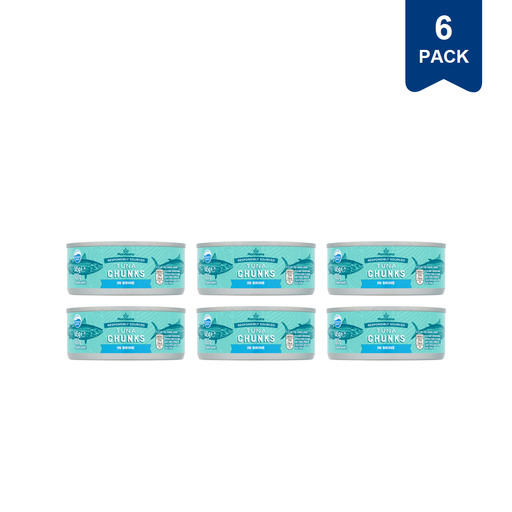 No image available
This brine-packed chunk option can be considered for mixed buffet dishes when brine suits the recipe. Confirm the delivered pack quantity, drained yield and label instructions.
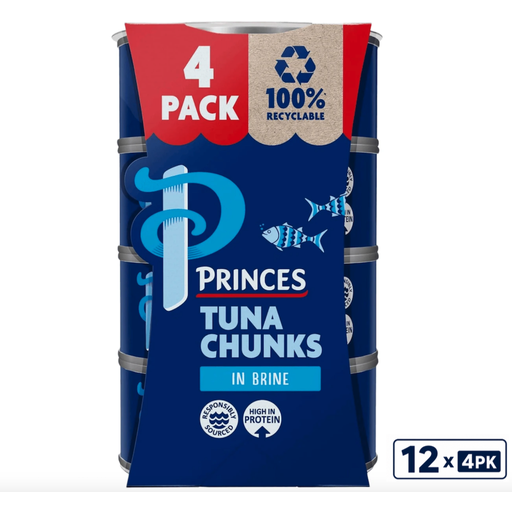 No image available
The listed bundle format may suit a kitchen preparing repeated batches of mixed tuna dishes. Confirm the delivered case quantity and drained yield, and check that brine suits the recipe.
Use drained weight to plan the tuna available for a recipe. The checked Tesco 4 × 145g pack states 4 × 10²g drained tuna, so its net pack weight is not the amount of tuna available after draining.
Yes. Food Standards Agency guidance says retail and catering businesses must provide allergen information for prepacked and non-prepacked food; Food Standards Scotland provides separate guidance for Scottish businesses. Match the buffet information to the received tuna and the finished recipe, including any other ingredients.
Follow the received product’s directions for transferring, covering and refrigerating unused contents, including its stated use period. Build those steps into the hotel’s food-safety procedures rather than applying unopened-tin storage rules.
No. Check the certification, fishing-method statement or sourcing policy for the exact product being served. A statement on one pack should not be extended to other products in the range.