Frequent second-home visitors
Individual tins can be used across regular stays. A four-pack with a stated drained weight also makes it easier to plan how much tuna to keep in the cupboard.


Choose four-packs if you want individual tins to rotate across visits; a larger multipack makes sense when its quantity matches your expected use and storage space. No-drain portions can simplify meals during short stays, but check the liquid medium, drained weight and storage directions on the exact pack.
Individual tins can be used across regular stays. A four-pack with a stated drained weight also makes it easier to plan how much tuna to keep in the cupboard.
If you want to leave enough tuna between visits without accumulating unused tins, compare the pack count and total drained weight, then consider how often you will be there.
A no-drain pack addresses the practical need to prepare a meal with less draining during a brief visit. Check its pack size and availability against ordinary chunk multipacks.
| Concern | What to check | Who this matters to |
|---|---|---|
| Stock rotation | Best-before dates on the tins and a quantity that fits expected visits. | If I leave the house empty for weeks, I need tins I can keep track of and use across visits; about 31% of consumers put stock rotation first. |
| Usable quantity | Pack count and total drained weight, rather than tin size alone. | When I buy a multipack, I want to know how much tuna remains after draining; about 31% of consumers prioritise usable quantity. |
| Liquid medium | Whether the tuna is in spring water, brine or sunflower oil, and the exact product label. | For meals I plan to make there, I want a liquid medium that suits the recipe; about 25% of consumers place meal format first. |
| Opening convenience | Whether the pack is labelled no-drain and how many portions it contains. | On a brief visit, I may want to open a tin without draining it before lunch; about 13% of consumers prioritise low-mess preparation. |
The stated weight of a tin can include its liquid. Tesco Groceries lists both its own-label and Princes spring-water four-packs as 4 x 145g tins, with 4 x 10²g drained tuna.
Check the drained weight of the exact pack when comparing how much tuna you will have available for meals.
Tins left at a second home can be forgotten between visits. GOV.UK explains that a best-before date concerns quality; the printed dates and storage directions still matter.
Choose a quantity that fits your visits, keep an inventory and use tins with the earliest best-before dates first.
The John West no-drain 3 x 100g brine pack addresses preparation during short stays, but contains fewer tins than a four-pack and serves a different need from keeping more individual tins on hand.
Choose no-drain when avoiding the draining step matters; otherwise, compare pack counts and drained quantities.
The Tesco, Princes, John West and M&S product instructions described in their listings call for refrigeration and consumption within two days of opening.
Follow the label on your tin. If tuna remains, transfer it as directed, refrigerate it and plan to use it within the stated period.
Tesco Groceries lists an own-label spring-water four-pack with both tin size and drained weight stated.
Princes has a listed spring-water four-pack for shoppers who want separate tins across several visits.
The named No Drain brine multipack focuses on avoiding the draining step during a short stay.
Marks & Spencer lists a 640g four-pack of tuna chunks in spring water for cupboard stocking.
These brine, spring-water and sunflower-oil multipacks offer individual tins for second-home cupboard stocking. The larger Princes listing calls for particular attention to whether its case quantity suits your visits.
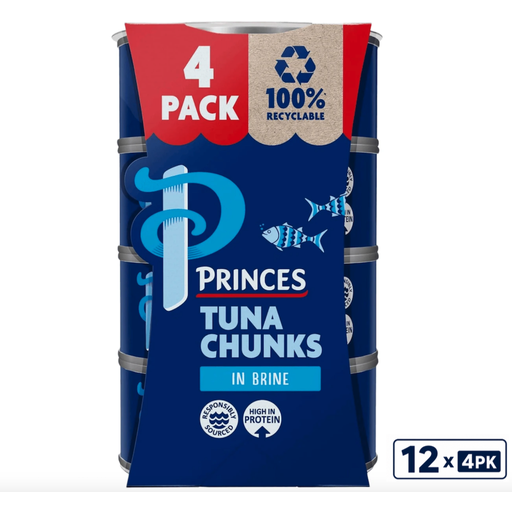 Image unavailable
This listing is for a larger stock of individually tinned tuna for repeated visits. The title specifies 12 packs of 4 x 145g tins in brine; confirm the case contents, total drained weight and best-before dates before choosing this quantity.
 Image unavailable
Four separate 125g tins suit visits when you expect to open one tin at a time. This is the spring-water variant; check its drained weight and the dates on the tins when planning your stock.
 Image unavailable
This four-pack provides separate tins for meals across visits. It contains 4 x 145g tins in brine; check the pack's drained weight and the delivered tins' best-before dates.
 Image unavailable
Choose this format if four separate tins in sunflower oil suit the meals you plan at the property. The pack is listed as 4 x 125g; check its drained weight and follow the label after opening.
 Image unavailable
Four individual tins in sunflower oil can be opened across separate visits. The listed pack contains 4 x 145g tins; check the drained weight and best-before dates for your stocking plan.
Compare their total drained weights as well as their tin counts. Tesco Groceries lists both its own-label and Princes spring-water four-packs as 4 x 145g tins with 4 x 10²g drained tuna, illustrating why the weight on the front of a tin does not tell you the drained quantity.
Follow the storage instructions on the exact pack and keep track of its printed dates. Food Standards Scotland advises checking food labels for storage directions; rotating tins by their best-before dates is useful when visits are spread out.
Follow that product's label and refrigerate leftovers promptly. The Tesco, Princes, John West and M&S listings described here instruct refrigeration and use within two days; the Tesco and M&S listings also specify transferring unused contents to a non-metallic container.
No. GOV.UK explains that a best-before date concerns quality, while a use-by date concerns safety. Check the date printed on each tin when deciding how much to leave at a property you visit intermittently.
Check the exact product's fish allergen declaration and any warnings on the tin. The John West and M&S listings warn that bones may remain, while the Joybuy Princes listing says not to consume tins with bloated or compromised packaging.