Care-home menu planners
Staff preparing sandwiches, pasta bakes, jacket-potato fillings or salads for several residents need to match the drained quantity and tin count to each planned dish.


Choose tinned tuna for care-home meals by the drained quantity needed for each recipe, the number and size of the tins, and residents’ assessed requirements—not outer-pack weight alone. Smaller tins may fit variable meal quantities, while larger tins may suit a planned batch; either way, check the current label for fish allergen information, possible bones and opened-tin instructions before serving.
Staff preparing sandwiches, pasta bakes, jacket-potato fillings or salads for several residents need to match the drained quantity and tin count to each planned dish.
A shared recipe still has to fit the people being served. The Care Quality Commission requires providers to assess nutritional needs and provide food that meets them; allergies and prescribed food textures also affect preparation.
When meal quantities vary, tin size affects how much is opened at once. Staff also need to follow the chosen product’s label and the home’s food-safety procedure for unused contents.
Set the recipe quantity and resident requirements before choosing a tin size; then check whether the pack can be ordered and used within the kitchen’s handling procedure.
| Concern | What to check | Who this matters to |
|---|---|---|
| Usable batch quantity | Drained weight per tin and the number of tins needed for the recipe. | If I am preparing several portions, outer-pack weight alone will not tell me how much tuna goes into the dish. About 29% of consumers put usable batch quantity first. |
| Resident requirements | Fish allergen information, the current nutrition label, possible-bones warnings and individual care plans. | When serving residents with different assessed needs, I need the product and prepared dish to fit each person’s plan. For about 29% of consumers, that suitability is the primary concern. |
| Supply continuity | Availability from the intended supplier and enough suitable tins for the planned menu. | If a menu relies on tuna for several services, I need to know the chosen format can be supplied when required. Roughly 21% of consumers make continuity their main priority. |
| Opened tins and leftovers | Tin size against the quantity used at one service, plus the current opened-product instructions. | For a service whose numbers vary, I would rather open only the tins needed and handle any remainder correctly. This is the leading need for about 21% of consumers. |
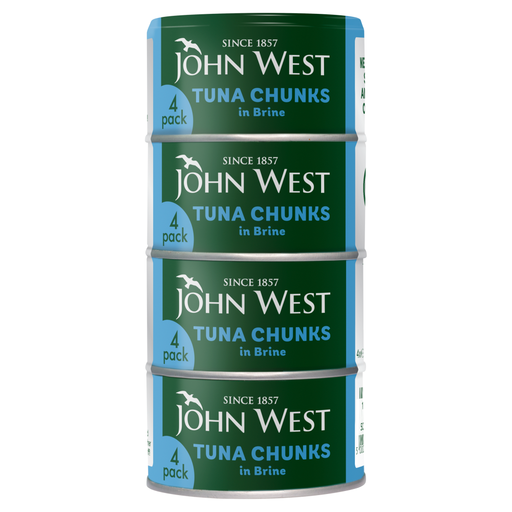
The Sainsbury’s listing for Princes spring-water chunks states 4 × 10²g drained for its 4 × 145g pack. Tesco states 4 × 112g drained for the John West 4 × 160g brine pack. The nominal tin weights are not the recipe yields.
Calculate the dish from the drained weight stated for the exact product, and check the physical label when the tins arrive.
Using nominal weight for a batch can leave the kitchen with too little tuna for the planned dish or more tins than it needs.
A larger tin only helps when its drained quantity fits the recipe and the prepared food fits residents’ assessed requirements. The Care Quality Commission requires providers to meet assessed nutritional needs.
Confirm the planned number of portions, recipe and individual care plans before selecting tin size or packing liquid.
Opening more than a service uses also creates leftovers that must be handled under the product instructions and kitchen procedure.
Tuna contains fish, and the checked John West and M&S listings warn that bones may remain. The Food Standards Agency says food businesses must provide allergen information.
Use current product information for the served dish, follow the home’s allergy controls and prepare food in line with each resident’s prescribed requirements.
The Ocado listing for M&S spring-water tuna gives both a 24-hour and a two-day instruction for unused contents. Those statements should not be treated as interchangeable.
Check the current physical can label and the home’s food-safety procedure, and clarify the instruction before ordering quantities that could leave opened contents.
Compare the exact pack and packing liquid, rather than assuming that one brand’s tin size or nutrition figures apply across its range.
John West tuna-chunk four-packs appear in several tin sizes and packing liquids. The figures below refer specifically to the 4 × 160g brine product listed by Tesco.
Princes 4 × 145g tuna-chunk packs include spring-water, brine and sunflower-oil variants. Their labels should be compared variant by variant.
Sainsbury’s lists own-label tuna chunks in spring water and brine in 4 × 145g packs.
The M&S spring-water tuna-steak multipack listed by Ocado contains four 200g nominal tins; this is a tuna-steak product, not tuna chunks.
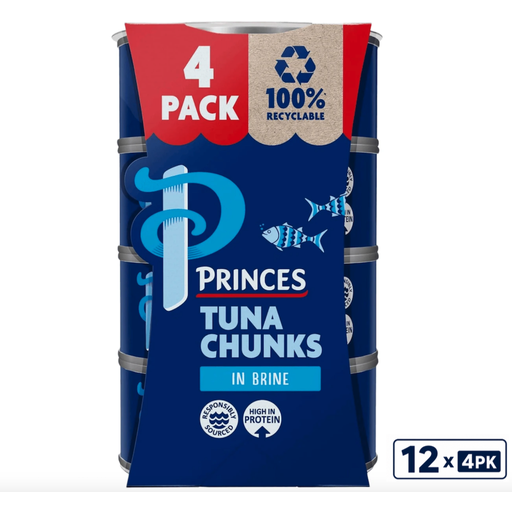
These Joybuy selections are tuna-chunk multipacks for care-home meal preparation: four-tin spring-water, brine and sunflower-oil formats, plus a brine listing described as a larger bundle. Match the packing liquid and tin quantity to the recipe, then check the current label against residents’ requirements.
 No image available
Four separate tins may suit a kitchen preparing smaller quantities across sandwiches, salads or pasta dishes. The stated nominal quantity is 500g across the pack; check drained weight on the current label before calculating recipe yield. Contains fish, so check the dish against residents’ care plans.
 No image available
The stated larger bundle may be relevant when planning several batches. Confirm the bundle unit and total drained quantity before setting a bulk recipe quantity. The product contains fish and carries a possible-bones warning; follow resident care plans when preparing it.
 No image available
Four separate tins can be opened according to the quantity needed for a service. Each tin is labelled 145g nominal weight; use the current pack’s drained weight for portion calculations. Contains fish, and any prescribed texture requirements must be followed when preparing the dish.
 No image available
Consider this four-tin format when the recipe calls for tuna packed in sunflower oil and the choice fits individual nutrition plans. Check the current label’s drained weight and the basis of its nutrition figures before comparing it with spring-water or brine products. Contains fish.
 No image available
Four 125g nominal tins offer separate units for recipes prepared in varying quantities. Confirm the drained yield and nutrition-label basis on the current pack before using either in menu calculations. Contains fish and may contain small bones; prepare it in line with residents’ care plans.
Not without checking individual requirements. The Care Quality Commission’s Regulation 14 requires providers in England to assess people’s nutritional needs and provide food that meets them, taking account of preferences and religious or cultural background. A shared recipe does not replace those assessments.
Tuna contains fish, so the home needs accurate information for the finished dish, not just the tin. The Food Standards Agency says food businesses must provide allergen information for prepacked and non-prepacked food and drink; follow the home’s allergen-control procedure when adding tuna to a recipe.
Do not assume that its texture is suitable. South Tees Hospitals NHS Foundation Trust explains that some care-home residents with swallowing problems are recommended a modified-texture diet; prepare and serve tuna according to the individual’s prescribed plan and relevant texture requirements.
Follow the current product label and the home’s food-safety procedure. The checked John West and Princes listings instruct users to refrigerate unused contents and use them within two days, while the Ocado listing for M&S spring-water tuna gives conflicting 24-hour and two-day wording. Check that product’s physical label before relying on either online instruction.