Solo lunch buyers tracking portions
A tin for a salad, sandwich or jacket potato is easier to account for when you know its drained weight and the calories, protein and salt in the portion you will use.


For a clearly defined tuna portion, start with a spring-water tin and compare the calories, protein and salt in the amount you will eat after draining. A no-drain tin avoids that preparation step, while an oil-packed tin has a different nutrition profile; neither format tells you the full-can figures without checking the exact product label.
A tin for a salad, sandwich or jacket potato is easier to account for when you know its drained weight and the calories, protein and salt in the portion you will use.
A ready-to-use, no-drain tin removes the draining step from a quick lunch. The format still needs to suit the portion size and nutrition figures you are looking for.
If tuna regularly accompanies bread, cheese or sauces, the salt figure for the actual can matters alongside its calories. Spring-water tins do not all have the same salt content.
Decide how much tuna you intend to use in one meal, then compare labels on that portion basis. Net tin weight, drained weight and a stated serving are not necessarily the same quantity.
| Concern | What to check | Who this matters to |
|---|---|---|
| Portion and calories | Check the drained weight and calories per can, then whether the stated serving covers the whole can. Compare protein on the same portion basis. | If I plan one tuna lunch, I want to count the portion I will actually eat rather than the weight printed on the front of the tin. About 42% of consumers put portion and calorie clarity first. |
| No-drain preparation | Confirm that the exact variety says no drain, and check its can size and nutrition basis. | When I need to assemble lunch quickly, avoiding liquid to drain is my main reason to choose a format. Convenience is the first concern for about 33% of consumers. |
| Salt | Compare salt per can or serving; use per-100g figures when comparing different sizes. | If tuna is a frequent ingredient in my meals, I want to know how much salt its portion contributes. Salt comes first for about 25% of consumers. |
A tin's net weight may include liquid, and a larger tin may contain more than the portion you intend to eat. Sainsbury's describes one drained can in its 3 × 80g spring-water pack as one serving.
Check the drained weight, serving declaration and nutrition for the amount you will use before recording a meal.
Sainsbury's lists 0.07g salt per drained can for its 3 × 80g spring-water tuna, while ASDA Groceries lists 0.50g per drained can for its own 3 × 80g product. Their declared drained-can quantities differ, so compare both the per-can and per-100g labels for your purpose.
Read the salt figure for the exact tin rather than relying on the packing medium.
Tesco Groceries lists 89 kcal and 3.6g fat per can for its 3 × 80g tuna in oil. The packing medium is therefore part of the decision when you are counting the whole tuna portion.
Compare the label for the oil-packed product with the spring-water alternative, and account for any dressing or other ingredients added to the meal.
The NHS advises people who are pregnant or trying for a baby to eat no more than four cans of tuna or two tuna steaks a week because tuna can contain mercury.
Count tuna eaten across meals during the week; a different brand or packing medium does not remove that limit.
Its 3 × 80g spring-water pack identifies each 56g drained can as one serving, which helps when planning a fixed tuna portion.
Its spring-water tuna comes in a 3 × 80g format for buyers who want separate cans.
Its No Drain spring-water tuna is intended for use without draining and comes in 100g cans within the cited three-pack.
Princes lists conventional spring-water tuna chunks in 145g and 3 × 80g sizes, as well as a separate ready-to-use drained-tuna range.
Tesco's range includes tuna in water and in oil, making the packing medium a choice to check within its own-brand products.
The cited M&S spring-water tuna comes in a 160g tin, a different portion format from the smaller multipack cans.
These selections cover individual spring-water tins and multipacks of separate cans, including no-drain spring-water and sunflower-oil varieties. Choose by the portion and preparation you want, then check the current label for the amount you will eat.
 No image available
Consider this format if you want a separate 100g can without a draining step. Sainsbury's lists 116 kcal, 27g protein and 0.8g salt per 100g for this John West spring-water product; check the current can label when recording the full portion.
 No image available
This is a single 145g spring-water tin rather than a multipack. If you intend to use the whole tin for one meal, check its drained weight and full-can nutrition instead of treating the net weight as the amount of tuna eaten.
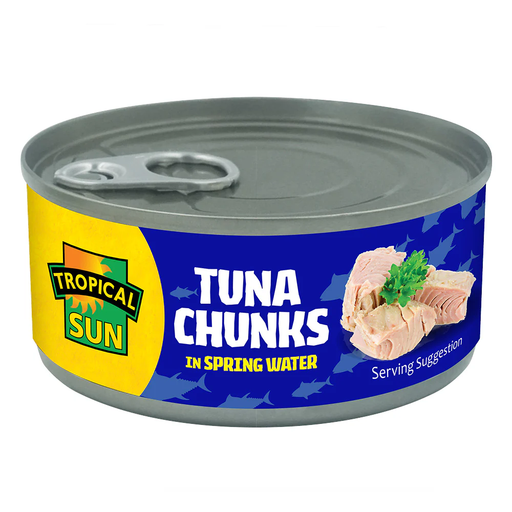 No image available
This single spring-water tin has a 160g net weight. Check the drained quantity and the nutrition label before deciding whether the whole tin fits the portion you planned.
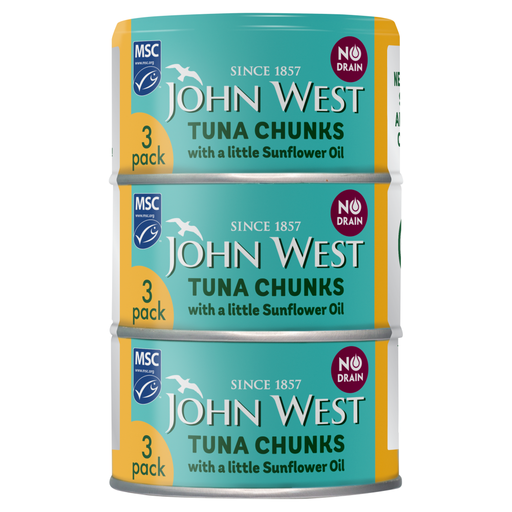 No image available
Choose this no-drain format if sunflower-oil tuna suits the dish you are making. The pack contains three separate 100g cans; check this oil-packed variety's own full-can nutrition rather than using figures from the John West spring-water version.
 No image available
This pack provides six separate 145g spring-water tins, not one standalone tin. If you plan to use one can at a time, check its drained weight and full-can nutrition to establish the portion.
A spring-water tin with a stated drained-can serving gives you a straightforward portion to compare. Check that specific tin's calories, protein and salt: water-packed products differ in salt, and a larger tin need not equal one serving.
Use per-100g figures to compare products on the same weight basis, then use the drained-can or stated-serving figure to plan what you will eat. GOV.UK explains that nutrition information is expressed per 100g or 100ml; a product may also give values for a serving.
No. The NHS says fresh and canned tuna do not count as oily fish, so do not count a tuna tin as an oily-fish serving.
Yes, within the NHS limit for people who are pregnant or trying for a baby: no more than four cans of tuna or two tuna steaks a week. Count tuna across meals rather than treating each separately purchased tin as a separate allowance.
Tuna is fish and is unsuitable for someone with a fish allergy. Check the exact product's current ingredients and allergen label before buying.