Campers checking organic ingredients
You want to know exactly what an organic claim covers before packing tuna for a trip. Organic olive oil around the fish is a different claim from organic tuna.


Choose tuna packed in organic olive oil if the organic agricultural ingredient is your priority; choose a no-drain tin if handling food with little washing-up matters more. Fish4Ever says its wild-caught fish cannot itself be labelled organic, and an MSC fishery label addresses a separate question. Whichever route you take, choose a portion you can finish if you cannot refrigerate leftovers.
You want to know exactly what an organic claim covers before packing tuna for a trip. Organic olive oil around the fish is a different claim from organic tuna.
You have limited space for draining and washing up, or no reliable way to refrigerate an opened tin. Portion size and the opening format matter alongside the ingredients.
You want an MSC-labelled tin and need to assess that fishery claim separately from any organic claim on its ingredients.
For a camping meal, start with the requirement that would decide your choice: the scope of an organic claim, handling at the campsite or fishery certification.
| Concern | What to check | Who this matters to |
|---|---|---|
| Organic claim | Check which ingredient is described as organic and read the exact claim and certification on the tin. | If I am choosing tuna for a camping meal because an organic claim matters, I want to know whether it describes the olive oil rather than the fish. About 33% of consumers put clarity about the organic claim first. |
| Campsite handling | Compare no-drain and conventional tins, then choose a portion you can finish or store as the label directs. | Without an easy place to drain a tin or refrigerate leftovers, I would choose a meal-sized portion that needs little handling. About 42% of consumers prioritise low-mess preparation and opened-tin storage. |
| Fishery certification | Look for the MSC label on the particular tin; check organic ingredient claims separately. | When certified fishery sourcing is my deciding factor, I need to check the label on the tin I am buying. About 25% of consumers put fishery certification first. |
Fish4Ever says wild-caught seafood cannot itself be labelled organic. An organic claim on the agricultural ingredient does not extend to the fish.
Read the ingredient list and the precise claim on the tin. For UK organic labelling, the Department for Environment, Food & Rural Affairs says products must meet organic production rules to carry an organic claim.
Sainsbury's instructs buyers of its 4 x 145g tuna in brine to refrigerate opened contents and use them within one day. That matters if your campsite has no reliable refrigeration.
Match the tin size to the people eating at that meal, and follow the storage directions on the product you choose.
An unfinished portion may have to be discarded if you cannot store it as directed.
The Marine Stewardship Council's MSC label concerns certified fisheries; organic labelling addresses a different set of requirements.
Check for the MSC label if fishery certification matters to you, then check any organic claim against the named ingredient.
The NHS guidance on tuna in pregnancy applies regardless of whether a tin carries an MSC label or contains an organic ingredient.
The NHS advises pregnant people to eat no more than four cans of tuna or two tuna steaks a week.
A relevant choice when the ingredient of interest is organic olive oil: Planet Organic lists Fish4Ever Skipjack Tuna Steak in Organic Olive Oil 160g.
Its No Drain Tuna Chunks in Spring Water MSC offers a format to consider where draining would be awkward.
Its Tuna Chunks in Spring Water is a conventional tinned option for shoppers choosing a packing medium.
Its 4 x 145g Tuna Chunks in Brine may suit a trip where several tins will be used across meals.
Its tinned-tuna range provides a reference point for comparing oil, spring-water, brine and drained formats.
These tins cover no-drain portions for simpler campsite meals and a tuna-in-organic-olive-oil option for shoppers focused on that ingredient. Check each tin's label for claims and storage directions before packing it.
 No image available
Choose the no-drain format when you want to limit liquid handling at the campsite. The pack contains three separate 100g tins; check the label's storage directions if you will not finish an opened tin.
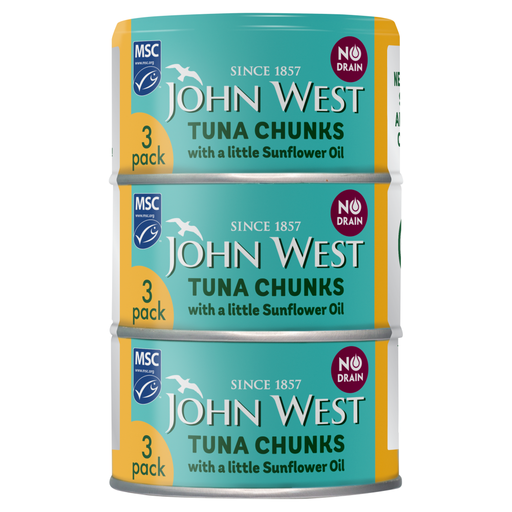 No image available
This is another no-drain option for a campsite meal, packed in sunflower oil rather than spring water. The pack contains three 100g tins; read the tin's directions before keeping any opened contents.
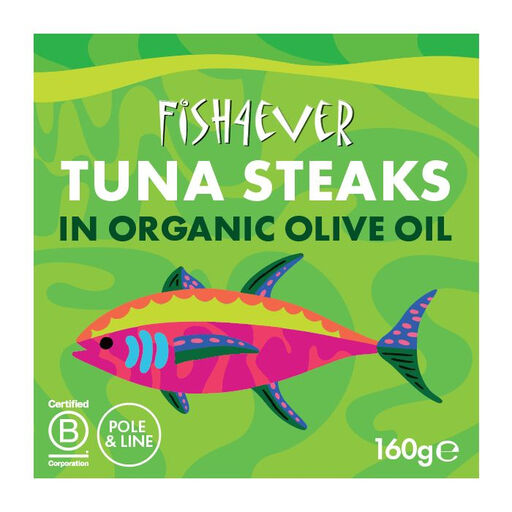 No image available
Consider this tin if organic olive oil, rather than an organic claim for the fish, is what you want for a camping meal. The tin is 160g; check the exact organic wording and certification on its label, and plan for the storage directions after opening.
Do not read an organic olive-oil claim as a claim about the tuna. Fish4Ever says wild-caught seafood cannot itself be labelled organic because organic is a farming standard. Check which ingredient the wording on the tin identifies.
No. The Marine Stewardship Council's label concerns certified fisheries, while organic claims follow separate production and labelling rules. Check each claim independently on the tin you intend to buy.
Only if you can follow that tin's storage directions. Sainsbury's, for example, instructs buyers of its 4 x 145g Tuna Chunks in Brine to transfer opened contents to a non-metallic container, refrigerate them and use them within one day. Without suitable refrigeration, choose a portion you can finish when opened.
Yes. The NHS advises pregnant people to eat no more than four cans of tuna or two tuna steaks a week. An organic ingredient or MSC label does not change that guidance.