For care-home meals, choose tinned tuna that fits each resident’s assessed nutrition, allergen and, where applicable, texture requirements before considering an organic claim. If organic ingredients are part of the purchasing brief, check exactly what is certified: tuna packed in organic olive oil is not, on that wording alone, certified organic tuna. Compare the current label’s ingredients, salt information and sourcing claims for the exact product.
Who is choosing the tuna?
Care-home menu planners
Start with individual meal requirements, including fish-allergen controls and any prescribed texture. The Care Quality Commission requires providers it regulates to assess nutritional needs and provide food that meets them; an organic or fishing claim does not replace that assessment.
Teams checking organic credentials
Check whether certification covers the product or a named ingredient. UK organic labelling guidance from the Department for Environment, Food & Rural Affairs requires an organic claim to have an inspection and certification basis; a claim about packing oil should not be extended to the fish.
Buyers planning repeat catering orders
Compare the exact product’s packing medium, drained weight, salt information and sourcing statement before adding it to a recurring menu. These details can differ between products sold under the same brand.
What should take priority?
A care-home purchase must meet the residents’ applicable meal and allergen requirements; the priorities below distinguish what consumers may focus on when comparing products for those meals.
| Concern | What to check | Who this matters to |
|---|
| Resident suitability |
Check the current fish-allergen declaration and nutrition panel. For a prescribed texture-modified diet, assess the prepared dish against the resident’s required IDDSI level. |
If a meal needs to fit an individual care plan, I cannot choose tuna by its label claims alone. About 50% of consumers put resident suitability first. |
| Organic claim |
Identify the certified product or ingredient and check the claim and certification details on the exact label. |
When purchasing to an organic-ingredient brief, I need to know whether the claim covers the oil, the fish or the whole product. Organic credentials are the primary concern for about 30% of consumers. |
| Sourcing and catering use |
Compare the exact tin’s fishing or certification claim, drained weight and packing medium. |
For a recurring menu, I need a product whose sourcing statement and usable quantity fit the home’s purchasing plan. Roughly 20% of consumers place sourcing and catering practicality first. |
What can go wrong when buying?
-
Calling tuna organic because its packing oil is organic
The Fish4Ever product listed by Abel & Cole identifies skipjack tuna separately from olive oil marked as produced to organic standards. That ingredient wording does not establish that the tuna itself is organic.
Record the precise certified claim for the purchased product and check its current label and certification details before using organic wording in purchasing records.
-
Assuming soft tuna chunks meet a swallowing plan
For a resident with a prescribed texture-modified diet, the texture of the finished dish matters, not just how the tuna feels before preparation. The International Dysphagia Diet Standardisation Initiative identifies serious risks from texture errors.
Follow the resident’s care plan and check the prepared meal against the prescribed IDDSI level; do not substitute a general description such as soft food.
-
Choosing by a brand-wide sourcing message
A fishing claim does not establish a tin’s packing medium, salt content, drained quantity or organic status. Those details affect how the particular product fits a recipe and purchasing brief.
Compare the exact product label, including nutrition information per 100g where given, and plan recipe quantities using drained weight.
-
Using an old product listing for meal records
A changed ingredient or allergen declaration can make an existing recipe record inaccurate.
Check the physical label when goods arrive and update recipe and allergen records if the product or formulation changes.
Brands to consider
John West
A branded route for shoppers comparing familiar tinned-tuna formats in supermarket listings.
- Tesco and Sainsbury’s list John West tuna products, including different packing formats.
- Check the chosen tin’s ingredients and claims; a brand name or a sourcing label does not establish organic certification.
Princes
A tinned-tuna range with several product formats.
- Princes says it can trace its canned fish back to the original boat.
- That brand claim does not establish the organic status, salt content or packing medium of an individual tin.
Tesco
An own-label option within a wider tinned-tuna category.
- Its category listing lets shoppers compare individual tuna products and pack formats.
- Read the selected product’s label rather than treating a category listing as evidence of an organic claim.
Sainsbury’s
An own-label route for buyers considering a stated fishing-sourcing policy.
- J Sainsbury plc stated in 2023 that its own-label canned tuna was MSC-certified and pole-and-line caught.
- A fishing credential is distinct from organic certification; check the current tin’s sourcing statement and food information.
Asda
An own-label option with product-level ingredient information to inspect.
- ASDA Groceries lists tuna, water and salt for its Tuna Chunks in Brine 145g.
- Check that tin’s current salt information, fish-allergen declaration and any certification claim before using it in a menu.
M&S
A spring-water tuna option for buyers comparing recipes and sourcing statements.
- Marks & Spencer describes its Tuna Chunks in Spring Water as pole-and-line caught and responsibly sourced under its Forever Fish policy.
- Those sourcing statements are not organic claims; check the physical label and assess any bones warning for the intended dish.
Tuna products on Joybuy
These products offer organic-olive-oil, spring-water and conventional olive-oil options for care-home menu planning. The Rio Mare product is a glass jar rather than a tin. For every option, check the delivered label and assess the finished meal against individual resident requirements.
 No image available
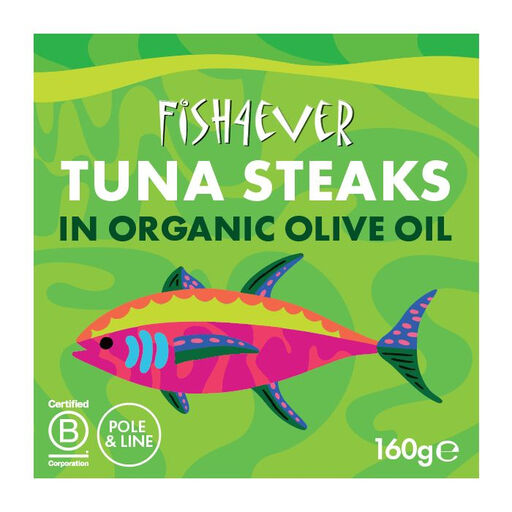
Fish4ever Tuna Steaks in Organic Olive Oil 160g
Consider this oil-packed option when the purchasing brief calls for an organic ingredient and the planned recipe can use olive oil. The product name specifies a 160g pack and organic olive oil; confirm the certification scope on the delivered label rather than describing the tuna itself as organic. Check the fish-allergen information and the finished dish’s suitability for each resident.
View on Joybuy
 No image available
John West Tuna Chunks in Springwater 4 × 125g
A spring-water option when the recipe calls for tuna without packing oil. This pack contains four 125g cans. Compare the current label’s drained-weight nutrition and salt information for meal planning; ordinary chunks still need assessment for any prescribed texture-modified diet.
View on Joybuy
 No image available
Morrisons Fad Free Tuna Chunks in Spring Water 145g
Consider this single 145g can when a spring-water format fits the planned dish. Check its current ingredients, fish-allergen declaration and drained-weight nutrition before adding it to a resident’s meal plan. Its chunk format alone does not establish suitability for a prescribed texture.
View on Joybuy
 No image available
Morrisons Fad Free Tuna Chunks in Spring Water 145g, 6 packs
This six-pack provides separate 145g cans for menus that repeatedly use spring-water tuna. Plan usable quantities from the current drained-weight information, not the can size alone, and check the delivered labels for ingredients and allergens. Assess the prepared dish separately for residents with texture requirements.
View on Joybuy
 No image available
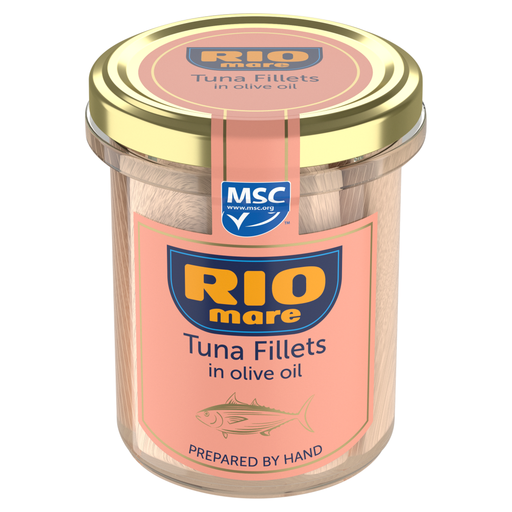
Rio Mare Tuna Fillets in Olive Oil Glass Jar 180g
Consider this 180g jar when an olive-oil-packed fillet format suits the recipe rather than a tin or spring-water chunks. Check the exact label for its sourcing claim, ingredients and allergens; an olive-oil or fishing claim does not establish organic certification. Follow the jar’s storage directions and the resident’s meal plan.
View on Joybuy
Common questions
Does tuna in organic olive oil mean the fish is organic?
No: that wording identifies an organic claim for the oil, not necessarily for the fish. The Fish4Ever listing from Abel & Cole marks its olive oil as produced to organic standards while naming skipjack tuna separately. Check the exact product label and certification scope before describing the tuna itself as organic.
Can a care home select tuna solely for its organic or sourcing claim?
No. For providers it regulates, the Care Quality Commission requires assessment of residents’ nutritional needs and food that meets them. Organic and fishing credentials can inform a purchase, but the meal must also fit applicable individual nutrition, allergen and swallowing requirements.
What allergen information matters when tuna is served in a prepared meal?
Fish is an allergen, so check the current product label and accurately communicate the finished dish’s allergen information. The Food Standards Agency’s guidance requires food businesses in retail and catering to provide allergen information for prepacked and non-prepacked food.
Are ordinary tuna chunks suitable for a texture-modified diet?
Not automatically. Where a resident has a prescribed texture requirement, prepare and check the complete dish against that person’s required IDDSI level. The International Dysphagia Diet Standardisation Initiative warns that texture errors can have serious consequences.
How should unused tuna be stored after opening?
Follow the current product label and the home’s food-safety procedures for the particular service. GOV.UK’s Safer Food, Better Business supplement addresses small residential care homes that prepare and cook food for residents; it is not intended for nursing homes.


