What matters when choosing?
Start with the recipe and residents' requirements, then compare usable quantity and preparation work among products that meet them.
| Concern |
What to check |
Who this matters to |
| Usable quantity for routine dishes |
Compare the drained quantity, pack count and amount needed for the same recipe. |
When planning repeated pasta bakes or sandwich fillings, I need to know how much tuna remains after draining. About 36% of consumers would put usable yield first. |
| Resident-specific dietary fit |
Check the current ingredients, fish allergen information and nutrition label against individual meal requirements. |
If residents have different dietary instructions or preferences, one tin cannot be assumed to suit every plate. For about 29% of consumers, individual dietary fit would be the primary concern. |
| Texture of the finished meal |
Follow the prescribed texture level where applicable and test the prepared dish under serving conditions. |
For a texture-modified meal, I need the completed recipe to meet the resident's prescribed level, whatever tuna format I start with. Roughly 21% of consumers would prioritise that need. |
| Preparation and portion handling |
Check whether draining is required and whether the tin size suits the batch. |
When kitchen handling time matters most, I want a format that works with the planned portions without unnecessary draining or breaking up. About 14% of consumers would make preparation their main concern. |
Tinned tuna options on Joybuy
These multipacks offer chunks in brine, spring water or sunflower oil for routine dishes. Compare their drained quantities and current labels against the same recipe and residents' requirements before choosing.
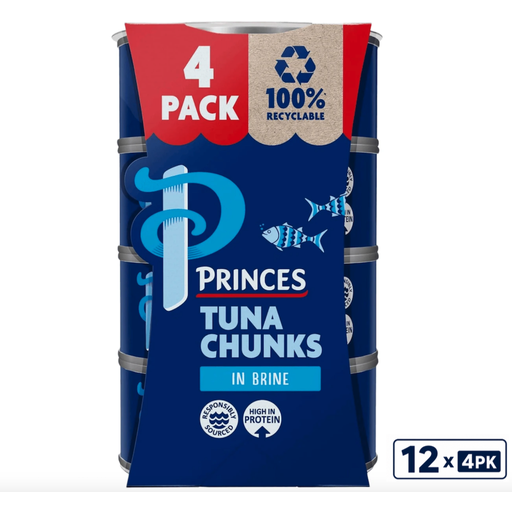 Image unavailable
Princes Tuna Chunks in Brine, 4 × 145 g × 12 packs
The case format can serve repeated recipes where staff plan to drain and prepare tuna chunks. It contains 12 four-can packs, each with 145 g tins; check the drained quantity and current label when planning servings.
View on Joybuy
 Image unavailable
Morrisons Fad Free Tuna Chunks in Spring Water, 145 g × 6
This six-pack is an option for repeated dishes calling for spring-water tuna chunks. Check its drained quantity and current label against the recipe and each resident's requirements.
View on Joybuy
 Image unavailable
Princes Tuna Chunks in Brine, 4 × 145 g
This four-can pack can be considered for mixed dishes where brine-packed chunks suit the recipe. Plan portions using the drained quantity rather than the labelled tin weight, and check the current ingredient and allergen information.
View on Joybuy
 Image unavailable
John West Tuna Chunks in Springwater, 4 × 125 g
This four-can format is an option when a recipe calls for spring-water chunks. Each tin is labelled 125 g; check the drained quantity for batch planning and assess any texture-modified finished dish separately.
View on Joybuy
 Image unavailable
Princes Tuna Chunks in Sunflower Oil, 4 × 145 g
Consider this four-can pack when sunflower oil fits the planned dish and residents' requirements. Check its drained quantity and the weight basis on the current nutrition label before using those figures for meal planning.
View on Joybuy
Care-home tuna questions
How can a care home compare tins for the same recipe?
Compare the amount of drained tuna and the pack count, then work out how many tins the planned dish needs. A tin's labelled total weight is not necessarily the quantity of tuna available after draining.
Can one tinned tuna product be served to every resident?
No single product should be assumed suitable for everyone. In England, the Care Quality Commission says providers must assess people's nutritional needs and provide food that meets them, taking reasonable dietary requirements arising from preferences and religious or cultural backgrounds into account; staff should also check individual allergen and meal instructions.
Are ordinary tuna chunks suitable for a texture-modified meal?
Not automatically. Use the texture prescribed following the resident's assessment, then prepare and test the finished dish under its intended serving conditions, as set out by the International Dysphagia Diet Standardisation Initiative.
What should staff do with tuna left after opening?
Follow the instructions on the specific tin. For its 800 g tuna steak in spring water, M&S instructs users to move unused contents to a non-metallic container, refrigerate them and eat them within two days; check other products' own labels rather than applying that instruction to every tin.
What allergen checks matter for a tuna dish?
Check the current tuna label for fish allergen information and review every ingredient in the completed dish. Mayonnaise, sauces, cheese, bread or other additions can introduce allergens that are not apparent from the tuna tin alone.


