Choose albacore loins, fillets or tuna steaks in oil when intact pieces and the oil medium suit the planned dish and each resident’s assessed requirements. Plain chunks may be more useful in mixed dishes, but no tin is automatically suitable for an individual diet or prescribed texture level. Check the exact pack’s ingredients, fish allergen information, bone warning, nutrition and storage instructions before serving.
Who is choosing the tuna?
Care caterers working from resident care plans
A tuna dish needs to fit the individual resident’s assessed requirements, including any allergy or prescribed texture level. The Care Quality Commission’s guidance for England addresses assessed nutritional needs; the International Dysphagia Diet Standardisation Initiative (IDDSI) places food-texture recommendations with the assessing clinician.
Menu planners choosing a plated fish dish
Loins, fillets and steaks offer identifiable pieces for a plated meal. Compare the exact product’s packing medium, drained nutrition and salt values before deciding how it fits the menu.
Kitchen teams planning repeat service
Pack size, portioning and post-opening instructions matter when tuna appears regularly on the menu. Check the bone warning and ingredient label again if the product changes.
What matters when buying?
For care-home dining, establish whether the prepared dish meets each resident’s requirements before choosing its presentation, nutrition profile and pack format.
| Concern |
What to check |
Who this matters to |
| Individual suitability |
Check the fish allergen and ingredient information, bone warning and care plan. Where a texture level is prescribed, assess the prepared dish rather than the tuna alone. |
If a resident has an allergy or swallowing requirements, I need to know whether the finished meal fits their plan before choosing a cut. About 36% of consumers put this individual suitability first. |
| Meal presentation |
Compare the cut and packing medium; check that any seasoning suits the intended recipe. |
For a plated salad or fish dish, I may want pieces that remain recognisable rather than tuna mixed through a sauce. Visible pieces are the primary concern for about 29% of consumers. |
| Nutrition profile |
Compare protein, energy, fat and salt on a consistent basis, including per 100g drained where stated and per intended portion. |
When planning a resident’s portion, I need the figures for the exact product, not an assumption based on oil, water or brine. About 21% of consumers put that nutrition comparison first. |
| Kitchen handling |
Check pack and drained weights, current availability and the exact post-opening instructions. |
If several servings must be prepared across a menu cycle, I need packs that fit portioning and the kitchen’s storage plan. For about 14% of consumers, handling is the leading concern. |
Buying pitfalls
-
Assuming a premium cut suits every resident
A loin or steak still needs to fit the individual care plan. Fish allergy, a possible-bones warning or a prescribed texture can change what may be served.
Check the exact product and assess the completed recipe against the resident’s requirements before service.
-
Choosing oil-packed tuna by name alone
Nutrition varies between products. Ocado lists M&S Collection Albacore Tuna Loins at 160kcal and 0.60g salt per 100g drained; Sainsbury’s lists its Taste the Difference albacore steak at 208kcal and 0.66g salt on the same basis.
Compare the current labels and intended portions against the menu plan rather than treating one packing medium as the answer.
-
Using flavoured tuna as a flexible kitchen base
Chilli, garlic and other added ingredients can change both the dish’s flavour and its ingredient profile. Princes’ Ocean Select Sweet Chilli and Asda’s Chilli & Garlic Tuna are distinct recipes, not interchangeable with plain tuna.
Choose a flavoured product only when its full ingredient list suits the recipe and the residents being served.
-
Planning a menu without checking the exact pack
Pack sizes and instructions affect how a kitchen can use leftovers. The cited M&S and John West examples specify refrigeration and use within two days after opening; instructions for another product may differ.
Confirm availability before fixing the menu, then follow the purchased pack’s storage directions.
An opened pack may go to waste if its remaining contents cannot be used within its labelled time limit.
Brands to consider for relevant tuna formats
M&S
Its Collection albacore loins and standard tuna steak offer two different olive-oil-packed choices for dishes where visible pieces matter.
- Ocado lists the Collection loins at 31.1g protein and 0.60g salt per 100g drained.
- The standard steak has different nutrition; both cited products warn that bones may be present.
Sainsbury’s
Taste the Difference includes albacore steak and fillets in extra virgin olive oil.
- Sainsbury’s lists its 160g albacore steak at 25.9g protein and 0.66g salt per 100g drained.
- Check current availability before committing these products to a menu.
Princes
Its range includes chunks, steaks and larger brine packs, alongside seasoned Ocean Select tuna.
- The Princes 2026 catalogue lists a 1.7kg tuna-chunks-in-brine format for larger-scale preparation.
- Ocean Select Sweet Chilli contains seasoning, so check its ingredients before using it in a recipe intended for plain tuna.
John West
Chunks and no-drain steak formats address different preparation needs.
- The cited brine chunks can be compared by their labelled nutrition; Joybuy also lists a portioned, no-drain steak product.
- The cited brine chunks carry a possible-bones warning. Do not assume the sunflower-oil no-drain steak has the same nutrition or handling needs.
Tesco
Its tinned-fish range offers standard tuna chunks in pack sizes that may be relevant to routine meal preparation.
- Tesco Groceries lists own-label spring-water chunks in a 400g pack.
- Assess any premium steak or fillet as the exact product offered, rather than assuming it is a Tesco own-label line.
Asda
Its Chilli & Garlic Tuna with Extra Virgin Olive Oil is a flavoured 80g option for a specific recipe.
- Asda identifies skipjack tuna and lists 22g protein per 100g for this product.
- The chilli, garlic and other ingredients need to fit the intended dish; Asda lists 1.1g salt per 100g.
Joybuy tuna selections
These products cover steak and fillet formats for dishes with visible tuna pieces, plus spring-water chunks for mixed dishes. Select the exact pack according to the planned recipe and residents’ requirements.
 Image unavailable
Tropical Sun Tuna Steaks in Sunflower Oil
Steak pieces are an option when the dish calls for visible tuna rather than chunks mixed through a filling. Check the current pack’s bone warning and whether its post-opening instructions fit the service plan.
View on Joybuy
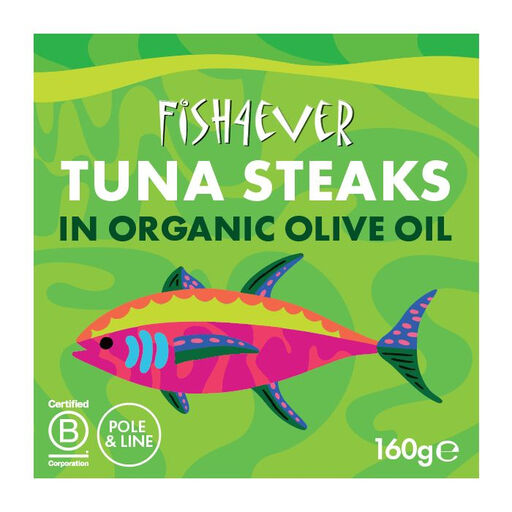 Image unavailable
Fish4ever Tuna Steaks in Organic Olive Oil 160g
Consider this olive-oil steak format where the recipe calls for identifiable tuna pieces. Use the current pack to establish the basis of its nutrition figures before comparing them with drained values from another product, and check its bone warning.
View on Joybuy
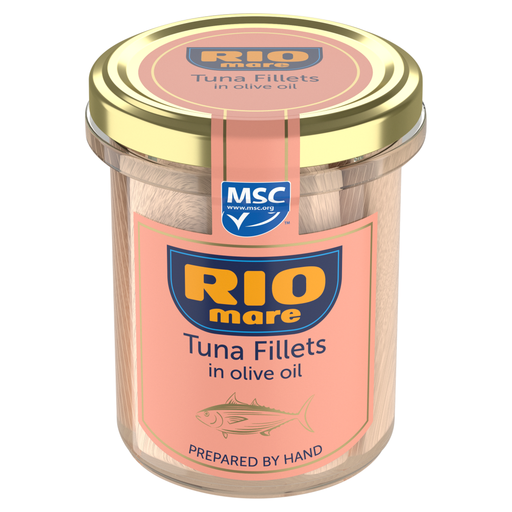 Image unavailable
Rio Mare Tuna Fillets in Olive Oil Glass Jar 180g
The glass-jar fillet format offers visible pieces for a salad or plated dish. Read the current jar label for a bone warning and instructions for storing any contents left after opening.
View on Joybuy
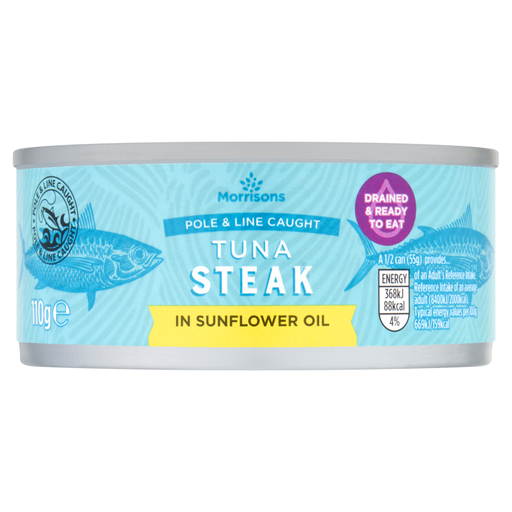 Image unavailable
Morrisons Drained Tuna Steaks with Sunflower Oil 110g
This is a sunflower-oil steak option for recipes needing identifiable pieces. Its product wording uses both “Drained” and “No Drain”, so confirm the exact pack’s handling directions before planning preparation; check its bone warning and post-opening instructions too.
View on Joybuy
 Image unavailable
John West Tuna Chunks in Springwater 4 x 125g
Choose the four-can chunk format when tuna will be mixed into a filling, sauce or other dish rather than presented as a whole piece. Check the current pack’s bone warning and follow its instructions for any opened can.
View on Joybuy
Common questions
Can every resident have the same premium tinned tuna?
No. In England, Care Quality Commission Regulation 14 guidance requires providers to assess nutritional needs and provide food that meets them. Select a tuna dish within each resident’s assessed requirements and preferences rather than relying on its premium description.
Is a tuna steak or loin suitable for a texture-modified diet?
Not automatically. The International Dysphagia Diet Standardisation Initiative says a clinician makes food-texture recommendations following assessment. Check the completed dish at serving conditions against the resident’s prescribed IDDSI level; the appearance of tuna in the tin does not establish the finished meal’s texture.
What allergen details should the kitchen check?
Check the current product label and record the ingredients of the completed recipe: tuna contains fish, while flavoured products can introduce other ingredients. Food Standards Agency guidance addresses providing allergen information for non-prepacked food.
How should tuna be stored after opening?
Follow the purchased pack’s instructions. The cited M&S and John West examples call for refrigeration and use within two days; the cited M&S product also directs users to move unused contents to a non-metallic container. Do not apply those directions to a different pack without checking its label.


