What should you check?
Start with the exact tin’s ingredients and sugars figure. Then compare salt and, if choosing oil-packed tuna, energy and fat; finally, pick a pack you can use and store as directed.
| Concern |
What to check |
Who this matters to |
| Sugars and ingredients |
Read sugars per 100g on the exact tin and check whether it is plain tuna or a flavoured product. Confirm whether the figure is for drained tuna before comparing it with another label. |
I want a plain tuna add-on without relying on a “reduced sugar” description that may not distinguish it from other plain tins. About 45% of consumers put confirming sugars and ingredients first. |
| Salt, energy and fat |
Compare salt on the same per-100g basis. If considering sunflower-oil tuna, compare its energy and fat figures with those of the spring-water option. |
With a seasoned takeaway, I need to decide how the tuna’s salt fits the meal; if choosing oil, energy and fat matter too. Those trade-offs come first for about 33% of consumers. |
| Portions and leftovers |
Check tin count and drained quantity, then read the exact pack’s after-opening storage instructions. |
I may use only a little tuna tonight, so the portion and what to do with the rest affect which pack I choose. Around 22% of consumers prioritise portioning and leftover handling. |
Brands to compare
These product-line examples show why it is worth comparing exact packs rather than assuming every tin from a brand has the same nutrition or format.
John West
A spring-water chunks range with different pack formats.
- Sainsbury’s lists the John West 4 × 125g pack at 102g drained per tin, with 0g sugars and 25g protein per 100g drained.
- The cited ingredients include salt. Check the nutrition and pack size of the exact variant you choose.
Princes
Plain tuna chunks offered in spring water, brine and sunflower oil.
- Princes lists 0.0g sugars per 100g drained for all three cited variants.
- Their other figures differ: the cited spring-water and brine products list 0.85g and 0.9g salt per 100g drained respectively, while the oil product lists 180kcal and 9.5g fat per 100g drained.
Tesco
Tesco’s tinned-tuna category includes water, brine and oil formats, as well as chunks and steaks.
- The range gives shoppers several formats to compare.
- Use the nutrition panel of a particular tin to judge its sugars and salt; a category or packing-liquid name does not supply those figures.
Sainsbury’s
Own-label spring-water chunks include a 3 × 80g pack and a 145g tin.
- Sainsbury’s lists less than 0.5g sugars and 0.12g salt per 100g drained for both cited products.
- Check the current pack label and the after-opening instruction for the format you buy.
Asda
Own-label skipjack chunks in spring water include 145g single-tin and four-tin formats.
- Asda lists less than 0.5g sugars per 100g drained for the cited 145g tin.
- That tin also lists 0.90g salt per 100g drained. Recheck the current label when comparing it with another product.
M&S
A cited 160g spring-water tuna chunks product.
- M&S lists 0.0g sugars, 99kcal and 0.75g salt per 100g for this product.
- Check the current label and its measurement basis before comparing those figures with a drained-weight panel.
Joybuy tuna selections
These tins cover plain tuna chunks in spring water, a no-drain spring-water format and tuna chunks in sunflower oil. Choose by the packing medium, pack format and the figures on the exact label—not by an assumed sugar difference between plain varieties.
 Image unavailable
John West Tuna Chunks in Springwater, 4 × 125g
A four-tin spring-water pack to consider if you want plain tuna available for more than one meal. Sainsbury’s lists 0g sugars and 0.80g salt per 100g drained for its cited John West 4 × 125g product; confirm the current figures on the pack you receive.
View on Joybuy
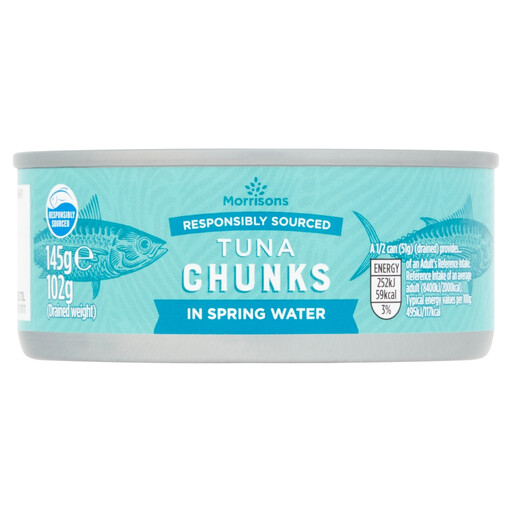 Image unavailable
Morrisons Fad Free Tuna Chunks in Spring Water, 145g
This single spring-water tin may suit a meal where you do not want a multipack. Check its current sugars and salt figures, and whether you will use the whole tin or need to store leftovers.
View on Joybuy
 Image unavailable
Morrisons Fad Free Tuna Chunks in Spring Water, 145g (6 Packs)
The title describes multiple spring-water tins for use across meals. Confirm the total number of tins before buying: the title says six packs, while the stated net quantity is 145g. Check the current nutrition label for each tin.
View on Joybuy
 Image unavailable
John West No Drain Tuna Chunks in Springwater, 3 × 100g
The no-drain format may suit a quick add-on when you want less preparation. This is a three-tin pack; check the pack’s per-100g measurement basis before comparing its sugars or salt with drained-weight figures from other tuna.
View on Joybuy
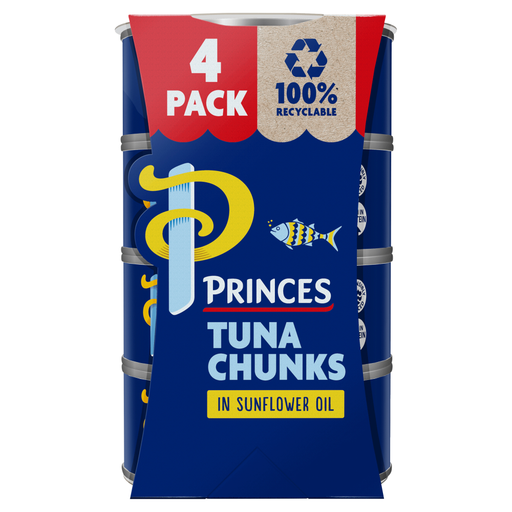 Image unavailable
Princes Tuna Chunks in Sunflower Oil, 4 × 145g
Consider this four-tin oil-packed format if you prefer tuna in sunflower oil rather than spring water. Princes lists 0.0g sugars, 180kcal and 9.5g fat per 100g drained for its cited plain sunflower-oil chunks; check the exact pack’s figures and measurement basis before comparing variants.
View on Joybuy
Questions about choosing tuna
Is “reduced sugar” a useful way to choose plain tinned tuna?
For the cited plain products, checking the exact sugars figure is more useful than looking for a separate “reduced sugar” description. Princes lists 0.0g sugars per 100g drained for its spring-water, brine and sunflower-oil chunks; the cited spring-water examples from John West, M&S, Asda and Sainsbury’s list 0g, 0.0g or less than 0.5g. Check flavoured or sauce-based products individually rather than applying those plain-tuna figures to them.
Should I choose spring water, brine or oil?
Choose by the other differences that matter to your meal once you have checked sugars. The cited Princes products all list 0.0g sugars per 100g drained, but its brine chunks list 0.9g salt against 0.85g for spring water; its sunflower-oil chunks list 180kcal and 9.5g fat against 99kcal and 0.5g fat for spring water, on the same drained-weight basis.
What should I check on the tin before using it with a takeaway?
Check the current ingredients, fish allergen information, sugars and salt figures, date mark and storage directions on the physical pack. UK government food-labelling guidance addresses ingredients, allergens and nutrition information for prepacked foods; the exact product label also lets you check which figures and instructions apply to the tin in your hand.
How should I store tuna left after the meal?
Follow the instruction on your particular pack. The cited M&S and Asda products direct consumers to transfer unused tuna to a non-metallic container, refrigerate it and use it within two days; the cited Sainsbury’s 3 × 80g product specifies use within one day.


