Shoppers checking sugars
If you are buying tuna for festive sandwiches, a buffet or leftovers, the exact tin matters more than a reduced-sugar search term. Plain tuna and tuna in a sauce or prepared recipe should be checked separately.


Start with the label rather than seeking a reduced-sugar claim: plain spring-water and brine tins checked by Princes Food & Drinks, ASDA Groceries and Tesco Groceries list 0.0g or less than 0.5g sugars per 100g drained. For a Christmas food shop, choose the packing liquid and tin size to suit your dishes, then compare the exact products’ sugars, salt and drained weight. An oil-packed or flavoured product needs its own label check; one plain tin’s figures do not apply to a whole range.
If you are buying tuna for festive sandwiches, a buffet or leftovers, the exact tin matters more than a reduced-sugar search term. Plain tuna and tuna in a sauce or prepared recipe should be checked separately.
For several planned dishes, compare pack size with drained weight and think about which meals will use an opened tin. Spring water, brine and oil also give you different ingredients and nutrition panels to consider.
If anyone eating the meal has a fish allergy, check the allergen declaration. If the food shop includes tuna for someone pregnant or trying for a baby, the Food Standards Agency’s reported intake guidance is a separate consideration from sugars.
For plain tuna, confirm the sugar figure on the tin, then weigh the format against the dish and any household food checks.
| Concern | What to check | Who this matters to |
|---|---|---|
| Sugars in the exact tin | Read the ingredients and sugars per 100g drained. Check flavoured or sauce-based tuna separately from plain tins. | If I want plain tuna for sandwiches or a buffet, I need to know what this tin contains rather than rely on a reduced-sugar search term. About 50% of consumers put that label check first. |
| Packing liquid and meal size | Compare drained weight, salt, fat and energy on the same per-100g basis; match the pack size to planned servings. | A pasta bake and a sandwich filling may call for different tuna formats, and I need enough drained tuna for the dishes I have planned. Choosing the format and quantity is the primary concern for about 30% of consumers. |
| Allergens, storage and intake | Check the fish declaration and opening instructions. Where relevant, consider tuna eaten across the week as well as this purchase. | Before stocking up for several meals, I need to account for a fish allergy, opened-tin storage or pregnancy-related intake guidance in my household. Those checks come first for about 20% of consumers. |
Plain tins can already list very little sugar. The Princes brine, ASDA spring-water and Tesco spring-water products checked for this article list 0.0g or less than 0.5g sugars per 100g drained, but their other label details are not interchangeable.
Compare the current tin’s sugars, salt and ingredients, using the same per-100g drained basis where available. Choose the packing liquid for the dish rather than for a sugar claim alone.
The packing liquid does not establish the salt figure. Checked plain spring-water and brine products list values from 0.75g to 0.90g salt per 100g drained.
Read the salt line on the two tins you are considering before choosing one for several Christmas dishes.
Multipacks can cover several meals, but an opened tin has different storage instructions from an unopened one. Checked retailer labels instruct shoppers to transfer leftovers to a non-metallic container, refrigerate them and use them within 2 days.
Choose tin sizes that fit the servings you have planned, and follow the instructions on the pack you buy.
Unused tuna may go to waste if it cannot be used within the pack’s stated period after opening.
Tuna is fish, so its sugar figure does not address a fish allergy. Pregnancy and trying-to-conceive intake guidance concerns tuna eaten across meals, not whether a tin is reduced in sugar.
Check the allergen declaration. Where the intake guidance applies, account for tuna across the week before buying tins for multiple meals.
Use named products and their current labels for comparisons; a figure for one tin does not describe every product from its brand.
Its range includes spring-water chunks and no-drain formats for different preparation needs.
Its tinned-tuna range includes brine and spring-water formats for plain tuna dishes.
Tesco own-label spring-water and sunflower-oil tins allow a comparison between packing liquids within its range.
Asda own-label spring-water multipacks offer a plain-tuna option for meals using several tins.
Its spring-water tuna chunks are another named product to compare by label rather than by packing-liquid description alone.
These tins cover spring-water and brine chunks, a no-drain spring-water format and sunflower-oil chunks. Choose among them according to the dishes and number of servings you have planned, then check each pack’s current label.
 Image unavailable
The six-pack may suit a shop planned around several plain-tuna dishes, such as sandwiches and pasta. Each tin is labelled 145g; check its drained weight and nutrition panel when deciding how many tins the meals require.
 Image unavailable
Four spring-water tins offer separate portions for planned sandwiches, salads or other plain-tuna dishes. Use the current label’s drained weight, sugars and salt figures when comparing this variant with another pack.
 Image unavailable
This four-pack is a brine option for meals where plain tuna suits the recipe. Compare its salt figure with the particular spring-water tin you might otherwise buy; the packing liquid alone does not establish which has less salt.
 Image unavailable
The no-drain format and three 100g tins may suit smaller planned portions with less draining during preparation. When comparing nutrition figures with conventional tins, check whether each label uses a drained-weight basis.
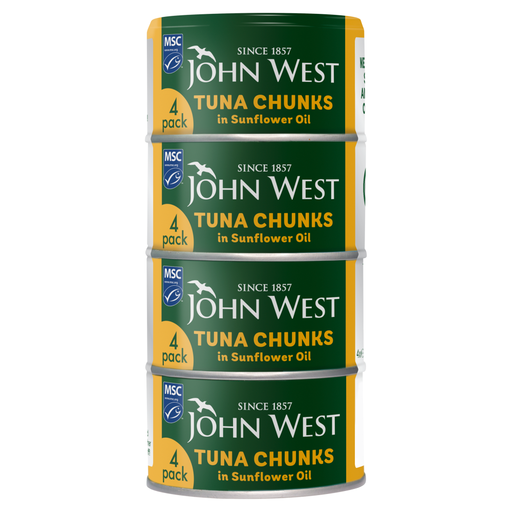 Image unavailable
Choose an oil-packed tin when that format suits the planned dish, rather than assuming it offers a sugar advantage. This pack contains four 125g tins; compare its current fat, energy and salt figures with a spring-water alternative if those differences affect your choice.
Check the exact label before seeking a reduced-sugar version. Plain spring-water and brine products checked by Princes Food & Drinks, ASDA Groceries and Tesco Groceries list 0.0g or less than 0.5g sugars per 100g drained; flavoured or sauce-based products need a separate check.
No such conclusion follows from the packing liquid alone. The checked plain spring-water, brine and sunflower-oil products all list very little sugar, while other nutrition figures vary. Compare the specific tins on the same label basis and choose a format that suits the dish.
Follow the tin’s opening instructions. Checked retailer labels say to move unused tuna to a non-metallic container, refrigerate it and use it within 2 days; plan servings around the instructions on the pack you buy.
The Food Standards Agency reports NHS guidance of no more than four medium cans of tuna a week or two tuna steaks a week for people who are pregnant or trying for a baby. This concerns total tuna intake across meals, not the sugar figure on a particular tin.
Check the can’s best-before date and storage instructions against when you plan to use it. GOV.UK explains that a best-before date concerns quality; after opening, follow the product’s separate storage instructions.