Who is each format for?
Start with how the tuna will be served: visible pieces and a mixed filling call for different formats, while a quick assembly may make draining the more important consideration.
Households making quick holiday lunches
For sandwiches, wraps, jacket potatoes or salads assembled with little preparation, drained tuna steak and no-drain pots are worth considering. Sainsbury's describes its listed Princes drained steak as ready to use and its John West fridge pot as no-drain and ready to eat.
Families who want recognisable tuna pieces
Tuna steak and fillet-labelled products are the relevant tinned formats to compare when piece shape matters. Check the actual product and the child's preference rather than assuming a format name guarantees they will enjoy its texture.
Households checking ingredients and sourcing
Compare the exact pack's packing liquid, declared nutrition, fish-allergen information and any sourcing label. These details vary by product; a claim on one tuna item does not describe an entire brand range.
What should you check before choosing?
Decide whether piece shape or reduced draining matters more for the lunch you are making, then check ingredients and leftover instructions on the specific pack.
| Priority | What to check | Your needs |
|---|
| Piece format |
Look for steak or fillet wording if you want recognisable pieces. Choose chunks if the tuna will be mixed into a filling; tinned steak is not fresh refrigerated fish. |
I want visible tuna pieces in a sandwich or salad, rather than a filling where the pieces will be mixed through. |
| Preparation |
Check whether the exact pack says drained, no-drain or ready to use. A steak or fillet name alone does not establish how much liquid you will need to handle. |
Lunch needs to be assembled quickly, with as little draining as possible. |
| Packing liquid and label |
Distinguish spring water from olive or sunflower oil, and compare ingredients, salt and declared nutrition on the exact variant. A per 100g figure helps compare labels, not the complete lunch. |
I prefer tuna packed without added oil, or I want to compare labels before adding it to a lunch with other foods. |
| Allergens and leftovers |
Fish is an allergen identified by the Food Standards Agency. Read the pack's allergen information and follow its specific instructions for transferring, refrigerating and using any opened tuna. |
A child's fish allergy needs checking, or I expect to have tuna left after making lunch. |
| Fishery sourcing |
If independent certification matters, check for the MSC ecolabel or a product-specific certified-fishery statement on the item you are buying. It does not tell you about flavour or salt content. |
I want to identify a tuna product with a stated, independently assessed fishery credential. |
Brand and retailer references
These examples show formats and label details to compare; they do not establish that every product from a brand has the same ingredients or handling instructions.
John West
Its tuna range includes a spring-water steak fridge pot listed by Sainsbury's for lunches that benefit from no-drain handling.
- The listed 110g pot is labelled no-drain and ready to eat; its ingredients list tuna (93%), spring water and salt.
- Sainsbury's says to replace this pot's lid, refrigerate after opening and use within two days. Do not apply that instruction to other John West packs.
Princes
Princes discusses tuna as a children's sandwich filling, while Sainsbury's lists a drained, ready-to-use spring-water steak.
- The listed 3x110g drained steak is explicitly described as ready to use.
- For that product, Sainsbury's says to empty, cover and refrigerate opened tuna and use it within two days; check other variants separately.
Tesco
Tesco's tuna-steak listings include a single 110g own-label steak with a little spring water, an option to consider when choosing a pack format.
- The listing identifies both the steak format and its spring-water packing liquid.
- Check the individual product label for ingredients and handling instructions rather than relying on the category listing.
Sainsbury's
Its own-label spring-water tuna steak provides a product-specific sourcing reference as well as an alternative steak format.
- Sainsbury's describes its 3x120g tuna steak as skipjack from a fishery certified to the MSC environmental standard.
- Its instructions say to transfer opened tuna to a non-metallic container, refrigerate and use within one day; the sourcing statement and storage rule are specific to this product.
Tuna options on Joybuy
These Joybuy options include tinned steaks, jarred fillets and no-drain chunks for assembled holiday lunches. Their packing liquids and stated preparation formats differ, so choose by the lunch you plan to make rather than treating the formats as interchangeable.
 No image available
Tropical Sun Tuna Steaks in Sunflower Oil
A steak-format option for a sandwich or salad when recognisable pieces matter. It is packed in sunflower oil rather than spring water; check the pack if draining matters to your lunch preparation, and follow its instructions for leftovers.
 No image available
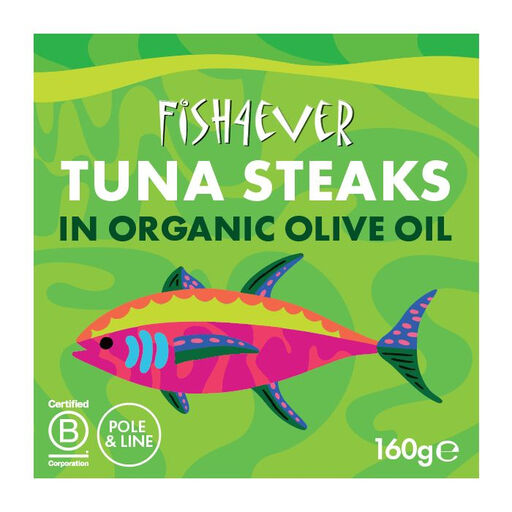
Fish4ever Tuna Steaks in Organic Olive Oil 160g
Consider this steak format for bread or salad when piece shape is more important than avoiding added oil. It is packed in organic olive oil; check the pack for preparation and after-opening instructions.
 No image available
John West No Drain Tuna Chunks in Springwater 3 x 100g
The no-drain chunk format suits a mixed sandwich filling when avoiding draining matters more than having steak- or fillet-shaped pieces. This 3 x 100g pack is labelled as packed in springwater; follow its after-opening instructions for any unused tuna.
 No image available
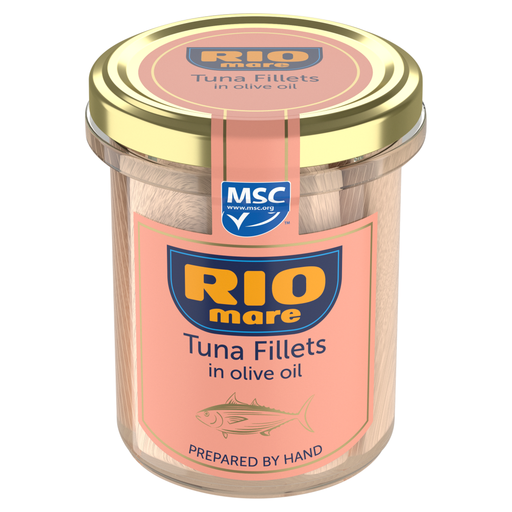
Rio Mare Tuna Fillets in Olive Oil Glass Jar 180g
A jarred fillet format to consider when you want recognisable pieces in a sandwich or salad. This 180g product is packed in olive oil; check the jar for liquid handling and after-opening storage instructions.
 No image available
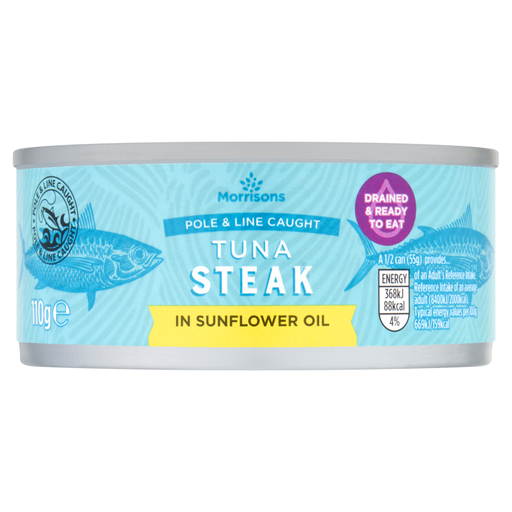
Morrisons Tuna Steaks with Sunflower Oil 110g
The steak format may suit a sandwich or salad where recognisable pieces matter. This 110g product is packed in sunflower oil. If reduced liquid handling is important, confirm the preparation directions on the exact pack; its title and description differ on whether it is drained or no-drain. Check the pack for leftover storage instructions too.
Common questions
Is tinned tuna steak the same as fresh tuna fillet?
No. Tinned steak or fillet is a canned or jarred tuna format, not fresh refrigerated fish. Choose it when you want a ready-to-assemble tuna ingredient with recognisable pieces, rather than for a recipe that calls for fresh fish.
Which packing liquid should I choose for a holiday lunch?
Choose a spring-water variant if you want tuna without added oil, and check the exact label for salt and other ingredients. Olive-oil and sunflower-oil products may suit a different recipe or taste preference; the packing liquid does not tell you whether the tuna needs draining.
Can I keep tuna left over from an opened pack?
Follow the instructions on that pack, because storage methods and periods differ. Sainsbury's says its own-label tuna steak should be transferred to a non-metallic container, refrigerated and used within one day; its listed Princes drained steak and John West fridge pot specify two days with their respective refrigeration instructions.
What should I check if a child has a fish allergy?
Fish is an allergen identified by the Food Standards Agency. Read the ingredients and allergen declaration on the exact product, particularly if it is flavoured or mixed with other ingredients; tuna is not a suitable lunch ingredient for someone with a fish allergy.
Does canned tuna count as oily fish in NHS guidance?
No. The NHS says fresh and canned tuna do not count as oily fish. Do not treat a tinned tuna lunch as the oily-fish portion described in that guidance.


