What matters when choosing?
For meals prepared for an older person, start with the household’s main need, then check the label and handling requirements of the exact pack.
| Concern | What to check | Who this matters to |
|---|
| Protein contribution |
Compare protein per 100g drained and the drained weight of each tin. Seek clinical advice if poor appetite or unintended weight loss is the underlying concern. |
If I am planning regular meals, I want to know how much tuna the person will actually eat and what it contributes alongside other foods. About 33% of consumers put protein contribution first. |
| Opening and preparation |
Check the exact pack for a no-drain design or stated opening mechanism; do not assume every tin in a brand’s range works alike. |
When opening or draining a tin is difficult, being able to prepare the meal matters more to me than the number of tins in the cupboard. About 27% of consumers prioritise handling and preparation. |
| Dietary suitability |
Read the current ingredients, fish-allergen declaration and salt value. For a prescribed diet, follow the person’s clinical advice. |
If salt intake is restricted, I need to check the label against that person’s requirements; tuna is not suitable for someone with a fish allergy. Roughly 20% of consumers place dietary suitability first. |
| Portions and leftovers |
Match individual tin size to likely portions and check the pack’s instructions for unused contents. |
If I prepare meals for one person, a large tin may leave more than we can use within its stated opened life. About 20% of consumers put portion fit and leftover control first. |
Tuna multipacks on Joybuy
These multipacks include spring-water tuna for regular meals, a brine-packed option and sunflower-oil options, one of which has a stated no-drain opening format. Compare the exact packing liquid, label basis and tin size against the older person’s needs.
 No image available
Morrisons Fad Free Tuna Chunks in Spring Water, 6 × 145g
A six-tin spring-water pack for households planning regular tuna meals. The listing gives 24.9g protein and 1.0g salt per 100g drained; it instructs users to refrigerate leftovers in a non-metallic container and use them within two days. If opening or draining is difficult, check the exact tin’s mechanism before choosing it.
View on Joybuy
 No image available
John West Tuna Chunks in Springwater, 4 × 125g
Four individual spring-water tins may suit meals that use this tin size. The listing states 25g protein per 100g drained and 0.80g salt per 100g. Check the current label’s basis for each value; do not assume this pack has the opening or no-drain features of John West’s separate No Drain range.
View on Joybuy
 No image available
Princes Tuna Chunks in Brine, 4 × 145g
This four-tin pack offers brine-packed tuna rather than the spring-water option discussed above. Its listing gives 23.5g protein and 0.90g salt per 100g drained, and says to refrigerate unused tuna in a sealed container and consume it within two days. Check the packing liquid if that affects the meal you intend to make.
View on Joybuy
 No image available
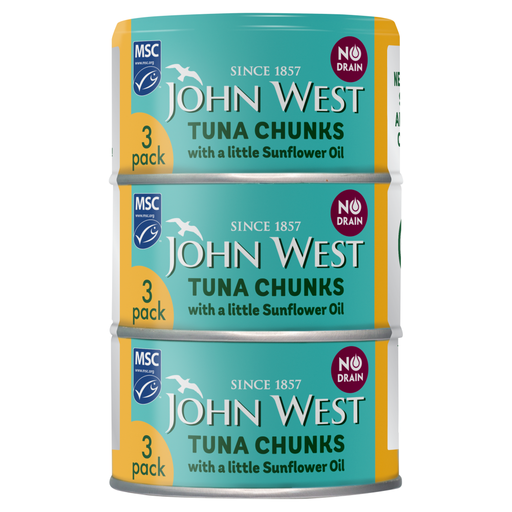
John West No Drain Tuna Chunks in Sunflower Oil, 3 × 100g
The stated no-drain design and twist-open SmartStrip address opening and draining tasks. This is sunflower-oil tuna, not plain spring-water tuna. The listing gives 27g protein and 0.90g salt per 100g but does not state a drained-weight basis for those figures; check the current label before comparing them with values declared per 100g drained.
View on Joybuy
 No image available
John West Tuna Chunks in Sunflower Oil, 4 × 125g
These four individual tins are an option when sunflower-oil tuna suits the intended meals. The listing gives 25g protein and 0.90g salt per 100g drained, instructs users to refrigerate opened tuna and consume it within two days, and warns that some bones may remain. Check the opening mechanism if handling is a concern.
View on Joybuy
Common questions
Is a tuna multipack suitable for an older person’s meals?
Tuna can be a convenient ingredient in varied meals, but a multipack is not a response to suspected malnutrition by itself. The NHS identifies people aged 65 and over as particularly at risk of malnutrition; seek GP or dietitian advice if there is unintended weight loss, markedly poor appetite or another concern about eating enough.
Should I choose spring-water, brine or no-drain tuna?
Choose by the ingredients and preparation tasks that matter for the person eating it. Check protein, salt and the basis used for nutrition figures on the exact pack; a no-drain label addresses draining but does not tell you whether the tuna is packed in spring water or oil.
Can someone with swallowing difficulties eat ordinary tuna chunks?
Do not assume ordinary chunks match a person’s required texture. University Hospitals Birmingham NHS Foundation Trust warns that swallowing difficulties can allow food to enter the lungs; follow the person’s speech and language therapy or dietetic advice on food texture and preparation.
What should I do with tuna left after opening a tin?
Follow the storage instructions on the pack purchased. For its named spring-water four-pack, Marks & Spencer says to transfer unused tuna to a non-metallic container, refrigerate it and eat it within two days.
What should I check if the person has a food allergy?
Tuna is fish, so it is not suitable for someone with a fish allergy. UK government allergen-labelling guidance says food businesses must provide information when any of the 14 regulated allergens is an ingredient; check the current pack’s ingredients and allergen information rather than relying on a different variant’s description.


