What matters when choosing tuna
Start with the role tuna will play in the meal, then compare pack medium, preparation and product-specific sourcing information.
| Concern | What to check | Who this matters to |
|---|
| Protein in a post-ride meal |
Compare protein per 100g and per pack, noting whether values refer to drained tuna. |
If tuna is the main protein ingredient after a ride, the amount in the portion matters more than the format's name. About 30% of consumers put that protein contribution first. |
| Carbohydrate alongside tuna |
Consider when you will eat and what carbohydrate food accompanies the tuna. |
For a longer ride, I would not rely on plain tuna alone for carbohydrate; bread or another carbohydrate food has a different role in the meal. Around 30% of consumers chiefly need to plan that pairing. |
| Low-mess preparation |
Check whether the exact pack is no-drain or resealable, and read its serving instructions. |
When lunch follows a commute, avoiding draining or carrying an opened tin can shape the pack choice. For about 20% of consumers, preparation convenience is the primary concern. |
| Seafood sourcing information |
Look for species, origin, catch-method and certification details on the individual product. |
Where sourcing is the deciding factor, a general retailer policy is a starting point rather than an answer about one tin. Roughly 20% of consumers place product-specific sourcing information first. |
Pack medium changes what you get besides protein. For its tuna chunks, Princes declares 23.5g protein per 100g drained in both spring water and sunflower oil. The sunflower-oil version has 180kcal and 9.5g fat per 100g drained, compared with 99kcal and 0.5g fat for spring water. Both list less than 0.1g carbohydrate per 100g drained; check a flavoured product separately rather than applying those figures to all tuna.
Joybuy tuna selections
These tuna packs cover spring-water chunks, sunflower-oil chunks, brine-packed steaks and a flavoured no-drain option. Choose by the meal you are making and check each pack's instructions before use.
 Image unavailable
John West No Drain Tuna Chunks in Springwater 3 x 100g
The no-drain format is a practical choice for a lunch after commuting. This pack contains three 100g cans of spring-water tuna chunks; check the label if you need nutrition figures for a particular serving.
 Image unavailable
John West Tuna Chunks in Springwater 4 x 125g
Four 125g cans offer separate portions for planned meals after riding. Check this pack's instructions if avoiding draining is important: its preparation wording is not clear enough to treat it as a no-drain product.
 Image unavailable
John West No Drain Tuna Chunks in Sunflower Oil 3 x 100g
Consider this when a no-drain, oil-packed tuna ingredient fits the meal you are preparing. It comes as three 100g cans; compare its own nutrition label with spring-water products on a consistent serving basis.
 Image unavailable
Tropical Sun Tuna Steaks in Brine 160g
This brine-packed steak format is for a meal where you can prepare the fish before serving. The product listing requires thorough cooking: do not treat it as ready to eat. Check the pack instructions before use.
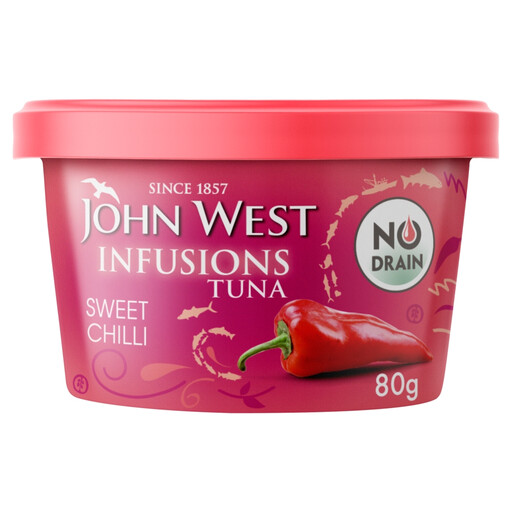 Image unavailable
John West Infusions Tuna Sweet Chilli 80g
This 80g flavoured tuna pack offers a different lunch option from plain chunks. Check its own ingredients and nutrition label rather than using figures for plain tuna; a flavoured pack should not be assumed to supply the carbohydrate needed for a ride.
Questions about tuna and cycling
Is plain tinned tuna enough fuel for a long bike ride?
Not by itself as a carbohydrate source. Princes declares less than 0.1g carbohydrate per 100g drained in its plain spring-water and sunflower-oil chunks, while University College London Hospitals NHS Foundation Trust says activity lasting longer than 60 minutes may require carbohydrate-containing snacks for energy.
Should I choose spring-water or sunflower-oil tuna?
Choose according to the fat and energy you want in the meal, rather than assuming one contains more protein. Princes declares 23.5g protein per 100g drained for both its spring-water and sunflower-oil chunks; the respective figures are 99kcal and 0.5g fat versus 180kcal and 9.5g fat.
Does a no-drain pack offer better cycling nutrition?
No-drain describes preparation, not a nutritional advantage. It may be useful for a lunch after commuting, but compare the exact pack's nutrition, ingredients and serving size with any standard tin you are considering.
Can pregnant cyclists eat tinned tuna in the UK?
Yes, within the NHS pregnancy guidance of no more than four cans or two tuna steaks a week. The NHS gives this pregnancy-specific limit because tuna can contain pollutants, including mercury; seek individual clinical advice where applicable.
What should someone with a fish allergy check?
Tuna is fish, so do not treat a tuna product as suitable for a fish allergy. Check the ingredients and allergen information on the exact pack, particularly for flavoured products, and follow your medical allergy advice.


