Reduced-sugar meal planners
Cyclists comparing plain tuna for sandwiches, rice, pasta or jacket potatoes around training need to read the sugars figure on the exact tin, particularly when considering a flavoured product.


For a reduced-sugar meal ingredient, compare plain tuna in spring water, brine or oil and choose a tin whose current label shows 0g or less than 0.1g sugars per 100g drained. The cited plain-tuna products contain virtually no carbohydrate, so tuna is better placed in a meal alongside a separately chosen carbohydrate food than relied on as fuel during a long ride. Packing liquid also changes the fat, energy or salt you may want to compare.
Cyclists comparing plain tuna for sandwiches, rice, pasta or jacket potatoes around training need to read the sugars figure on the exact tin, particularly when considering a flavoured product.
Riders planning food for a prolonged event need to distinguish a tuna-based meal from the carbohydrate foods they intend to take on the bike. British Cycling discusses carbohydrate as a fuel for sportives.
Cyclists assembling a meal after a commute or training session may prefer a no-drain portion or a multipack. Opening format, drained weight and instructions for leftovers affect how convenient each tin is in practice.
| Concern | What to check | Who this matters to |
|---|---|---|
| Sugars in a meal ingredient | Compare sugars per 100g drained on the exact tin; check the rest of the meal separately. | For a sandwich or rice bowl around training, I want a plain tuna ingredient that fits my reduced-sugar preference. About 33% of consumers put that meal-ingredient choice first. |
| Carbohydrate for a long ride | Check the tuna’s carbohydrate figure and plan separate food to carry on the ride. | On a prolonged ride, I need to plan what I will eat while cycling rather than count a tuna tin as my carbohydrate food. Roughly 42% of consumers prioritise that distinction. |
| Quick meal assembly | Compare no-drain or standard tins, drained weight and storage instructions after opening. | After a commute or training session, I want to assemble a meal without much draining or preparation. Convenience is the primary concern for about 25% of consumers. |
The cited plain-tuna products contain virtually no carbohydrate. British Cycling identifies carbohydrate as a fuel for a prolonged sportive, so a tuna tin does not replace a plan for food during the ride.
Use tuna as an ingredient in a meal and choose carbohydrate foods for the ride separately.
Princes lists 180kcal and 9.5g fat per 100g drained for its sunflower-oil chunks, against 99kcal and 0.5g fat for its spring-water chunks. Its brine product lists 0.9g salt per 100g drained.
Compare the current labels on the specific tins, using the same drained-weight basis, before choosing a packing liquid for your meal.
Ingredients and nutrition information can change. A figure shown for one variant or an earlier pack need not describe the tin you are holding.
Read its label for sugars, carbohydrate, salt, ingredients, allergens, drained weight and storage instructions.
Tuna contains fish, and the M&S spring-water product warns that bones may remain. NHS guidance also sets a tuna limit for people who are pregnant or trying for a baby.
Avoid tuna if fish is an allergen for you, check for bones when eating and follow the applicable NHS guidance.
The cited range includes spring-water chunks and a no-drain brine format, giving meal planners a choice of preparation styles.
Its cited plain chunks come in spring water, brine and sunflower oil, making packing liquid a useful point of comparison.
The cited own-label spring-water chunks come as a multipack for preparing several meals.
The cited own-label range includes spring-water tuna chunks in a multipack.
The cited spring-water chunks offer another plain-tuna label to compare for a cycling meal.
These spring-water and sunflower-oil tins offer different pack sizes and draining formats for meals around cycling. Check each current nutrition label if its sugars figure is central to your choice; none should replace carbohydrate food planned for a long ride.
 No image available
The no-drain format suits assembling a meal with less liquid to manage. This is a three-pack of 100g spring-water portions; check the current label for sugars and carbohydrate.
 No image available
The four-tin spring-water pack suits preparing more than one meal. Sainsbury’s lists less than 0.1g sugars and 25g protein per 100g drained for the cited 4 x 125g product; confirm the figures on the pack you buy.
 No image available
This six-pack gives meal planners multiple 145g spring-water tins. Check the current nutrition panel, particularly the sugars and carbohydrate figures, before choosing it for a reduced-sugar meal.
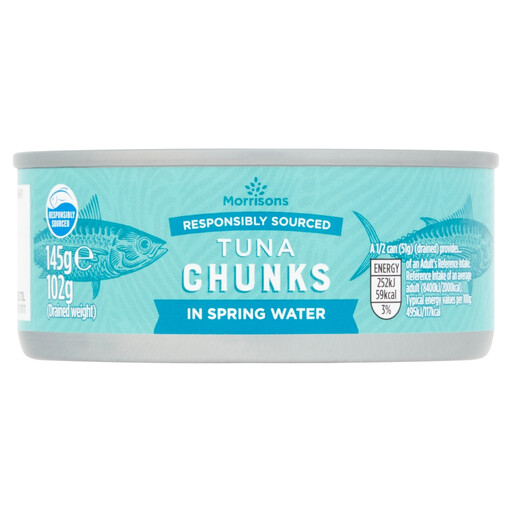 No image available
The single 145g spring-water tin suits someone planning one tuna-based meal rather than buying a multipack. Compare its current sugars, carbohydrate and salt figures on the label.
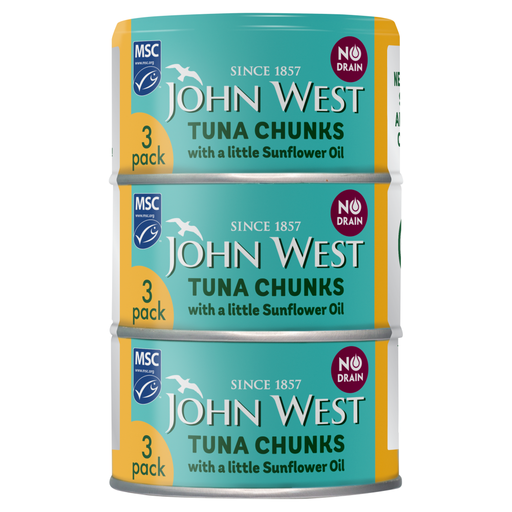 No image available
This no-drain three-pack offers 100g portions packed in sunflower oil for quick meal assembly. Compare its current sugars, fat and energy figures with a spring-water tin rather than assuming the packing liquids have the same meal profile.
The cited plain-tuna products contain virtually no carbohydrate, even when their sugars figures are 0g or less than 0.1g per 100g drained. British Cycling discusses carbohydrate as a fuel for sportives, so plan food for the ride separately and use tuna as part of a meal.
No. The cited Princes brine and sunflower-oil chunks also list 0.0g sugars per 100g drained. Packing liquid still matters for other figures: Princes lists 99kcal and 0.5g fat for its spring-water product, compared with 180kcal and 9.5g fat for its sunflower-oil product on the same basis. Check the precise tin’s label.
The cited Tesco and M&S products instruct buyers to transfer unused contents to a non-metallic container, refrigerate them and consume them within two days. Follow the storage instructions on your own pack.
NHS guidance says people who are pregnant or trying for a baby should have no more than four cans of tuna a week. That is guidance for those circumstances, not a general limit for cyclists.