Cooking a shared dinner
If tuna is going into a pasta bake, jacket-potato filling, melt or rice dish, check the drained weight before deciding how many tins the recipe needs.


For a pasta bake, jacket-potato filling or tuna melt, spring-water chunks give you tuna to mix with the other ingredients; compare drained weights to see how much fish each pack provides. Choose no-drain tuna when skipping that step matters, or consider steak or oil-packed tuna when its texture suits the dish. Check the individual tin for ingredients, allergens and storage instructions.
If tuna is going into a pasta bake, jacket-potato filling, melt or rice dish, check the drained weight before deciding how many tins the recipe needs.
A no-drain or ready-drained format suits a potato, toastie or pasta dish when you want to add the tuna without tipping away packing liquid first. John West and Princes describe products in these formats as ready to use.
If catch method or certification matters to you, look for the statement on the particular tin. The sourcing information given for one product should not be assumed to cover every product from its brand or retailer.
Start with the amount of tuna your dish needs, then decide whether preparation, packing medium or texture changes which tin you would use.
| Priority | What to check | Your needs |
|---|---|---|
| Usable quantity | Compare drained weight where it is stated, rather than treating total pack weight or tin count as the amount of fish. Tesco lists 280g drained weight for its 400g spring-water tin. | I am mixing tuna through several portions and want to know how much will remain after draining. |
| Preparation | Check whether the exact product needs draining. John West describes its No Drain spring-water range as ready without draining; Princes describes its drained range as ready to use. | For a quick jacket potato or toastie, I would rather open a tin and add the tuna straight away. |
| Packing medium and texture | Check whether the tin contains spring water, brine or oil, and whether it holds chunks or steak. Marks & Spencer describes its sunflower-oil tuna steak as having a moist, rich texture. | Chunks will be mixed into my pasta bake, but I might choose a different texture when the tuna is more prominent on the plate. |
| Ingredients and labelling | Read the individual tin’s ingredients, allergen information, nutrition values and any warning about bones. Compare nutrition figures on the same stated basis, such as per 100g drained. | I want to check what is in the tuna before adding other ingredients to the meal. |
| Sourcing | Look for a catch-method statement or certification mark on the particular product. Sainsbury’s describes its checked spring-water chunks as pole-and-line caught and MSC certified. | Sourcing information matters to me, so I will check the tin I am buying rather than rely on the retailer’s name. |
| Leftovers | Read the tin’s instructions for transferring, refrigerating and using contents after opening. Food Standards Scotland advises following the food label for storage after opening. | If I only use part of a tin, I need to know how to store the rest. |
Spring-water tins contain packing liquid, so the weight on the front of a pack does not necessarily tell you how much tuna will go into dinner.
Check the drained weight when planning portions or comparing different pack sizes.
Standard chunks and products expressly labelled no-drain are different preparation choices. The packing medium alone does not establish whether a tin is ready to add directly to a dish.
If avoiding the draining step matters, check that the exact tin says no-drain or ready-drained.
Ingredients, nutrition values and instructions for opened contents are product-specific, including within a brand’s range.
Read the current tin for allergens, any bone warning and storage directions before cooking or keeping leftovers.
A catch-method statement or certification mark identifies the product to which it applies, not necessarily every tuna tin sold under the same name.
Check the mark or wording on the individual product when sourcing affects your choice.
These examples show how particular product formats differ; check the individual tin rather than applying one product’s details to a whole range.
Its 400g spring-water chunks tin is an example to check when one larger tin suits a mixed dinner.
Its spring-water chunks come in a 4 x 145g pack that can be opened across separate meals.
Its 4 x 145g spring-water chunks offer a multipack format for mixed dishes.
Its range includes spring-water chunks and a separately described ready-drained format.
Its No Drain spring-water chunks address the preparation step in a quick meal.
Its listed products include spring-water chunks and tuna steak in sunflower oil for different recipes.
These Joybuy options include spring-water chunks for mixed dinners, a no-drain format and brine-packed chunks. Compare the exact pack and label against the way you plan to use the tuna.
 Image unavailable
Four tins can be opened across separate pasta bakes or other mixed meals. This is a spring-water chunks pack; check the tin’s drained weight for the amount going into the dish, and do not assume it is a No Drain product.
 Image unavailable
The No Drain format suits a meal where you want to add tuna without tipping away liquid first. The pack contains three 100g tins that can be opened separately; check the current label for storage instructions.
 Image unavailable
Four brine-packed tins provide chunks for meals made on separate occasions. The product description instructs you to drain the tuna before use; check the current label if its salt information matters for your recipe.
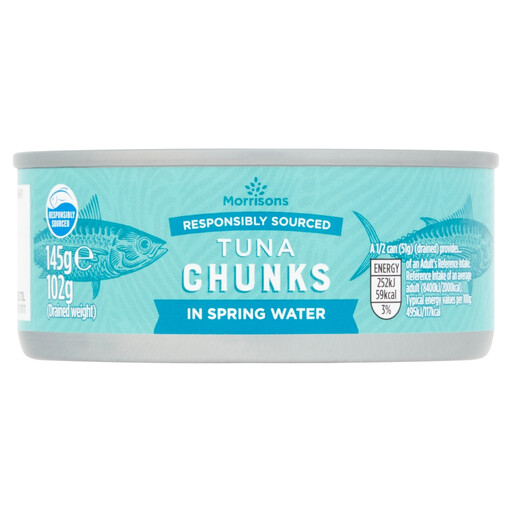 Image unavailable
This single tin is a spring-water chunks option for a pasta dish or jacket-potato filling. Its listed ingredients are skipjack tuna, spring water and salt; check the drained weight when planning the portion.
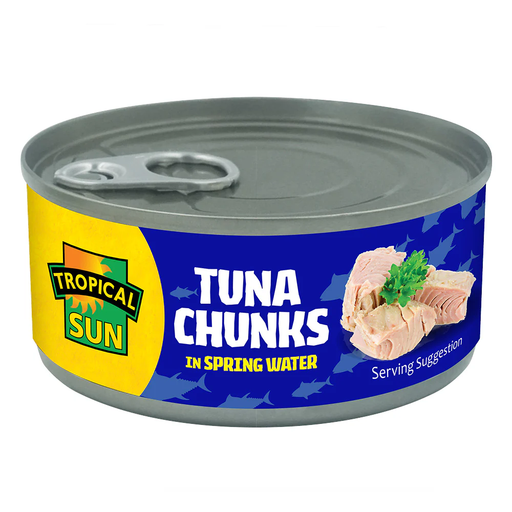 Image unavailable
This single tin contains spring-water tuna chunks for mixing into pasta or rice. The product description says to drain it before use; check the current allergen label, including any stated traces of soybeans or wheat.
Use the drained weight where it is stated, because the total pack weight also includes packing liquid. For example, Tesco Groceries lists 280g drained weight for its 400g spring-water chunks tin; check the corresponding figure on another product before comparing portions.
Spring-water or brine-packed chunks can be drained and mixed into the other ingredients; check which medium the exact tin uses and its preparation instructions. If you want the oil-packed tuna’s character in the finished dish, M&S describes its sunflower-oil steak as moist and rich. Compare the individual ingredient and nutrition labels rather than treating the formats as interchangeable.
Follow that product’s instructions for transferring, refrigerating and using the contents. Food Standards Scotland advises checking the label for whether food needs refrigeration after opening; instructions can differ between tuna products.
Tuna is fish, so read the current ingredient and allergen label, particularly if the tin is going into a shared dish. Check and follow any warning that small bones may remain.