Late-night budget cooks
You want a cupboard tin for a quick supper and do not mind draining it. Checking the drained weight helps you judge how much tuna you can use.


Start with standard tuna chunks if you plan to mix them into a sandwich filling, pasta or a jacket potato topping; choose no-drain tuna when avoiding preparation matters more. Spring water gives you a relatively neutral base, while oil or brine should suit the flavour you want in the finished meal. Check the drained weight, pack size and label before deciding whether a different format meets your needs.
You want a cupboard tin for a quick supper and do not mind draining it. Checking the drained weight helps you judge how much tuna you can use.
After a long day, you would rather open a no-drain or drained-and-ready tin than deal with its packing liquid before making toast, a wrap or a salad.
You choose the packing liquid and piece format to suit a particular meal, or check the exact tin for nutrition and sourcing information.
For a late-night supper, decide what you are making, how much preparation you want to do and how much tuna the pack provides after draining.
| Concern | What to check | Who this matters to |
|---|---|---|
| Usable amount | Compare drained weight and the number and size of tins, especially across multipacks. | If I am making a cupboard supper, I want to know how much tuna will reach the plate after draining. About 36% of consumers put usable amount first. |
| Preparation | Look for no-drain or drained-and-ready wording; check the tin size for your meal. | On a night when I want to assemble supper straight away, avoiding the draining step matters most. That is the primary need for about 29% of consumers. |
| Meal fit | Choose a packing liquid to suit the dish and decide whether you want chunks or larger steak pieces. | For a pasta filling or a plated meal, I want the liquid and texture to work with what I am making. Around 21% of consumers prioritise that fit. |
| Label details | Read the exact product label for nutrition, ingredients and any product-specific sourcing claims. | If I choose tuna by its ingredients or sourcing information, the particular tin matters more than a general claim about the brand. This is the main concern for about 14% of consumers. |
Tins can differ in size and in how much tuna remains after draining, so the number of tins does not tell you the usable amount.
Check the stated drained weight alongside the pack size when comparing formats.
No-drain tuna removes a preparation step; steak pieces offer a different presentation. Neither feature is necessary when ordinary chunks will be mixed into a filling.
Choose the format for the preparation or texture you actually want that night.
The cited Princes and M&S products instruct shoppers to refrigerate unused tuna in a suitable container and eat it within two days.
Transfer leftovers to a sealed, non-metallic container, refrigerate them and follow the instructions on your tin.
The NHS says fresh and canned tuna do not count as oily fish. Its pregnancy guidance also limits tuna consumption because tuna can contain mercury.
Check the NHS advice relevant to you rather than treating a tuna supper as an oily-fish portion.
Own-label tuna listings include standard chunks in spring water, oil and brine, alongside other tin and multipack formats.
The range represented here includes standard chunks and a separately listed drained-and-ready tuna steak product.
The No Drain Tuna Chunks listings cover spring water, oil and brine.
Its listed tuna includes spring-water chunks and steak options with product-specific label information.
These tins cover no-drain spring-water chunks and standard chunks packed in spring water, brine or sunflower oil. Choose by the preparation and flavour you want, then check each pack’s drained weight.
 Image unavailable
For a toast topping or sandwich filling you want to assemble without draining. The pack contains three 100g tins of tuna chunks in spring water; check whether that amount suits your meal.
 Image unavailable
For keeping spring-water chunks available for pasta, sandwiches or a jacket potato topping. The pack contains six 145g tins; check the drained weight and preparation instructions on the label.
 Image unavailable
For a chunk filling when brine suits the intended sandwich or pasta dish. The pack contains four 145g tins; check the drained weight and whether the label’s preparation instructions work for you.
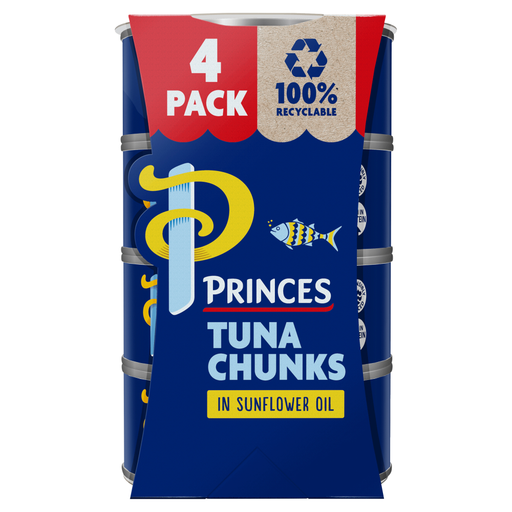 Image unavailable
For pasta, a salad or a sandwich filling where sunflower oil suits the dish. The pack contains four 145g tins; choose spring-water tuna instead if you want a more neutral starting point.
Choose the liquid for the meal: spring water provides a relatively neutral base, oil can contribute to the dish’s flavour, and brine may suit a filling where you want that taste. Read the exact label if ingredients or salt content matter to you.
A no-drain tin is useful when you want to assemble toast, a wrap or a salad without first draining tuna. If that step is not a problem, standard chunks are another option; compare pack and drained weights to see how much each provides.
Transfer it to a sealed, non-metallic container and refrigerate it. The cited Princes and M&S products instruct shoppers to eat leftovers within two days; follow the instructions on your particular tin.
No. The NHS says fresh and canned tuna do not count as oily fish, so a tinned-tuna supper does not provide an oily-fish portion under that guidance.
The NHS advises people who are pregnant not to eat more than four cans of tuna or two tuna steaks a week because tuna can contain mercury. Keep track of tuna eaten across meals, not just the tin used for one supper.