Parents planning cupboard meals
If tuna is going into several family meals, compare the usable quantity in each tin and whether the pack size fits your plans.


For regular family meals, compare usable drained quantity, pack size and the salt declaration on the exact tin. Choose a no-drain format when skipping the draining step matters to you; if someone is pregnant or the tuna is intended for a baby, apply the relevant NHS guidance separately.
If tuna is going into several family meals, compare the usable quantity in each tin and whether the pack size fits your plans.
A no-drain tin removes a preparation step when putting together a sandwich, jacket potato, pasta dish or salad. Check the opening format on the exact pack.
Tuna needs different checks depending on who will eat it: NHS pregnancy guidance sets a weekly limit, while food for babies calls for attention to age, texture and salt.
Start with the meals you intend to make, then check usable quantity, preparation steps and the label on the particular tin.
| Concern | What to check | Who this matters to |
|---|---|---|
| Usable quantity for regular meals | Compare drained weight where stated, as well as the number and size of tins. | If I plan several cupboard meals, I need to know how much tuna I can use, not just the total weight of a tin packed with liquid. About 36% of consumers put usable quantity for regular meals first. |
| Fast, low-mess preparation | Confirm whether the exact product is no-drain and check how it opens. | With little uninterrupted time to make lunch, I may want tuna I can add straight to a meal. For about 29% of consumers, avoiding the draining step is the primary need. |
| Pregnancy and age-appropriate feeding | Check NHS pregnancy guidance where relevant; for a baby, check age guidance, salt and texture on the food being served. | When planning food for someone who is pregnant or for a baby, I need checks that fit the person eating it, rather than treating every family portion alike. This comes first for about 21% of consumers. |
| Sourcing and meal format | Look for an MSC label on the exact pack and choose a packing medium and texture that fit the dish. | For sandwiches or salads, I may care particularly about chunks versus flakes, or want a certified sourcing label on the tin I buy. About 14% of consumers make sourcing or format their main concern. |
Water, brine or oil contributes to the stated pack weight, so two tins of a similar size need not yield the same amount of tuna.
Check the drained weight on the exact product when deciding how many tins a meal needs.
The Tesco and Sainsbury's spring-water products described in their listings give different salt values per 100g drained. The packing medium alone does not tell you the salt content.
Read the nutrition panel on the tin you intend to use, particularly if the meal may be shared with a child.
The NHS says fresh and canned tuna do not count as oily fish. Tuna therefore does not fill the oily-fish place in its fish guidance.
If you are planning meals around that guidance, consider other fish separately rather than relying on tuna for it.
Being shelf-stable does not change the NHS weekly tuna limit during pregnancy or make an adult preparation automatically suitable for a baby.
Follow the pregnancy limit when applicable. For baby meals, check age guidance, salt and texture; the NHS tuna-dip recipe is labelled for children aged 12 months and older.
Its cited No Drain spring-water range is relevant when removing the draining step matters to your meal routine.
Princes lists spring-water chunks in several pack sizes, alongside other tuna formats.
The cited own-label spring-water multipack gives a straightforward drainable-chunks option for planned meals.
The cited own-label spring-water multipack may interest shoppers checking sourcing statements as well as the tin's nutrition panel.
These John West and Princes tins cover no-drain tuna and multipacks in spring water, brine or sunflower oil. Choose the format for your planned meals and check the exact tin's label before using it for pregnancy or baby meals.
 No image available
Consider this format when you want to add tuna to a quick sandwich or salad without draining it. The three smaller tins let you open one at a time; check the exact label for salt and storage instructions.
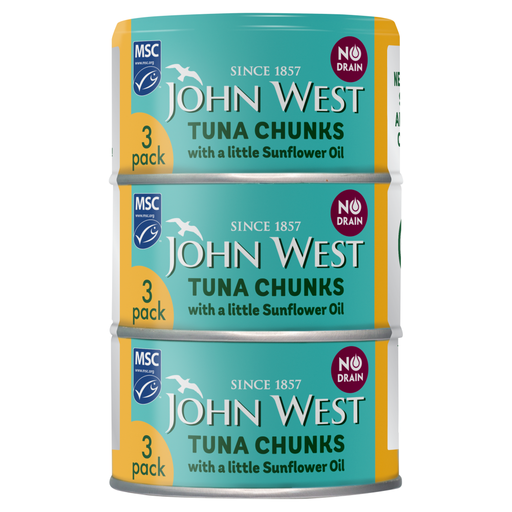 No image available
This no-drain option suits a short meal-preparation window if tuna packed in sunflower oil fits the dish. It contains three 100g tins; check the label if the packing medium or salt declaration affects your choice.
 No image available
The four-tin pack is an option for planning several meals using spring-water tuna chunks. Check the exact can's handling instructions rather than assuming this product has the No Drain format.
 No image available
This four-tin pack suits meal planning when chunks packed in brine fit your recipes. The product information says to drain the tuna; check the exact label for salt and storage instructions.
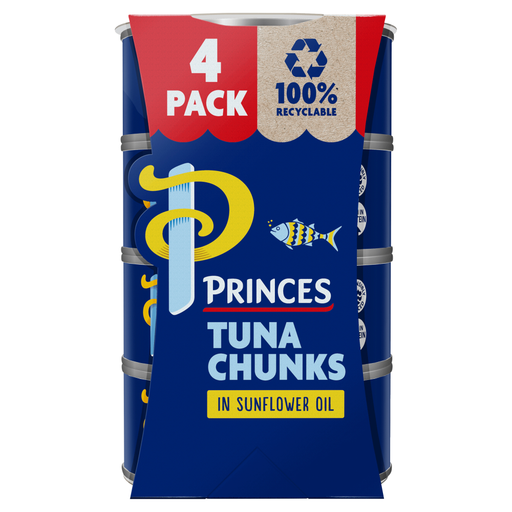 No image available
Consider this four-tin pack for sandwiches, salads or pasta when sunflower oil suits the meal you intend to make. Check the exact tin's nutrition panel and instructions after opening.
Check the drained weight where the retailer or tin states it. Tuna packed in water, brine or oil includes liquid in its total pack weight, so compare the amount you expect to use as well as the tin size.
Yes, within the NHS pregnancy limit of no more than four cans or two tuna steaks a week. The NHS gives this limit because tuna can contain pollutants, including mercury; it is specific to pregnancy rather than a rule for every new parent.
No. The NHS says fresh and canned tuna do not count as oily fish. Its breastfeeding guidance advises aiming for two portions of fish a week, including one portion of oily fish, so tuna does not fill that oily-fish place.
Choose an age-appropriate preparation and check its salt and texture rather than serving an adult portion without adjustment. The NHS publishes a tuna-dip recipe for children aged 12 months and older and advises that babies should not eat much salt.
Follow the storage instructions on the exact product. For example, Sainsbury's instructs users to move the contents of its cited spring-water tin to a non-metallic container, refrigerate them and use them within one day; instructions for other tins can differ.