Who this is for

Easy-chew meal planners

You need fish that can be flaked into a soft, moist meal, with skin and bones removed. NHS Lothian lists tinned tuna as an option in its easy-to-chew guidance; the finished meal must still suit the individual's chewing and swallowing needs.

One-person cupboard-meal shoppers

You want an individual tin rather than a multipack or a much larger can. The single tins considered here range from 125g to 160g, but the amount of tuna after draining can differ from the weight on the front of the tin.

Salt-label comparers

You want to compare the stated salt per 100g drained, not assume that spring-water tins have the same figure. Sainsbury's lists 0.12g for its 145g tin; Tesco and Asda each list 0.90g for their checked 145g tins.

What matters when choosing

Start with the texture the finished meal needs, then compare the usable portion, label and opening method.

Concern Buying checks Who this matters to
Finished-meal texture Read bone warnings and plan a soft, moist dish. Follow any individual swallowing plan. If the meal must be easy to chew, I need tuna I can flake and serve without hard pieces; about 42% of consumers put finished-meal texture first.
Portion and salt label Compare drained weight and the salt figure per 100g on the relevant label. For one small meal, I want to know how much fish the tin provides and what its salt label says. About 25% of consumers make portion and label comparison their first concern.
Opening effort Check the individual tin's opening method and whether its contents need draining. When preparing a quick meal, I want the tin to be straightforward to open; opening effort comes first for about 17% of consumers.
Sourcing and value Check sourcing statements on the specific tin and compare its current shelf information. If I am choosing between similar tins, I want to weigh the product's sourcing statement against what it offers for my meal. About 16% of consumers put sourcing and value first.

Buying pitfalls

  • Assuming the tin makes the meal easy to chew

    The International Dysphagia Diet Standardisation Initiative describes Level 7 easy-to-chew food as soft and tender, without bones or other hard pieces. A tin of tuna does not determine the texture of the finished dish.

    Flake the tuna, remove any bones and add a moist accompaniment. Follow the person's prescribed texture plan where one applies.

  • Assuming spring-water tins have similar salt figures

    The checked Sainsbury's tin lists 0.12g salt per 100g drained, while the checked Tesco and Asda tins each list 0.90g on that basis.

    Compare the current label's salt figure and its measurement basis before choosing.

  • Overlooking bone warnings

    Tesco, Asda, John West and M&S warn on the checked products that bones may remain. The International Dysphagia Diet Standardisation Initiative excludes bones from Level 7 easy-to-chew food.

    Inspect the tuna as you flake it and remove any hard pieces before serving.

  • Planning a portion from the tin's total weight

    Tesco and Princes list 102g drained weight for their 145g tins, while John West lists 102g drained weight for its 125g tin. The front-of-pack weight alone therefore does not tell you how much drained tuna to plan around.

    Use the drained weight where stated. If you will have leftovers, follow that product's refrigeration and use-by-opening instructions.

    Opening more than the meal needs can leave unused tuna that must be stored and used within the period on the label.

Brands to consider for single tins

Tesco

Tesco lists an own-label 145g tin of skipjack tuna chunks in spring water, with 102g drained weight.

  • The checked product lists 0.90g salt per 100g drained.
  • Its label warns that minor bones may remain.

Sainsbury's

Sainsbury's lists an own-label 145g single tin of tuna chunks in spring water.

  • Its listed 0.12g salt per 100g drained is lower than the other single tins compared here.
  • The product page was marked out of stock when checked; confirm availability before planning a meal around it.

Asda

Asda lists an own-label 145g single tin of tuna chunks in spring water.

  • The checked label lists 25g protein and 0.90g salt per 100g drained.
  • Asda warns that some bones may remain.

Princes

Princes offers a 145g spring-water tuna-chunk tin described as Easy Open.

  • Tesco's listing states 102g drained weight and 0.85g salt per 100g drained for this product.
  • An opening claim does not replace checking and preparing the fish for the intended meal.

John West

John West lists a 125g single tin of tuna chunks in spring water with 102g drained weight.

  • Asda's checked listing gives 0.80g salt per 100g drained.
  • The product information warns that bones may remain.

M&S

M&S lists a 160g single tin of tuna chunks in spring water.

  • The larger tin offers an alternative when the planned meal needs more than a smaller single tin.
  • Its listing warns that bones may be present; follow its instructions for storing unused contents.

Single tins on Joybuy

These individual spring-water tuna tins can be considered for a moist, easy-chew meal when the finished food suits the person eating it. Check for bones and use the pack label to plan portions.

Morrisons Fad Free Tuna Chunks in Spring Water 145g

Morrisons Fad Free Tuna Chunks in Spring Water 145g

This single 145g tin is an option when you plan to flake tuna into a moist dish for one meal.

The stated 145g is the tin size, not a drained-weight figure. Inspect the fish for hard pieces, and check the current label if the drained portion matters to your recipe.

View on Joybuy
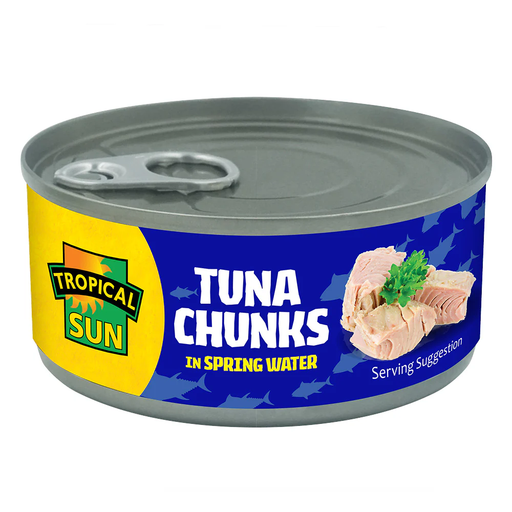
Topical Sun Tuna Chunks in Springwater 160g

Topical Sun Tuna Chunks in Springwater 160g

This single 160g can suits a recipe that calls for a larger tin or leaves room for a later portion.

Check the label for drained weight when planning servings. Inspect the tuna for small bones, and follow the product's instructions if any is left over.

View on Joybuy

Questions about easy-chew tuna meals

Is tinned tuna automatically suitable for an easy-chew diet?

No. NHS Lothian includes tinned tuna as an easy-to-chew fish option after skin and bones are removed, but the finished food must be soft and moist. The International Dysphagia Diet Standardisation Initiative says Level 7 easy-to-chew food is not for someone with an increased choking risk or a swallowing problem requiring another texture; follow any individual swallowing plan.

How can I prepare tuna for a softer meal?

Flake it, remove any bones and mix it with a moist accompaniment, such as a sauce or a soft potato filling. NHS Lothian's easy-to-chew guidance identifies tinned tuna as an option after bones are removed; preparation does not override a prescribed texture plan.

Which compared single tin lists the least salt?

Sainsbury's 145g tuna chunks in spring water lists 0.12g salt per 100g drained, lower than the other single tins compared here. For context, the checked Tesco and Asda 145g listings each state 0.90g on that basis. Confirm the figure on the current pack before using it for a label comparison.

What should I do with tuna left after opening a tin?

Transfer unused tuna to a covered non-metallic container and refrigerate it, following the period stated on that product's label. The checked Tesco, Asda, Princes and M&S instructions differ, so use the directions for the tin you opened rather than assuming one period applies to every brand.