Fat-first meal planners
If you use tuna in salads, sandwiches or cooked meals, compare the packing liquid and fat per 100g drained before deciding whether a particular piece size matters.


For a low-fat diet, start by comparing tuna packed in spring water or brine on a per-100g drained basis. Choose steak pieces or a no-drain format if their texture or easier handling matters to you, rather than assuming they contain less fat. Princes lists 0.5g fat per 100g drained for its spring-water chunks and 16.0g for its sunflower-oil sandwich tuna; the NHS also says canned tuna does not count as oily fish.
If you use tuna in salads, sandwiches or cooked meals, compare the packing liquid and fat per 100g drained before deciding whether a particular piece size matters.
A no-drain or drained-and-ready pack may make lunch easier to assemble. Check its drained weight and salt as well as its fat content before choosing it over a standard can.
If a stated catch method or seafood certification matters to you, look for it on the individual product. Check the nutrition separately: a sourcing statement does not establish fat or salt content.
Compare the nutrition for the exact product before choosing between chunks, steak and no-drain formats. The considerations below distinguish consumers by the need they would put first.
| Concern | What to check | Who this matters to |
|---|---|---|
| Fat and packing liquid | Read the ingredients and compare fat per 100g drained. Do not use a premium description as a substitute for the nutrition panel. | If keeping fat down is my main aim, I need to know what is in the can before choosing a texture or format. About 36% of consumers put fat and packing liquid first. |
| Texture and convenience | Check whether the tuna is chunks, steak or no-drain, and compare drained weight across pack sizes. | For lunch away from home, I might value a can that needs no draining; for a plated meal, I might prefer larger pieces. About 29% of consumers place texture or convenience first. |
| Salt, allergens and storage | Compare salt per 100g and per serving, read the fish-allergen information and follow the pack's instructions after opening. | When I also need to watch salt or keep part of a can for later, those label details shape what I can use. About 21% of consumers prioritise label and storage considerations. |
| Seafood sourcing | Look for an MSC ecolabel or a stated catch method on the specific pack, then assess its nutrition separately. | If sourcing is what makes a product worth choosing for me, I want a claim I can identify on the pack. About 14% of consumers make sourcing their primary concern. |
Premium can describe the pieces or the pack rather than the packing liquid. Princes lists 16.0g fat per 100g drained for its sunflower-oil sandwich tuna, compared with 0.5g for its spring-water chunks.
For a low-fat choice, compare the exact products' per-100g drained figures before deciding whether steak pieces or an oil-packed recipe suits you.
Water-packed products can differ in salt. The cited Sainsbury's drained-and-ready tuna lists 0.75g salt per 100g, while Tesco lists 0.90g for its spring-water chunks and its John West No Drain listing shows 1.0g.
If salt matters to your choice, compare it on the current labels as well as comparing fat.
The NHS says fresh and canned tuna do not count as oily fish.
If you follow NHS guidance on including oily fish, do not count a tuna meal as that portion.
Can sizes and drained weights affect how much tuna is available for a meal. If you will not use a whole can, its after-opening instructions also matter.
Compare drained weight for the exact packs and follow each label's storage directions for leftovers.
The details below refer to particular tuna products, not every product made by each brand. Use the current pack label for the variant you choose.
Its No Drain Tuna Steak is an example of a spring-water format intended to need less draining.
Its range illustrates why the packing liquid and tuna format need separate checks.
Its spring-water chunks offer a product-specific example for comparing nutrition and sourcing information.
Its drained-and-ready water-packed tuna illustrates a format for meals where avoiding a draining step matters.
Its spring-water chunks are an option for shoppers interested in a stated catch method alongside nutrition.
These selections cover spring-water chunks, brine-packed chunks and a no-drain spring-water format. Compare their nutrition on the same basis before using the figures to make a low-fat choice.
 No image available
Spring-water chunks for salads, sandwiches or cooked meals. The product information lists 1.0g fat and 1.0g salt per 100g drained. Compare drained weight per can when planning portions, and check the current label for fish-allergen information.
 No image available
A spring-water chunk option for sandwiches, salads and pasta. Its product information lists 0.7g fat per 100g drained. Check drained weight per can if portion size matters, and read the current fish-allergen information.
 No image available
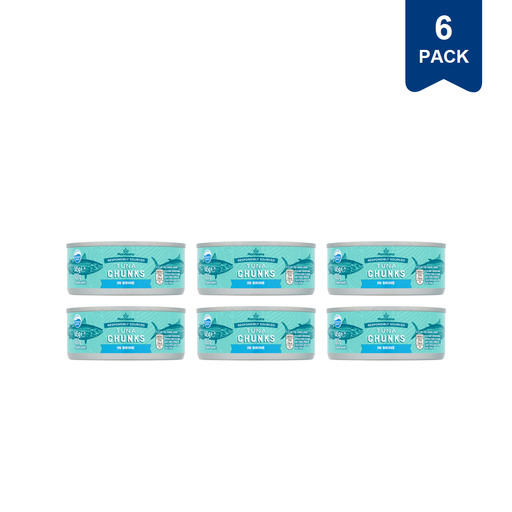
Brine-packed chunks provide another format to compare with spring-water tuna. The product information lists 1g fat and 0.9g salt per 100g drained. Check the current label if the packing liquid, fish-allergen information or drained portion size affects your choice.
 No image available
The no-drain format suits meals prepared without a separate draining step. The product information lists 0.9g fat per 100g, but check the current pack before comparing that figure with values expressly given per 100g drained. Read the fish-allergen information too.
 No image available
Spring-water chunks intended for mixed meals such as sandwiches or pasta. The product information reports approximately 0.5g fat per 100g; check the pack's nutrition basis before comparing it with drained-weight figures. The listing identifies fish and warns of possible traces of soybeans and wheat, so check the current allergen label.
Spring-water tuna is a useful starting point, but compare the exact products rather than relying on the packing liquid alone. Princes lists 0.5g fat per 100g drained for its spring-water chunks and 16.0g for its sunflower-oil sandwich tuna. Brine-packed and no-drain products also need their own label checks.
No. The NHS says fresh and canned tuna do not count as oily fish, so a canned-tuna meal does not fulfil its advice to include an oily-fish portion.
For people who are pregnant or trying for a baby, NHS guidance limits tuna to no more than four cans or two tuna steaks a week because tuna contains higher mercury levels than some other fish. This is a condition-specific limit, not a general rule for choosing low-fat tuna.
Follow the instructions on the specific pack. The cited Tesco and John West products say to refrigerate unused contents and consume them within two days; the cited Sainsbury's product says to transfer leftovers to a non-metallic container, refrigerate and use them within one day.
The Marine Stewardship Council says its blue ecolabel identifies seafood from a fishery meeting its Fisheries Standard, with handling covered by its Chain of Custody Standard. Check for the label on the particular pack; it does not tell you whether that tuna has less fat or salt.