Low-fat label comparers
If total fat is your main concern, compare the packing liquid and fat per 100g on the product you intend to buy. Check the portion you will eat rather than relying on a general impression of tuna as a food.


For a low-fat tinned-tuna choice, compare the fat per 100g on the exact label, then choose steak-style pieces if their texture matters or chunks if the tuna will be mixed into a meal. Princes lists 0.5g fat per 100g drained for its spring-water tuna steak and 16.0g per 100g for a sunflower-oil tuna product; those figures describe the checked variants, not every tuna in water or oil. A tinned tuna steak offers larger preserved pieces, not a raw fresh fillet.
If total fat is your main concern, compare the packing liquid and fat per 100g on the product you intend to buy. Check the portion you will eat rather than relying on a general impression of tuna as a food.
If the tuna will remain visible in a salad, on a jacket potato or as part of a plated lunch, larger steak-style pieces may matter more to you than they would in a mixed filling.
If you use tuna in sandwiches, pasta or family meals, consider whether single tins, multipacks or a no-drain format suit how you prepare and portion it. Check the nutrition label for the chosen format.
For tinned tuna chosen as part of a low-fat eating pattern, start with the exact product’s fat figure and packing liquid. Texture, usable portions and preparation effort can then guide the choice between steaks and chunks.
| Concern | What to check | Who this matters to |
|---|---|---|
| Total fat | Compare fat per 100g on the exact variant and check whether that figure is for drained tuna. Note whether it is packed in spring water or oil. | If I need to keep track of total fat, a change in packing liquid could affect which tin fits my eating plan. About 36% of consumers put fat control first. |
| Piece size and texture | Look for steak-style pieces rather than chunks when presentation matters; check the drained weight for the amount you can serve. | For a salad or plated lunch, I may want larger pieces that stay distinct instead of tuna that will be mixed in. Around 29% of consumers make that texture their primary concern. |
| Usable portions | Compare the declared protein per 100g, the drained weight and the portion you plan to use. | When tuna is the main ingredient in a meal, I want to know how much usable fish the pack provides. Protein and portion planning comes first for about 21% of consumers. |
| Preparation effort | Check the pack size, preparation directions and storage instructions for tuna left after opening. | If lunch needs to come together quickly, a convenient pack and manageable leftovers may decide which format I choose. Roughly 14% of consumers put that need first. |
The packing liquid and product variant matter. Princes declares 0.5g fat per 100g drained for its tuna steak in spring water, compared with 16.0g per 100g for its checked sandwich tuna in sunflower oil.
Read the fat-per-100g figure and packing liquid on the exact product, rather than choosing by brand name alone.
Here, “steak” describes the larger-piece tinned format. It does not make the product a raw fresh tuna fillet for cooking.
Choose tinned tuna steak for preserved, ready-to-use pieces; if your recipe calls for raw tuna, shop for that separately.
Spring-water packing does not make salt figures identical. The checked Marks & Spencer, Asda and Tesco steak listings declare differing amounts of salt per 100g.
Compare salt on the exact label alongside fat, particularly if you are following advice to limit salt.
M&S offers tuna steak in spring water for shoppers seeking larger tinned pieces.
Princes has spring-water tuna steaks and chunks as well as oil-packed tuna, so the variant is central to the choice.
John West offers spring-water chunks and a no-drain tuna-steak fridge pot for different meal-preparation needs.
Tesco lists own-brand spring-water tuna steaks and larger tins of chunks, allowing a choice between piece format and pack size.
Asda offers own-brand tuna steak in spring water, including a three-pack of 110g tins.
These selections are spring-water tuna chunks for meals where the fish will be mixed in or flaked. If you want larger, intact steak-style pieces, use that texture requirement when choosing outside this list.
 No image available
The six-pack suits cupboard planning for meals where tuna chunks will be mixed into other ingredients. If you need larger pieces to remain intact, compare a tuna-steak format instead; check the pack’s nutrition and storage directions for your intended portions.
 No image available
Four cans offer separate portions for mixed dishes such as sandwiches or pasta. The chunk format is less suited to a meal where you want intact steak-style pieces; compare the label’s drained weight and fat figure for the portion you will use.
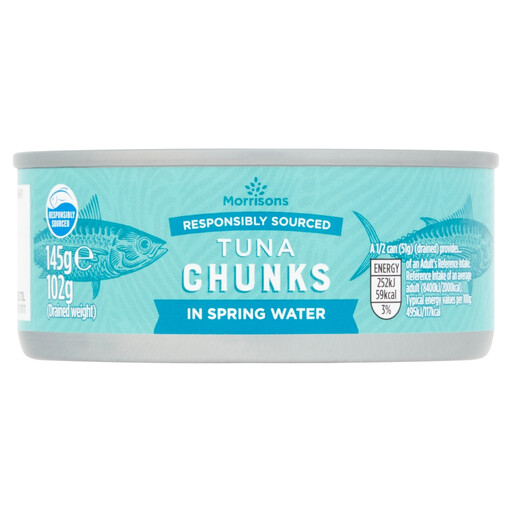 No image available
This single-can format suits a meal that calls for tuna chunks rather than a multipack. Check its drained portion and the directions for storing any tuna left after opening; choose steak-style tuna if larger pieces are important to the dish.
 No image available
The three-can pack is an option for meals where chunks can be mixed in. Although “No Drain” is in the product name, check the pack’s preparation directions before relying on that convenience, and confirm the basis of its per-100g nutrition figures before comparing them with drained tuna.
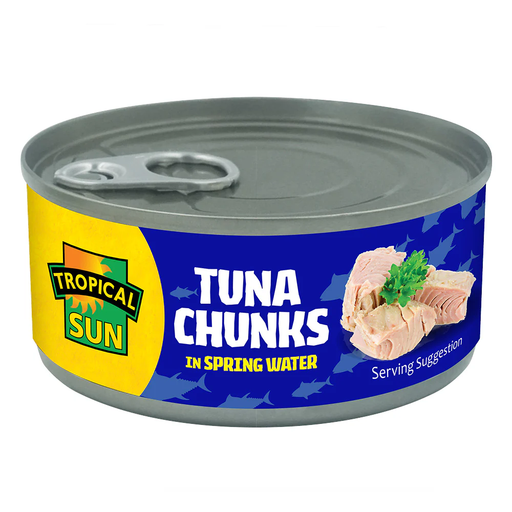 No image available
This single tin offers chunks for dishes where an intact steak presentation is unnecessary. Check the exact fat and protein figures and their per-100g basis on the pack before using them to compare it with other tuna; check the allergen information if relevant.
No single packing-liquid description establishes the fat content of every product. The checked spring-water steaks from Marks & Spencer, Princes and Asda declare 0.4g to 1.0g fat per 100g, while the checked Princes sandwich tuna in sunflower oil declares 16.0g per 100g. Compare the exact labels, including whether figures refer to drained tuna.
No. The NHS states that fresh and canned tuna do not count as oily fish, so do not count a tuna meal as an oily-fish portion when planning fish meals.
Follow the instructions on the tin you buy. The checked Asda and Tesco product pages direct shoppers to move unused tuna to a suitable non-metallic container, refrigerate it and use it within two days of opening; check whether your chosen product gives the same directions.
Follow your individual clinical plan and compare the fat figure on the exact product label with the portion you intend to eat. Oxford University Hospitals’ guidance for people advised to have no more than 20g of fat a day is written for that specific dietary context, not as a target for everyone choosing tinned tuna.