Hosts serving a visible tuna course
For a cold starter, crostini or composed salad, consider fillets or steaks that can be arranged on the plate. Check the stated servings and whether the packing oil suits the dressing.


Choose whole tuna fillets or steaks when the fish will be visible in a cold Sunday starter, salad or composed side; chunks make more sense when the tuna will be mixed into a dish. Tinned tuna is not a like-for-like replacement for a roast centrepiece, so match the cut, packing medium and serving quantity to the course you plan to make.
For a cold starter, crostini or composed salad, consider fillets or steaks that can be arranged on the plate. Check the stated servings and whether the packing oil suits the dressing.
No-drain tuna can go straight into a quick side or light fish course. If the tuna will be mixed into another preparation, intact pieces may matter less.
Look at the exact pack for an MSC label or a specific catch-method statement. A general brand claim does not establish the credentials of every tuna product it sells.
Start with how the tuna will appear in the finished course, then check how much usable fish the pack provides and what it is packed in.
| Priority | What to check | Your needs |
|---|---|---|
| Cut and presentation | Check whether the pack contains fillets, steaks or chunks. Decide whether the pieces need to remain visible after serving. | For a starter or composed salad, I want sizeable pieces I can arrange on the plate. For fishcakes or a mixed filling, chunks could do the job. |
| Serving quantity | Check drained weight where stated, as well as pack weight and the stated number of servings. Tesco Groceries lists 150g drained weight for its 200g Finest Albacore steaks; Sainsbury's describes its 220g Albacore fillets as two servings. | If several people will share the course, I need to know how much tuna I can actually serve, not just the weight printed on the front. |
| Packing medium | Check whether the tuna is packed in olive oil, another oil, water or brine. For an oil-dressed dish, check how the packing liquid will work with the other ingredients. | I may want olive oil as part of a cold dressing; for a different flavour or preparation, I would compare the other packing options. |
| Preparation | Check whether draining is needed and read the opening and storage instructions on the exact pack. Joybuy describes its John West brine steaks as no-drain. | When serving a quick side, I want to know whether I can use the tuna straight from the tin. |
| Sourcing claim | Look for a product-level MSC label or a catch-method statement. Keep certification distinct from a brand's own traceability claim. | If sourcing matters to my choice, I want a claim I can check on the particular pack I am buying. |
| Nutrition label | Compare salt on the same per-100g basis and check whether figures refer to drained tuna. Joybuy lists 1.0g salt per 100g drained for its John West no-drain brine steaks. | For a salt-conscious meal, I want to compare the labels of the specific products under consideration. |
Whole pieces are relevant to a visible starter or side, but their shape matters less once the tuna is broken up for fishcakes or a mixed filling.
Decide how the tuna will be served before choosing between fillets, steaks and chunks.
Oil or other packing liquid can be included in the pack weight. Tesco Groceries, for example, lists 150g drained weight for its 200g Finest Albacore steaks.
Check drained weight and stated servings when planning a shared course.
A statement about a brand's fishing methods is not the same as certification of the product in your hand.
Check the exact label for an MSC mark or a specific catch-method claim, and distinguish the two.
Brine and oil affect how tuna fits into a dish, while nutrition figures need to be read on the basis stated on the label. The Joybuy John West no-drain brine steaks list 1.0g salt per 100g drained.
Compare the packing medium and per-100g label before choosing a product for the meal.
These examples illustrate different tuna formats; a brand's wider range should not be assumed to have the same ingredients or sourcing credentials as a particular pack.
An own-label example for a shared, presentation-led cold dish.
An own-label Albacore steak option packed in a blend of olive oils.
A branded route to no-drain tuna when quick preparation matters.
A range spanning chunks, drained tuna, steaks and flavoured tuna.
These fillet and steak options suit a visible cold starter or side. Compare their packing oils and check portions and preparation instructions for the particular pack.
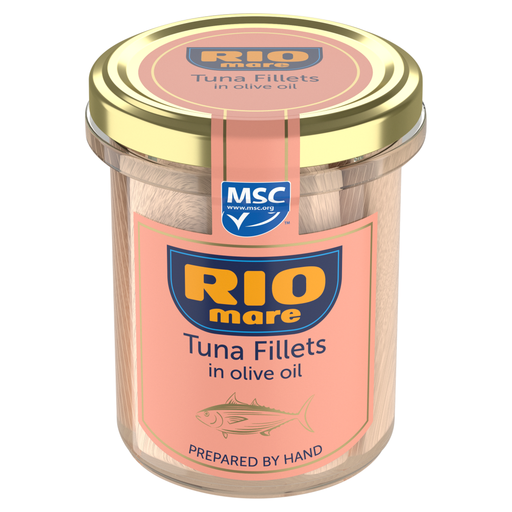 Image unavailable
Fillets in olive oil offer intact pieces for a cold starter or composed salad. Check the drained weight and servings when planning portions, and look for an MSC label on the exact pack if certification matters to you.
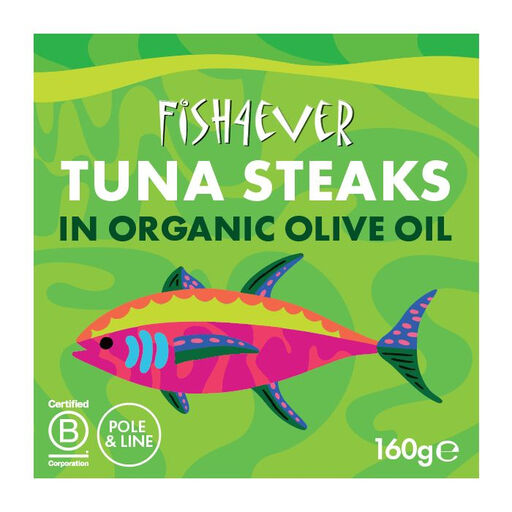 Image unavailable
Steaks in olive oil are an option when the tuna will remain visible in a salad or side. The organic description refers to the olive oil, not necessarily the tuna; check drained weight and servings for a shared dish.
 Image unavailable
The steak cut is relevant to a visible tuna side, while sunflower oil offers a different packing medium from the olive-oil options. Check the pack's drained weight, servings and any sourcing claim before choosing it for the table.
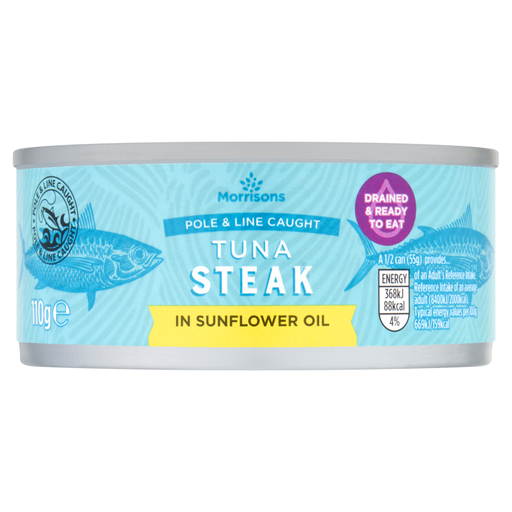 Image unavailable
Tuna steaks with sunflower oil are an option for a visible side. The product is described both as drained and as no-drain, so confirm the exact pack's preparation instructions and serving quantity before relying on either description.
It is not a like-for-like roast centrepiece. Whole tinned fillets or steaks make more sense as a cold starter, salad or light fish side, where their pieces can remain visible.
Check the cut, drained weight, stated servings and packing medium. Sainsbury's describes its 220g Albacore fillets as two servings, while Tesco Groceries lists 150g drained weight for its 200g Finest Albacore steaks; pack weight alone does not tell you how much drained tuna you will serve.
No. The NHS states that fresh and canned tuna do not count as oily fish, regardless of whether a particular product is packed in oil.
The NHS advises people who are pregnant or trying for a baby to have no more than four cans of tuna a week or two tuna steaks a week. This is a weekly limit, so a Sunday serving needs to be considered alongside tuna eaten on other days.
Follow the instructions on the exact pack. The cited Tesco and Sainsbury's products instruct shoppers to transfer unused tuna to a non-metallic container and refrigerate it, rather than leaving it in the opened tin.