Campers keeping preparation simple
If draining a tin or clearing up liquid will be awkward, a product explicitly labelled no-drain is worth considering. Plan to finish an opened portion unless you can follow its refrigeration instructions.


Choose no-drain chunks if disposing of liquid and washing up will be awkward; choose spring-water steak if you want larger pieces without an oil-packed format. Olive-oil steak suits a meal built around the tuna itself, but compare the exact tins rather than assuming their nutrition or sourcing claims are alike. Whichever you pack, check the portion size and post-opening instructions if you cannot refrigerate leftovers.
If draining a tin or clearing up liquid will be awkward, a product explicitly labelled no-drain is worth considering. Plan to finish an opened portion unless you can follow its refrigeration instructions.
Steak offers a different cut from chunks or sandwich-style flakes. For an alternative to an oil-packed tin, compare spring-water products by their ingredients and nutrition information on the same stated basis.
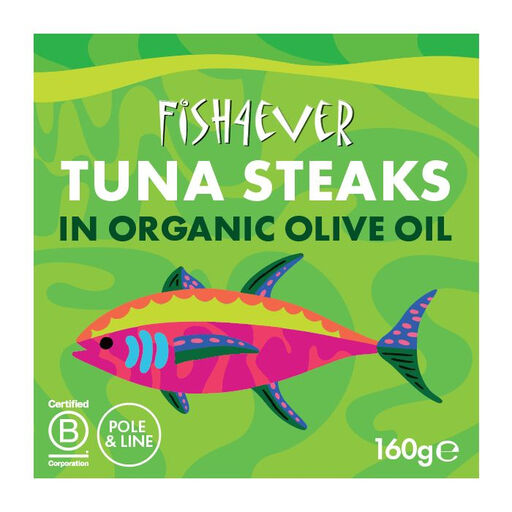
An olive-oil steak may fit a meal with few other ingredients. If a catch-method statement, traceability claim or certification matters to you, look for it on the exact product rather than relying on the brand name.
For festival camping, settle the practical question first: can you drain the tuna, and can you refrigerate anything left after opening? Then compare the cut, packing liquid and product-specific sourcing information.
| Concern | What to check | Who this matters to |
|---|---|---|
| Low-mess handling | Look for an explicit no-drain claim and check the opening and post-opening instructions. | With little space to prepare food or dispose of liquid, I want to open a tin and make a meal without draining it. About 31% of consumers would put low-mess handling first. |
| Cut and packing liquid | Check whether the tin contains steak, chunks or flakes, then compare spring-water products on the same stated nutrition basis. | If tuna is the centre of my meal, I want substantial pieces in spring water, even if I have to drain the tin. About 31% of consumers would prioritise that combination. |
| Oil-packed flavour | Check the oil type and the tin’s per-100 g nutrition information. | When the tuna supplies much of a simple meal’s flavour, I would consider an olive-oil steak rather than choose solely for easier handling. Roughly 23% of consumers would make flavour their primary concern. |
| Sourcing information | Look for the precise certification, catch-method wording or traceability statement on the product. | I want to know what a sourcing statement actually says before choosing a tin, rather than assume it covers a whole brand. About 15% of consumers would put product-specific sourcing information first. |
The cited John West, Sainsbury’s and M&S products instruct shoppers to refrigerate unused contents and use them within two days; some specify a non-metallic container.
Choose a portion you expect to finish in one meal if refrigeration is unavailable. Otherwise, follow the exact tin’s transfer and storage instructions.
Unfinished food also means carrying or obtaining a suitable container and arranging refrigerated storage.
M&S lists 209 kcal and 12.3 g fat per 100 g for its cited olive-oil steak, and 99 kcal and 0.6 g fat per 100 g for its cited spring-water chunks. These figures describe those products, not every premium tin.
Compare the labels on the same per-100 g or drained-weight basis before choosing a packing liquid.
MSC certification, pole-and-line wording and a brand’s traceability statement convey different information. None should be assumed to apply to every product in a range.
Check the exact tin for the statement that matters to you and read what it covers.
Fish is an allergen in tuna. GOV.UK says allergens present in prepacked food must be clearly labelled, while Reading Borough Council advises against buying damaged cans.
Read the ingredients and allergen information on the tin you intend to pack, and inspect the can for damage.
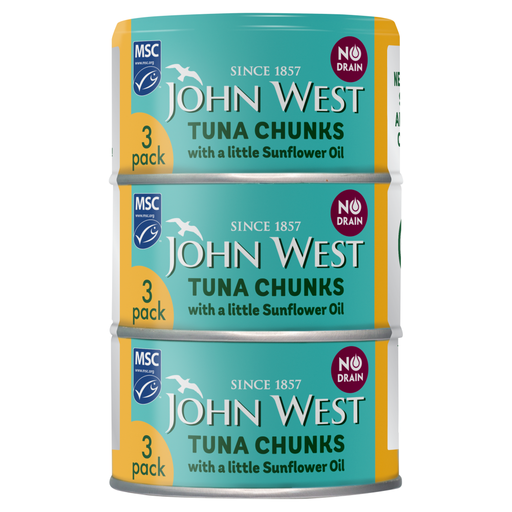
John West’s cited No Drain Tuna Chunks in Sunflower Oil is a product-specific option for meals with limited preparation space.
Princes offers the cited spring-water chunks and a separate chunks-and-flakes Sandwich Tuna in Brine, giving shoppers different cuts to consider.
The cited Albacore Tuna Steak comes in spring-water and extra-virgin-olive-oil versions, both with pole-and-line wording on their product listings.
The cited M&S range provides an olive-oil steak and spring-water chunks; M&S describes these products using pole-and-line sourcing wording.
Tesco’s tinned-tuna range includes cited own-label steaks with a little sunflower oil and chunks in sunflower oil.
These tins cover no-drain chunks for simpler preparation, spring-water chunks for meals where draining is practical, and an olive-oil steak. Choose the pack size with your planned meals and access to refrigeration in mind.
 No image available
Consider this three-tin pack when you want chunks without draining liquid at the campsite. John West lists 90% tuna, 170 kcal and 6.9 g fat per 100 g for this product; refrigerate any opened leftovers and use them within two days.
 No image available
This three-tin spring-water option suits a meal where you want chunks but would rather avoid draining. Check the physical pack’s opening directions before relying on the no-drain format, and follow its refrigeration instructions for opened leftovers.
 No image available
The six-pack provides spring-water chunks for several planned meals. This is a draining option, not a no-drain tin; unused opened contents need a suitable container and refrigeration.
 No image available
Consider this steak-format tin when the tuna and its olive-oil packing are central to the meal. If comparing nutrition with a spring-water tin, use the basis stated on each physical label; refrigerate leftovers after opening.
 No image available
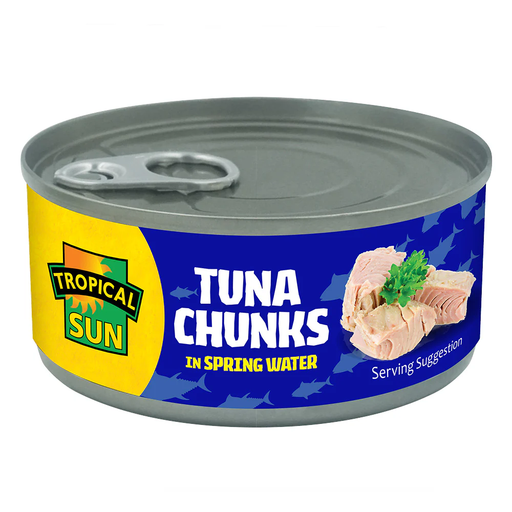
This single tin suits a planned meal with spring-water chunks if you have somewhere to drain it. Read the physical pack’s allergen information and refrigerate any unused tuna after opening.
Yes, if you follow the tin’s unopened-storage instructions and check its date and condition before packing. The cited product listings specify a cool, dry place for unopened tins; Reading Borough Council advises against buying damaged cans.
Only if you can follow that product’s post-opening directions. The cited Sainsbury’s and M&S tins instruct shoppers to refrigerate unused contents, use them within two days and, where stated, transfer them to a non-metallic container. Without refrigeration, choose a portion you expect to finish.
Read the exact tin’s ingredients and allergen information, including any additional ingredients in flavoured or prepared products. GOV.UK states that allergens present in prepacked food must be clearly labelled.
No. An MSC label is a certification statement, while pole-and-line identifies a catch method. Check which statement appears on the product you are buying; neither wording should be assumed to cover every tin from the same brand.